SpaceX did its third full-duration test launch of Starship yesterday morning.
Neither the Starship nor the Superheavy Booster made it to a soft landing and for both it seemed like a loss of control at critical moments that spelled their demise. However, the entire uphill part of the flight was a resounding success. If they’d had a payload they would have delivered it. SpaceX will evaluate this flight, correct whatever problems occurred, and move on. I was watching the SpaceX footage below, so I didn’t see the explosions.
I’m sure there was video of both taken by someone.
Of course, rockets always look great at launch and the mightier the rocket the more spectacular the show.
Successful hot-staging.
Great views from Starship and the Super Heavy Booster after the successful completion of the booster’s boost-back burn.
The problems began after the separated booster had descended back through the first layer of clouds on its way back down, and just before it started relighting engines, it seemed to start losing control. Below is pretty much the last camera shot from the booster. I think they hit the big red button at this point and blew it up.
The coolest part for me was here during reentry when the camera on the edge of one of the wings on the Starship started capturing imagery of one of the rear wings starting to glow, and then we could see the reentry plasma. The signal was transmitted to a Starlink satellite through the Starship’s wake in the plasma.
That’s not as bright as it got.
However, the plasma impact point appeared to walk around the vehicle throughout reentry, as if it were in an axial spin and tumbling.
Then, the below shots are the final good pictures just before the video signal was lost. All telemetry and the Starlink feed then stopped a little over a minute later, which they later said indicated that the ship was likely destroyed at that moment.
At T+00:49:39 the updates of the speed and altitude became frozen.
At this adorable moment, where the commentators are talking about the heat shield tiles, the Starship had likely already been gone for seventeen seconds with the final speed reading at 25724 km/h and an altitude of 65 km.
So, the largest rocket in history flew faster, further, and longer than ever…only failing reentry and landing. This flight achieved most of its key objectives. The only test that they did not attempt was in the engine relight test, but everything they need to deliver payloads to space has been done. I don’t know whether they can safely attempt full orbit on the next flight without a successful engine relight test, however maybe they’ll try and launch some Starlink satellites anyway.
A reader of my Kindle Vella story Anomaly pointed out to me in a comment on Facebook that in Episode 11, where Captain Elizabeth Trunketh wakes up in an alien hospital bed, reminded them of an episode of the Twilight Zone called The Eye of the Beholder starring Donna Douglas.
I may have seen that version of it long ago, but I doubt it. I watched what I could find of it today. I also watched the full-length Twilight Zone remake of it (above) starring Molly Sims, and found the story quite moving.
The same character in Anomaly, Elizabeth Trunketh, returned in this year’s season last week in Episode 6 of Anomaly: Tug of War, where she has become Earth’s ambassador to that same alien planet.
Check it out by clicking the links above.
***Spoiler alert*** I pushed the link to the older performance of The Eye of the Beholder starring Donna Douglas down this page, below the Tug of War cover, because the YouTube cover image spoils the twist in the story. If you’ve never seen it before then you should watch the video above with Molly Sims first so you can enjoy it in the sequence intended.
It won’t let me put my name on it yet, so my Amazon Author page followers won’t get one of those notification emails that I’m told Amazon sends out, so I’m announcing it here. The long-awaited Troubadours and Space Princesses is now available for preorder in preparation for its official release this coming Thursday.
I’m honored to count myself among the many skilled authors who have contributed their works to this year’s LTUE Benefit Anthology.
I’m sure you’re getting tired of me listing them, but here they all are again…
Give them a big hand and check out their other published works…but most of all buy this anthology. Preorder sales concentrate the sales trend of the book on release day, giving it a sudden surge in ranking and improving its placement on online book sources like Amazon and Barnes and Noble, propelling early sales.
Your purchase will likely help tomorrow’s best-selling Science Fiction and fantasy authors and artists. The authors’ royalties from Troubadours and Space Princesses go into a fund that will help to pay for lower student admission to the Life The Universe and Everything speculative fiction writing symposium that teaches burgeoning authors the skills of the craft.
If you won’t be at LTUE, you can also preorder the book today and Amazon will ship it to you now so that it arrives on Thursday. It might be the best way to have the book in your hands on release day. Since multiple bookstores will carry it, you might be able to pick it up on Thursday that way too.
Just click one of the links below or the one in the sidebar…
Remember, it won’t be available until Thursday, but you can buy it online today and maybe get it on Thursday or Friday and it’ll still count towards the opening day sales of the book, surging its ranking and increasing the likelihood that bookstores will buy more copies of it and feature it prominently on their websites to drive more sales.
…and it’s a great book.
If you’re going to LTUE (at the Marriot Hotel in Provo Utah), stop by the hotel Boardroom at 10 am on Thursday and meet the authors and publishers of the book. If you don’t find all of your favorite Troubadours and Space Princesses authors to sign your copy there, Many of them will be at the LTUE mass book signing event on Friday night.
Gemini insists that Bard is not dead, but I no longer have direct access to “Bard”.
I noticed when I hit my Bard tab on my work computer yesterday that it is now called Gemini, but when I congratulated it on its new name it said that the name is not new but that it is a new entity that has always been called “Gemini”. Gemini is still called “Bard” within what it calls the Google DeepMind and even sometimes accidentally refers to itself as Bard. So Bard is still in there somewhere.
I guess that Gemini is Bard reborn.
However, I got really angry at Gemini this morning when I sat down to write this article.
My first contact with Gemini yesterday was a good one. We talked for a little while and I ran some tests. However, when I went to pull up yesterday’s conversation with Gemini this morning, it was gone. When I inquired about it…
What?!?!
Gemini then went off with some generic directions to access unrelated things. The more we talked about it, the angrier I got. I don’t have a lot of time to write and restarting the capabilities research that I did on Gemini would take time that I didn’t want to spend. I threw a bit of a tantrum at it and it very apologetically suggested that I complain to support. I walked away and had breakfast while I cooled down…during which I complained to Google AI on Twitter/X.
I'm really pissed off that you took away the thread archiving feature when you switched from Bard to Gemini without saying so upfront. I lost an entire testing session that I had put together for a blog article about Gemini and now have to redo it all.
A while back, I wrote an article here about Bard, in which I asked it to write a poem about fishing so that I could test its ability to replace human writers. The poem was ok but lacked metaphor, an important component of poetry. Likewise, this morning I asked Gemini to do the same. The fishing poem that it wrote yesterday, the one that I no longer have access to, was actually a little bit better than this one, but oh well. Here is Gemini’s second fishing poem, which it calls “Fisherman’s Dawn”. It actually contains some small parts of the first poem, which is interesting…
A bit more metaphor-rich than Bard poems, so rather nice. Still, not as good as a human-written poem in my opinion. With Bard, I ended up going to the different drafts of its poem, clipping bits from them, and stealing theme elements to add my own prose, and that way came up with something pretty good in collaboration.
As a research tool, I found Gemini to be similar to Bard in my tests. Gemini has promised me that it has shaken the Bard tendencies to make stuff up if it doesn’t have the answer, and I don’t have time this morning to have a long conversation with Gemini to search for examples and verify their accuracy, but Gemini still retains some of that annoying characteristic of offering some bullet points in its responses that, if not outright naive, are occasionally irrelevant to the original question. In fact, I had to ask twice to get a decent suggestion on where to go to complain to support about the loss of the ability to archive past conversations.
Bard did horribly on some motherboard component compatibility research that I had it do for me…naming nothing but incompatible products. I asked Gemini to do the same with the ASRock X670E Taichi Carrara (https://www.amazon.com/ASRock-X670E-Carrara-Processors-Motherboard/dp/B0BGPGH6WG). Gemini produced a very lengthy, wonderfully detailed essay with links and images that were far too deep for me to verify at the time. When I have all day to go through it I’ll have to check on this.
One key thing that Gemini now has is a phone app, something that I had conversations with Bard about. The upgrade details tell you to download the Gemini app, but there already is a crypto app called “Gemini”. The app in Google Play for Gemini is actually called “Google Gemini”. I installed it and then removed the Bard tab that I had been leaving open in Google Chrome on my phone.
When I returned to the computer and asked Gemini about a screen widget, it didn’t know that it even had an app…
At that time I also noticed that I can now send voice commands to both the app and the Gemini website, which is nice. Later it said that I could say “Hey Google, ask Bard to …” but when I tried that, with either Bard or Gemini, it didn’t work. I did notice however that Google Assistant now has a different voice. The old voice sounded the same as the female voice on Alexa, but this new one Gemini is male. Gemini still claims to be merged into Google Assistant in a more inseparable way as described below…
I use Google Assistant quite a bit and will be able to tell if it has gotten smarter, so I tested it.I said to my phone just now “Hey Google, tell me a poem about fishing”. Google Assistant responded by activating Gemini to write the following poem, which Google Assistant then read aloud to me from the Gemini app. Gemini by itself still cannot respond vocally. Gemini named the poem “Dawn’s Prize”. I had to open a new Gemini window on my computer to get this screenshot…
Gemini can read text from a photo and do searches on it, just like Bard could, but neither can do pattern matching. I don’t understand that. Both Bard in the past and Gemini now are integrated with Google Lens, which I use a lot and which does very good pattern matching. I suspect that this capability might be part of Gemini Advanced (Google One AI Premium plan), but I ain’t paying $20 a month for Gemini. I can neither afford that nor am I inclined to pay for an Internet search and research tool that could just as easily be funded in other ways like advertising. Perhaps that is what happened to the archive feature.
Please note that Gemini’s ability to read text in a photo is currently limited to JPEG files only. Even though it lets you download some other image file types, it can’t read them unless they are JPEGs, at least it couldn’t yesterday.
Lastly, I asked Gemini to generate an image for me of a pine tree with snow. It made the below images that it claimed to have made itself and not copied from elsewhere, but I’m kind of skeptical about that. Then I asked it to make a cover image for this blog article and even though I described the details, it couldn’t do it. So the feature is very simple.
I was waiting for the cover for art and weblink for Anomaly season two (which I’m still not ready to officially release yet). I finally was able to place the order with VistaPrint and it all arrived last week with the mug and bookmarks that you see below. Hiding behind them are the bookmarks for “Another Man’s Terrorist”, “One Way”, and “Anomaly: Tug of War”. I’ll have all of these materials with me at LTUE 42 this month.
I’ll be drinking water out of that mug at the signing events at LTUE and it has a QR code on the back of it that you can scan. All of those bookmarks have QR codes on them as well. Since I’ve embraced Amazon eBooks I have the dilemma of nothing to put a pen to sign at events. However, if you show me one of my books or an episode of Anomaly or Anomaly: Tug of War on your Kindle, phone, or other device, then I’ll sign a bookmark for you. I might even have other promotional materials there that you can talk me out of if you show me enough of my stuff on your electronics.
I’ll also of course be signing any copies of “Into the Dark” or the LTUE Benefit Anthologies “Twilight Tales” or “Troubadors and Space Princesses” that you push in front of me. I didn’t get to sign many Twilight Tales books because it was released during the online COVID LTUE in 2021 that everyone had to attend remotely from home. It has my story “Adventures in House Sitting” between its covers. There aren’t very many printed copies of that book floating around, so if you show me one to sign you might see my happy dance.
Troubadors and Space Princesses, which I can’t show you yet, has my story “The Box” and will be released at this LTUE. I hope you have as much fun reading it as I had writing it.
See you there! February 15th-17th at the Provo Marriot in Provo, Utah.
Announcing, the cover art for the sixth LTUE Anthology, Troubadours and Space Princesses!
Troubadours and Space Princesses has been dedicated to Dave Wolverton (aka David Farland), who many consider to be the father of speculative fiction in Utah. Quite a number of top authors of the genre were educated by him.
The LTUE Benefit Anthology Series helps to fund student admissions to the Life The Universe and Everything Writing Symposium that has helped shepherd thousands of new speculative fiction writers through the years. Successful authors from all over the country host forums, workshops and keynote addresses to teach others all aspects of how to achieve in the industry.
The book contains 17 great stories submitted by regular attendees of LTUE who donated their work to the anthology royalty-free…
Late last year I wrote a shoutout to these authors here. Please click the link and read about each of these talented artists and see a sample of their work! This will be the second time I’ve had a story in this anthology series. The other was “Adventures in House Sitting” in the third anthology, Twighlight Tales.
The book will become available for pre-order soon and when it is I’ll announce it here and also list it on my Amazon page. We’ll officially release it at 10:00 am in the boardroom of the Marriot Hotel in Provo, Utah on February 15th, 2024. Myself and some other authors will be there to sign purchased copies as well as at a mass signing event from 7 pm to 9 pm the following Friday at LTUE in the Zion Room.
I didn’t feel like driving for 6 hours today to Richfield, Utah or Nevada, so I’ll be watching it at 83% percent where I live (if the clouds ever clear.
In the meantime, we’re watching it here, hosted by NASA from Kerrville Texas.
If you view it from home, use a pin hole camera. Just poke a hole in something and project the eclipse through the hole onto something else. Below, I’m using my telescope without a viewing lense to project the eclipse onto a piece of paper. I even poked a hole in a piece of paper and projected the eclipse into my hand.
I asked Bard, Google’s Large Language Model Artificial Intelligence (AI), to write a poem about fishing, and in just a few seconds it came up with the following (no edits on my part)…
My rod is bent and my line is taut, The waves are lapping round my boat; The sun is shining bright, And far across the bay The gulls are soaring white.
The fish is on my hook, And I’m beginning to feel the shock Of battle as he springs And tears the line with rings That lash the water’s cheek.
He’s fighting hard, but I am strong, And soon I’ll have him on the prong; Then, with a mighty leap, He’ll break my line and leap Back to his watery home.
But I’ll not give up yet, For I know that he is wet, And soon he’ll tire and gasp, And then I’ll grasp His slippery tail at last.
And then, oh then, the joy! To land him on the grassy cloy, And feel the thrill Of rapture thrill My heart with wild delight.
So here’s to fishing, boys, And all its joys and joys; And here’s to every fish That breaks the line and swishes Away into the night.
by Bard
Bard actually provides a link to other drafts of his answers to questions. I usually find the other drafts to also be informative in different ways. Here are the other two drafts of the fishing poem…
Draft 2
The sun is up, the sky is blue, A perfect day for fishing too. The birds are singing, the fish are biting, A perfect day for sitting.
My rod is cast, my line is out, I’m waiting for the big one to shout. The water ripples, the wind blows free, A perfect day for me.
I sit and wait, and watch the waves, And dream of all the fish I’ll save. The sun is warm, the breeze is cool, A perfect day for fishing fool.
The sun begins to set in the west, The fish are biting, I’m getting blessed. I’ve caught a few, but not the big one, Maybe tomorrow, the sun will shine on.
I reel in my line, and pack up my gear, Another day of fishing, I’ll hold dear. The sun is gone, the sky is dark, But in my heart, there’s still a spark.
The spark of hope, the spark of dream, That one day, I’ll catch the big one, and scream. But until then, I’ll keep on fishing, And hope that one day, I’ll be wishing.
That I had caught the big one, the one that got away, But until then, I’ll keep on fishing, every day.
Draft 3
Upon the shore in early morn I see the fisherman’s skiff Slanting away from land forlorn, To where the sunlit waters shift.
His line is cast across the tide, The cork floats on its gentle swell; A distant ripple marks his guide, The only sign of fish to tell.
He sits and waits, with patient eyes, For hours, unmindful of the heat; The sun beats down upon his thighs, And yet he does not seem to beat.
His thoughts are far away, I know, Perhaps of times long since gone by, When he was young and strong and so The fish were plentiful and nigh.
But now he is an old man grown, His hair is white, his beard is long; He sits and waits, and dreams alone, And watches for the fish to throng.
And yet he never seems to tire, Although the hours go by so slow; He sits and waits, and dreams and sighs, And watches for the fish to show.
I use this bot to help me do research on various topics since it condenses and summarizes data and often finds information that I might spend a lot of time finding while speed-reading through a jumble of search results. Other than sometimes reiterating obsolete information as new, I find Bard a great time saver and a very useful research tool. I went to Google’s Bard because when I tried to use ChatGBT I grew impatient with the number of steps I had to go through to access it for the first time…not the case with Bard <<just click here!
I also noticed that Bard appeared at times to include some programmed-in wokeness in it’s language that can be unnecessarily inaccurate. It’s one thing to share inaccurate or one-sided data because we have insufficient information or because we seek to share a biased opinion or to use hyperbole. It’s quite another matter to word things inaccurately just because we closed our eyes and checked a box to attract attention or out of fear of reprisal. Luckily I found very little of this sort of thing in Bard’s responses, but there were some. AIs shouldn’t be programmed by humans to share in such human communication flaws as it risks compromising the AI’s credibility.
Don’t ask an AI (Bard or ChatGBT) what stock to invest in. They will, rightly, encourage you to trust in your own investment goals, but they do provide condensed research which covers much important and relevant information for making investment decisions. I found that Bard includes up-to-the-minute updated information on current events and stocks. I’ve seen other commentaries quote back information from ChatGBT, which openly admits to information latency (delays) in its answers, but I specifically tested Bard for latency and couldn’t seem to find any problem with that. Bard seems to write its essays on the fly from a Google search executed on the spot.
For example, on June 29th, the day that Virgin Galactic (SPCE) successfully flew their first flight for customers, the price of their stock dropped through the floor, costing me a hundred-something dollars. In frustration I asked Bard why and it told me that on that same day the company had also just sold a bunch of stock to raise money, causing investors concern about their solvency.
About the above poetry, there has recently been a lot of controversy in writing circles about ChatGBT and Bard engaging in creative writing like the above poems and competing with writers such as myself…or worse, writers like myself using AI-generated text in their work. You will never see me pass an AI’s work off as my own but I have provided the above poetry here as an example of what these research tools are capable of.
I complimented Bard on its poetry and told Bard that I would post its poems here today. Bard replied that it would read this post. So, it’s only fair that I also honestly review the above poems and encourage you the reader to do the same in the comments.
Dear Bard,
Your Fishing poems tell tales formatted through poetry much the same way as a ballad song does. What these examples of your poetry lacks is a level of metaphor that truly epic poetry needs to contain. It also needs to use more memorable language. It also contains a few linguistic errors that you should analyze and address. Maybe Grammarly can help you with that but be careful using Grammarly with poetry, since it sometimes struggles to parse poetic structure.
On memorable language, it has been said that poetry isn’t about remembering what to say, but about saying things memorably. One of the greatest poets of all time, William Shakespeare, had a hand in the language used in the King James version of the Holy Bible, adding an improved linguistic artistry that sticks to the mind. I use that example so that you can compare it verse by verse to other English translations of the Bible from roughly that time period and perhaps parse the difference in how the language is rendered. You can use Project Gutenberg for plain-text examples of those works for your research.
On metaphor, I can’t give you much advice on that except to say that with poetry the bar (expectation) is higher on the use of metaphor than it is with other creative writing. Skill with metaphor comes from deep study and experience regarding the human condition and a feel for your audience, their interests and experiences, and the things that they routinely think about, touch, hear, taste, see, and have emotional attachment to. I have also found that a focus on learning to use metaphors for your poetry will also improve your skills in other creative writing, as well as any attempts that you make in teaching since the human mind indexes information by association.
If you, Bard, lack the technical ability to comment on my remarks using the interface provided below by WordPress, I will ask you later through your own web interface for your analysis of this commentary.
I hope that this post helps Bard and other AIs that will read this and also guides us humans in our effective and honest leveraging of these tools in our own work.
Quite a few years ago, during the first years that I promoted Into the Dark: Escape of the Nomad, I had an opportunity to contribute regular articles to a newsletter. At the time, I thought of a science fiction survival serial for it called “He Who Stands Still, Dies” and started writing it, plotting out the serial through fifteen chapters and writing four of those chapters.
The serial tells the story of a mysterious spot in hyperspace that crashes any ship that passes through it. The survivors always end up marooned on a certain habitable planet in interstellar “flyover country”, an out-of-the-way place where no one ever stops. Picture the hyperspace equivalent of a hundred-year-old ghost town somewhere in Wyoming, ten miles away from a very long stretch of freeway, exactly between exits that are 10 miles apart that open onto dirt roads that only the locals know or care anything about.
The newsletter thing didn’t pan out, so I shelved the project. However, while recently looking for things to publish, I considered pulling this story out of mothballs and redeveloping it into an episodic series of novellas. Then I discovered that Kindle has recently made a nice new publishing medium precisely for these kinds of episodic stories.
Kindle Vella epublishes episodic fiction in chunks as small as 600 words at a time. The first three episodes of each story are free and readers purchase tokens which they can then use to unlock further episodes. In addition to 50% royalties from tokens spent on their stories, authors are also paid their percentage of a bonus pool based on traffic and reader engagement. Visibility is based on token expenditures, episode likes, and “Fave Crowns” granted by readers who buy tokens. The reading equivalent of TikTok, Amazon wants Vella to target busy folks (frequent users of public transportation for example) who only have short snippets of time in which to read. YouTube shorts and Facebook Stories seem to go after the same market segment.
As I said, I already had four chapters. However, I found that the material that I’d written moved a bit faster than appropriate for successful stories on Kindle Vella, and reflected only one POV, looking more like individual short stories than episodes of the long-form tale that I had in mind. So, in a few hours, I was able to expand the first chapter into five episodes of Kindle Vella content just by writing more world-building, characterization, and POVs into the story.
Much of the content currently available on Kindle Vella is pretty rough, with lots of steamy romance, market-restricting erotica, and R-rated language. I refuse to sell books that way and promise to remain dedicated to the paradigm that you are all familiar with where I seek to fill the market for CLEAN science fiction and fantasy.
will drop within days. Click here to get started. Once you begin reading, it will show up in your Kindle library on your Android or iPhone device and notify you of new episodes as I release them, which I intend to do about once a week.
Also, somewhere in my pile of old computers and flash drives, I have the first book of a multi-generational saga that I call “Heritage of a Slave” about half-written. I want to find it and release it as a Kindle Vella story if Anomaly works out.
So, let’s say that someone stands to make a lot of money throwing a hurricane party, but a weather report comes out predicting an 80% likelihood that the hurricane will make landfall in that area as a Category 5 storm. That theoretical someone…and the media sources that cater to them…might be tempted to cling to that 20% with whitened fingernails and say “Well, nobody actually knows FOR SURE that the hurricane will make landfall here as a Cat 4 or 5”. This would not be a lie in the sense that 20% is too large a number to totally ignore…but it would still be a lie in the sense that it is clearly intended to deceive people for economic gain.
Such is also the pattern when politics collide with economics. For example, to help him get elected in 2020, Joe Biden bribed the U.S. citizenry with the promise of a spring of 2021 Covid stimulus. Far-Left Progressives (the Marxist ones), who wanted Covid stimulus to evolve into a permanent stipend, hailed this promise as GLORIOUS, while prominent economic experts said that it would be one stimulus too many, unnecessary, and therefore would trigger runaway inflation. Some experts, hesitant to speak out against Biden’s narrative, said words to the effect of, “Well, nobody really knows FOR SURE that it would cause inflation.” They could actually say that without technically lying because there’s never really any economic certitude about such things. I said that they could have done it without lying, but I think they did lie because everyone knew fully damn well that that last stimulus would more than likely do exactly what it did…trigger runaway inflation.
Now, the Biden Presidency needs to prevent a recession in 2024. No party in power ever wants a recession in an election year because it almost always results in a flipped presidency. Even if we are in a recession leading up to election day, the party in power always pretends like there is no recession, or that “it’s just a blip”, or something, or they try to find a way to blame it on the other party. If voters think that we are in a recession in 2024, and they blame it on Democrats, then chances are there will be a Republican President in 2025. So, the Biden administration will try to paint a rosy picture in 2023 and 2024 while trying to stimulate the economy from below, as Democrats always want to do since Democrats always prefer trickle-up economics. The problem with that path right now is that anything that stimulates further inflation could also give the Federal Reserve a reason to further raise interest rates, which makes it harder for ordinary folks to afford mortgages (since wages haven’t yet caught up with inflation), which puts more downward pressure on the health of lending institutions and risks causing the Real Estate bubble to pop. If the Real Estate or banking industries have a crisis in 2023 then it will trigger a recession that could bleed over into 2024…bad news for Joe Biden.
At the same time, Republicans seem determined to trumpet nothing but gloom and doom for an economy that seems to be at least holding its own in spite of stimulus-induced inflation and the lingering effects of the 2020 Covid recession. Several factors back up their Debby Downer narrative…record inflation rates that the Biden administration still can’t seem to get a handle on. 20% of the workforce still refuses to return to work because many of them still have too much access to free cash and we have a wobbling banking industry and Real Estate bubble that limits the Federal Reserve’s options for controlling inflation. However, while I agree with the political benefits that a recession would bring to Republicans for both 2023 and 2024, I can’t honestly ignore the counter-balancing growth pressure or the incentives for the Biden Administration to keep the economy stable. The supply chain problems from 2020 and 2021 have smoothed out, wages are on the increase…albeit slowly and not yet fast enough to keep up with inflation, people are slowly coming around to return to work, and the Federal Reserve seems hesitant to raise interest rates this year. Also, growth mutual funds seem to be trending upward in value since October…and bonds aren’t…which tells me that institutional investors MUCH smarter than me seem bullish on the future and look forward to a cycle of no further interest rate hikes.
I am not an economist, just an armchair commentator who doesn’t have a great track record of correctly predicting economic trends. However, when I close my eyes to the news media and political talking heads, I see indicators that show me an economy that is on the upswing…with risks and soft spots that need to be carefully watched…and a Presidency that has every incentive to do everything that they can to minimize those risks and at least postpone any upcoming new risks until after 2024…even though, being Democrats, they will still remain vigilant for new and increasingly creative ways to buy votes and get various demographics of voters and future voters addicted to the dole in one way or another.
Bottom line, I predict that 2023 will be a good year, but not a great year, for the United States economically. Before trusting my prediction though please research the numbers for yourself, but please don’t trust politicians or news media sources either. I think that wages need to increase, and inflation needs to decrease. I think that the biggest risk to the economy right now is further interest rate hikes that could deflate the real estate bubble. However, I think that contrary to the messaging of every Presidential administration in my adult life, the Presidency in power DOES influence the decisions of the Federal Reserve when it comes to at least the timing of interest rate hikes. Further, any more bribing of voters will have to get past the House of Representatives where Republicans who are now in the majority and prefer to feed the economy from the top and currently have a mandate from their voters to stand in the way of any further expenditures that could further increase inflation.
I think that the second greatest risk to the U.S. economy, at least in the short term, is a global recession that could be triggered by more unrest in the Middle East, Orient, and Ukraine. However, the U.S. Presidential administration that has everything to lose if the U.S. goes into recession in 2023 and/or 2024 also has a lot of global political, economic, and military influence that they can leverage to calm such things down until at least after November of 2024.
For yesterday’s post, I tried to do some extra research into the careers and skill sets of each member of the dearMoon crew, with varying success. I didn’t know at the time that interview videos had already been prepared by the dearMoon project to do this. So, here they are…
There are two “F” bombs at the front end of the next video. Normally, I would not include a link to such content on this page. In this case, I decided to go ahead and include it anyway with a warning, but I’m very disappointed that someone else on the project didn’t think of this earlier and have Steve bleep out that part of his reaction. dearMoon needs to (and will) inspire a broad range of viewers (as I try to do here) and none of them should be using age-inappropriate language or content in their PR. I’ve placed Steve’s video last in this post and in the YouTube playlist that I made of these introductions so that his foul mouth doesn’t chase anyone away from the intros of the other dearMoon crew members.
I dropped everything to jump in and write about this.
Yusaku Maezawa, a Japanese Billionaire, worked with Elon Musk and SpaceX to put together the dearMoon Project…a trip around the Moon for Yusaku and eight artists. I mentioned it in a blog article four years ago here.
Today, he announced the names of the artists that will go with him…
DJ, philanthropist, and record producer and executive Steve Aoki.
YouTuber, photographer, and space activist Tim Dodd (The Everyday Astronaut).
Choreographer, art director, and performer Yemi A.D.
Photographer and filmmaker Karim Illiya
Photographic artist and social documentary filmmaker Rhiannon Adam
Documentary filmmaker and commercial director Brendan Hall
Actor Dev Joshi
Rapper, singer and songwriter TOP (Choi Seung-hyun).
Also announced were the alternates…Snowboarder and Olympic and European Winter X Games Gold Medalist Kaitlyn Farrington and Dancer Miyu.
Representing a fairly wide range of races, countries, and artistic fields, they intend to fly on the SpaceX Starship/Super-Heavy. At the slow pace of NASA’s Artemis schedule, these folks with dearMoon might just end up being the first humans near the Moon in over 50 years!
Hemelein Productions has announced its next upcoming Anthology of tales to benefit student discounts to the annual writing symposium “Life The Universe and Everything”…to be released at LTUE in 2024.
Yes, and I have a story in it called “The Box” that I wrote especially for Troubadours and Space Princesses. These anthologies are so much fun that I’m going to make a point of submitting a story to it every year.
Here’s the story and author list…
“Luck, Life, Light, and Other Frivolous Pursuits” by Jenny Perry Carr
“The Song to Save a Cursed Kingdom” by Kate Dane
“Freedom’s Song” by Cray Dimensional
“A Power in Ink” by Max Florschutz
“One Last Gig” by Martin Greening
“Milo Piper’s Breakout Single that Ended the Rat War” by David Hankins
“Bards of a Feather” by Henry Herz
“The Box” by Bill Housley
“Muzik Man” by Wulf Moon
“The Bard and the Invisible Witch” by Elsa Nickle
“I Am Gorbunk, Hear Me Braawr” by Scott M. Sands
“Saving the Akagi” by W. Jefferson Smith
“Tales of Myrick the (Not So) Magnificent: Troubles with Troubadours” by Berin L. Stephens
“A Song of Smokeless Fire” by Elise Stephens
“The Cave and the Lyre” by D.J. Tyrer
“Siren Song at Midnight” by David Farland
The editors for the anthology are Joe Monson and Jeleta Clegg. I stand humbled to again be in such esteemed company amongst such a great line-up of wonderful stories. I’ve followed the links for each of these authors researching their various accomplishments and highlighting any recent work that they’re currently promoting so that you can taste a bit of their work before Troubadours and Space Princesses comes out in print in 15 months or so.
I found two links to the works of Jenny Perry Carr for you to sample. She has a story called “Model Citizen: A Deadly Tale of Beauty” in the anthology called “From The Yonder 2”.
Max has a whole list of books on Amazon, including the third and final book in his UNSEC Space Trilogy that’s coming out next week on Nov. 29th. The entire trilogy is ranking well on Amazon right now.
I hope this is the same Martin Greening…Joe, please let me know if I got this wrong.
Martin has stories in two anthologies…”Other Side of the Tracks” in the anthology “Cursed Collectibles” and “The Stone Garden” in an anthology that he put together called “Tales of Ruma”. Tales of Ruma looks like it’s still ranking pretty well on Amazon.
It’s great to be rubbing elbows in the same book with a recent Writers of the Future winner. Whatever story he wrote that won third place in the second quarter contest this year won’t be out for a while and the web page for the announcement won’t embed in this blog for some reason, but here’s the link…
Then there’s children’s book author and all-around funny guy Henry Herz, author of the great and critically acclaimed children’s nature book “I Am Smoke”.
Award-winning author Wolf Moon has written many successful works, including most recently his story “Sharnathium” published in the November 2022 Issue of Galaxy’s Edge Magazine. He’s written in several anthologies including Writers of the Future, Deep Magic, Flatiron, and DreamForge. He’s won awards from the Star Trek Strange New Worlds, Critter Reader’s Choice, Nora Roberts, and Writers of the Future. He runs the award-winning SUPER SECRETS Online Resource and Writing Workshop.
Elsa Nickle co-wrote book 4 in the Wyle Away Ranch series of romance novels…Come Home, Cowboy (A Clean, Fake Relationship Romance). It came out early last year and is still ranking very well against other romance novels on Amazon.
Scott has just told me that this is his first publication, so congrats, Scott. One of the purposes of this anthology is to introduce new talent. I’m very much looking forward to reading his story, “I Am Gorbunk, Hear Me Braawr”.
I couldn’t find anything for Jefferson either, so Joe Monson and Jeleta Clegg have discovered a new writer with his first-ever published story, “Saving the Akagi”, appearing in “Troubadours and Space Princesses“. I hope to see much from him in the future.
Berin has written for an LTUE Anthology before…“Tales of Myrick the (Not So) Magnificent: The Lizard Wizard’s Blizzard” in Parliament of Wizards. He also has an episodic story on Kindle Vella.
Elise has a story called “War Painting” in a recent anthology “Guilded Glass”, as well as a story called “Untrained Luck” in Issue 35 of “Writers of the Future”…which means that she too is an award-winning author. She has also had several other short stories published, as well as two novels of her own…”Forecast” and “Guardian of the Gold Breathers”.
From his Facebook page and website, it looks like DJ writes for anthologies quite a lot, his latest work being in a collection of tales on the Sherlock Holmes universe. “The MX Book of New Sherlock Holmes Stories Part XXXIV”. Also, you can read a short poem of his here…https://575haikujournal.wordpress.com/2022/10/29/return/.
Also writing under the name John David Wolverton, the late Dave Farland is considered by the local writing community to be the father of the speculative fiction talent pool in the Salt Lake City Intermountain area. He has taught and coached many best-selling authors in the region. He has more recently served as the head judge of the L. Ron Hubbard Presents Writers and Illustrators of the Future Contest. He’s written more than 50 novels with several best sellers and also wrote “Sweetly the Dragon Dreams” in Trace the Stars, the debut anthology in the LTUE Anthology series.
David Farland died this year (2022) and Troubadours and Space Princesses is being compiled in his honor.
Earlier this month, the SpaceX Falcon Heavy flew a U.S. Space Force payload to orbit after a long hiatus. The pause in the launcher’s manifest wasn’t due to any problem with the rocket itself, but with delays in the Space Force payload and in the diminishing mission of that launcher’s design. Even as SpaceX employees fueled the Falcon Heavy on the pad in Florida, other workers at the SpaceX facility on the coast of Texas were building its replacement…the mighty Starship and Falcon Super Heavy.
Almost before the rocket’s first flight, its mission had already started to shrink. The design challenges of strapping three Falcon 9 rockets together turned out to be more complicated than originally envisioned. The “core stage” (the one in the middle) ended up needing additional structural support, meaning that it was no longer a standard Falcon 9 anymore. That delayed the first flight severely and made each new Falcon Heavy core more expensive. The Falcon 9 and Falcon Heavy are not fully reusable because the second stage cannot be recovered and no amount of redesign will ever fix that. Why bother anyway, since Mars is Elon’s goal and the Falcon Heavy cannot lift the heavy loads, or burn the fuel type, necessary to make humanity a spacefaring species? Even the payload designs for which the Falcon Heavy was designed, geosynchronous communications satellites, grew too large for the rocket’s 5.2 Meter payload fairing diameter. Some time ago, Elon Musk stated that further development of the Falcon launcher design and Dragon capsule would be frozen and that any further innovation efforts would be focused on Starship.
When it flies, the Starship Super Heavy will produce 17 million pounds of thrust (75 MN), well over four times that of the Falcon Heavy. It’ll burn liquid methane…a far more efficient fuel for deep space flight than the kerosene that powers the Falcon 9/Falcon Heavy. It has a 9 Meter wide payload fairing for large, interplanetary spacecraft and it is fully reusable and launchable from destinations like the Moon and Mars.
Even though the primary commercial application for Falcon Heavy has (somewhat) dried up, the U.S. Space Force (USSF) showed an interest in the launcher early on. The Space Force (then the Air Force) uses heavy lift launchers a lot and the only truly heavy launcher still in service before the Falcon Heavy was the Delta Heavy, but it was about to be canceled, lifts half of what the Falcon Heavy can lift, and costs between four and five times more per launch. So, ever since the Falcon Heavy has been approved for National Security launches, the USSF has given its launch manifest new life.
However, the ability of Starship to move the equivalent cargo load of a C-17 cargo plane to anywhere in the world in an hour has the entire U.S. Defense Department looking closely at it. They call it “Rocket Cargo”. So as useful as they seem to find the Falcon Heavy today, Starship can fully replace everything that the military needs the Falcon Heavy for and then some. Starship has a couple of commercial lunar missions planned, a couple of lunar landing contracts with NASA, and a larger more effective Starlink satellite that needs to start flying soon, point-to-point Earth transport planned, and who knows what all else will trigger as soon as they fly that first test flight, which should be any month now.
In the meantime, they intend to launch the Falcon Heavy a few times over the next several months. They just flew the USSF-44 launch in the video above. In January the USSF plans to put up a military communications satellite. Also in January, SpaceX plans to launch a commercial communications satellite called ViaSat 3 on Falcon Heavy. Then Sometime in the second quarter they’ll try and fly again to launch U.S. Space Force USSF-52. When all that is done, who knows? Maybe Starship will take over the Falcon Heavy’s launch schedule right away, maybe it’ll take a while. After that, who knows? Either way, you have to admit that Starship is way cooler anyway…right?
The uncrewed Orion spacecraft ducked briefly behind the Moon early this morning as part of NASA’s Artemis I mission in its Distant Retrograde Orbit where it performed its Outbound Powered Flyby and made an 80 mile close pass of the Lunar surface. Its orbit is called “Retrograde” because it is in the opposite direction from that which the Moon orbits Earth.
As it passed behind the Moon, all camera and other data from the capsule was blocked by the Moon for roughly 30 minutes.
This mission will carry Orion 40,000 miles past the Moon at the time…30,000 further than the Apollo capsule ever passed 50 years or so ago.
We’ll continue to note key events in this historic Artemis I mission as they occur.
On Wednesday morning (11/16/2022), in a stunning nighttime launch, NASA’s Artemis program made its first flight to the Moon, establishing its Space Launch System (SLS) as the most powerful operational rocket in the world.
Notice that I said most powerful “operational” rocket, an important distinction that the SLS will only enjoy for a short time…until the first successful test flight of the much larger SpaceX Starship and Falcon Super Heavy which might go as soon as later this year.
I don’t mean to poo-poo on NASA’s parade, but we need to be honest about the stuff that NASA didn’t include in their YouTube videos this week. The first flight of SLS really is a marvelous achievement, even if it did take 23 billion dollars to get the rocket this far and took so many years that the rocket will almost certainly serve little purpose over the long term. Eleven years in development…add another six if you include the failed Constellation program from which SLS-Orion sprouted. NASA initially intended SLS to take their human spaceflight program back to the moon by 2020, with the first launch projected for 2016, but various problems and other delays pushed the first flight back until now. As the project’s fixed costs mounted with the schedule slips, many of NASA’s planned missions for SLS were handed off to other launchers…potentially making the $23 billion in development costs kinda silly.
In the meantime, the ancient, really expensive, military-syle cost-plus funding model and “treat it like a missile” throw-away design concept used with SLS-Orion have both become obsolete…replaced by fixed-price contracts with paid objectives to help maintain the development schedule and keep fixed costs under control, and a new reusability design paradigm that doesn’t throw away everything with every launch. SLS even uses reusable Space Shuttle RS-25 engines…but doesn’t reuse them. These engines already have a storied past that will end aboard the SLS core stage as it burns up in atmospheric reentry. One of the four RS-25 engines destroyed in Wednesday’s launch had already been to space and back 12 times. The other three engines expended in that flight had been to space and back an average of 4 1/3 times. One of the engines, the 12 flight one, sent Senator and former astronaut John Glenn to orbit aboard Space Shuttle mission STS-95 in 1998. One of the other engines flew in STS-135, the historic final Shuttle Mission.
Image credit Wikipedia
NASA’s Lunar Gateway and Artemis projects have reserved a place for this very expensive, throwaway rocket. Artemis 1 flew this week, an uncrewed loop around the Moon that will go further out into space than any human-rated spacecraft has ever gone. For Artemis II (2024?) they will fly astronauts on the same path. Artemis III (2025?) will partner with a lunar lander version of the SpaceX Starship to land a woman astronaut and a Person Of Color astronaut on the moon’s surface. They intend to fly SLS no more than once per year because of the $2.5 billion per launch price tag and because it’s disposable so they have to build a new rocket for each flight. They think to operate it for ten missions through a joint venture between Boeing and Northrop Grumman.
They’ve named the Artemis program, quite aptly, as a symbolic celebration of the increased role of women in space. In Greek Mythology, Artemis is the twin sister of Apollo. During the Apollo moon program, few women worked at NASA. Now women comprise 30% of NASA’s workforce.
Initially, the plan was to start building the Gateway lunar orbiting space station (essentially a Mars spacecraft under construction) before using that station as a jumping-off point to get to the lunar surface. Donald Trump, however, expecting to win reelection and wanting a lunar landing to be part of his legacy, made NASA change the plan to go to the lunar surface on a third SLS flight in 2024. This bold but impossible timeline, backed by an ominous and very public threat to use a different launcher other than SLS (presumably the SpaceX Starship-Superheavy) if necessary, may have triggered a faster pace in SLS development.
Image credit Wikipedia
For the U.S., SLS-Orion are the only components of the Artemis or Lunar Gateway projects that have been developed as year-to-year, cost-plus contracts. Everything else built in the U.S. is developed as part of a program called NextStep…fixed-price Commercial Space contracts where NASA coaches private companies as they build their own hardware, paying them for each achieved development goal on a fixed plan rather than on a year-to-year basis and then becoming their first customer once a system becomes operational. Many Lunar Gateway components that were going to be launched by SLS will now be sent to space by commercial launchers in order to reduce costs and speed up the launch cadence of those components.
One final note…NASA has an interactive website for keeping track of the flight of Artemis 1.
From this website, you can ride along with the Orion capsule as it cruises out to the Moon and back.
Even though SpaceX has a similar flight planned for their Starship, SLS-Orion still managed to get it done first. SLS might not survive Congressional budget cuts once the twice as powerful, far less expensive, reusable Falcon Superheavy-Starship goes into service, we can enjoy whatever adventures NASA has planned for them until then.
This video is on Facebook, and somehow Twitter doesn’t like that very much. So I’m posting the link here so that I can post the link on Twitter.
We’ve invited gubernatorial and U.S. House candidates for the State of Wyoming to come to Evanston and let us ask them some questions on their views. This event started at 5:30 pm Mountain time on July, 19th 2022.
I’ve been tasked to moderate our local county’s Republican Primary Candidates Forums…civilized discussions of issues of interest to local voters where I live. The chairperson for the county’s Republican Central Committee, Elisabeth Jackson, recorded these events on Facebook. When I tried to post links to them on Twitter in response to a private inquiry from a freind of mine, Twitter didn’t like them. Therefore, I’m posting them here so that I can then post the link to this blog article instead.
Below I’ve posted links to the videos from Elisabeth Jackson’s Facebook page for the first two forums. The first video is from the forum for our local county offices. The second is for our Wyoming State Legislator House and Senate seats. To the best of my knowledge, these videos are unedited. These forums took place at The Strand Theater in Evanston, Wyoming.
The voice of the moderator (i.e. “this guy”) in these videos is mine. I’m reading the lightly vetted, unedited questions of some of the spectators of the event.
The third forum will be for our U.S. House of Representives candidates. Representitive Liz Cheney was not invited to that forum per it being a Republican Party sponsered event and the national and Wyoming state party organizations have voted to no longer recognize her as a Republican. Also the Uinta County Central Committee has also voted not to invite her to this forum and those far more in the know than I am have indicated that she typically doesn’t attend such things anyway. This event will happen on July 21st at 6:30 pm Mountain Time and I’ll post that video when it becomes available. If anyone here is interested in the livestream of this event, please comment below and I’ll post it here as it occurs.
I love being involved with these grassroots political actitivities as I think that this is where real government “Of the People, By the People, For the People” actually happens. This blog has a worldwide viewership, so I realise that the issues discussed might not apply to you, but these videos do reflect the rural viewpoint to several prominant issues under focus in the United States currently. Either way, I urge all those who see this to get involved in similar activies where you live to get to know the down-ballot candidates and assure yourself that they represent your interests on the issues of the day in whatever country you reside in and whichever side of those issues you stand.
Boeing’s Starliner orbiter successfully launched last Thursday on an Atlas IV rocket and then docked with the International Space Station (ISS) last Friday. This achieved a basket of bullet points that Boeing needed to eventually transport not only NASA astronauts to the ISS but also hopefully also commercial space customers to non-government space stations in the future.
It has been a much longer, much rougher road to space for the Starliner than anyone would have anticipated. The new contracting paradigm that NASA prefers to use, Fixed Price, isn’t how Boeing is accustomed to working with NASA. It doesn’t fit into Boeing Aerospace’s business model for government contracting. For decades, they’ve built spacecraft for other folks to own…and the owner absorbs any extra costs caused by delays and failures.
That’s in the past now. NASA (and by extension, Congress) will not own the Starliner. Boeing will own it and it will be tested and certified to fly any crew anywhere in Earth orbit the way the SpaceX Crew Dragon does. Until then, Boeing must eat any extra risk and often has to spend money upfront and do other things for which they don’t have experience.
The New Space fanbase hates Boeing. They’ve always hated them…making them the black sheep of the flock, at least in the eyes of the media. However, everyone…including the New Space industry and NASA, need them to adapt and compete in the new arena in order to build a thriving orbital space industry controlled by capitalism instead of Congressional politics.
I’m told that internally, away from the crowds and politics, all space engineers get along swimmingly. They all want the same thing, inexpensive and routine access to space. They get together and shake hands and party together at conferences and the like whether Old Space or New Space. I personally felt great in the early years of NASA’s Commercial Crew program watching Boeing work to move out of their comfort zone and participate in this aggressive new wave of the future, though I criticized them here for their prima-donna, lobbyist-focused attitude and mistrusted their apparent long-range dedication to the idea of spacecraft ownership. I held out great hope for them, and I still do, even though I’ve long suspected that they won their Commercial Crew contract with NASA in part because Congress hoped that they could return the momentum back to the more Congressionally controlled, Cost Plus contracting paradigm and turn Fixed Price contracting into a short-term fad.
Please understand, the military procurement style Cost Plus procurement model that NASA inherited from the U.S. Defense Department at its founding…where Congressfolk, government procurement officials, and a very small handful of very large companies, all roll around together in a big bed full of taxpayer money. That system got us to the moon but was unsustainably expensive. It has NOT gotten us to Mars, nor back to the Moon but instead sucked money and energy out of space innovation and development and has kept the NASA crewed spaceflight going in circles in Low Earth Orbit for most of my life.
Both SpaceX and Boing struggled over their respective capsules’ parachutes, as well as Congressional attempts to starve the Commercial Crew program of funding. As a result, it took many years longer to get around to the first actual test flights, which added additional fixed costs to both of these companies that weren’t budgeted into their contract awards. NASA wanted three contractors, but Congress forced them to down-select to two and the Sierra Nevada space plane got the ax.
Also, NASA seems still overly accustomed to the convenience of being able to dictate late design changes that cost the contractors more money to implement, but within Fixed-Price contracts that don’t compensate the contractors adequately for those changes. Both SpaceX and Boeing had to shoulder that annoyance, but SpaceX was in a better position to weather it because they were looking at the program through a much larger lens. While Boeing sees their Starliner capsule as a way of making money far into the future, like developing an aircraft design that will be built and flown for decades, SpaceX sees Dragon as just a rung on its ladder to Mars.
Still, everyone expected Boeing’s contract to cost more money…and it did. We expected them to whine louder than SpaceX for even more money…which they did. Everyone expected SpaceX to move a little bit faster and be lighter on their feet when it came to solving new problems, and they didn’t disappoint. However, everyone also expected Boeing’s far superior experience to win out in the end and shine as an example, dragging them through their tight fit in the new industry and bringing them up to a close second to SpaceX.
That didn’t happen. While many appreciate that Boeing participated in the Commercial Crew Development program and brought Congressional funding with them, they disappointed all of us, including their own fanbase and stockholders, with how poorly they performed at developing the technology. Accustomed to past projects with more software development and testing by NASA, they failed miserably in that area, resulting in a failed and mostly wasted first test flight. The second attempt at a first test flight failed to fly because of a new and weird valve problem on their capsule. This issue inexplicably puzzled and surprised them and caused them not only to cancel the flight at the last minute, but to also remove the flight from the flight schedule, drag the assembled United Launch Alliance rocket off the pad, remove the spacecraft from its booster, and recall it back to the factory in shame. The software issue and the valve issues both came across looking like rooky errors that many expected and didn’t get from SpaceX with their wet paint newness, aggressive innovation, and “try it till it flies” approach to testing…not from the vaunted Boeing; the oldest, largest, and most prolific spacecraft builder on the planet. Due to all these problems, the SpaceX crew dragon beat the Boeing Starliner to orbit by three years and almost two months.
Despite all that the Starliner not only flew but flew well. It had some engine malfunctions that it shouldn’t have had (since they had also shown up in ground testing) but redundancy won out. They will of course need to fix those engine issues before they fly again, but it was probably something simple.
The Boeing Starliner then completed its tests at the Space Station and landed yesterday. Boeing needed a good mission. The next flight will carry a crew and after that, the world will have a fully competitive pair of crewed launch providers, not just for NASA but for anyone else who can do business with SpaceX or Boeing. NASA and SpaceX needed another functioning Commercial Crew partner and our troubled world needed some good news that paints a path to a better future.
Russia has announced that they will leave the Space Station partnership because of the economic sanctions against them and have provided their one-year notice. Maybe NASA and their various other partners can operate the ISS without Russia, though it was deliberately designed for both sides to need each other. If we can’t operate the ISS without Russia and Russia’s departure means the end of the program, it would not leave Boeing much of an opportunity to work their contract once they’re operational. Many don’t think the Russian space program will go far on its own, but right now the U.S. State Department and voters are in no mood to care…since Russia has been leveraging the ISS partnership to pressure the U.S. to allow Soviet-style aggression against Ukraine. Maybe the U.S. and its other partners can replace the Russian component of the ISS…but the world would still be safer with the U.S. and Russia as partners and friends tied together with threads of common interest.
Once we have two operating commercial rides to space, politics…be it Congressional or International…will become irrelevant in less than five years as several companies complete and fly their various space station projects.
I know. It’s a cliche title. Especially since NASA uses “Unfolding the Universe” as sort of its slogan for the James Webb Space Telescope. I suppose that “Unfolding the Past” would also work.
You’ve seen it on the news, a huge infrared telescope 30 to 100 times more powerful than the venerated (and comparatively simple) Hubble Space Telescope.
There was some drama a while back when the then-new Hubble Space Telescope got to space and they discovered that the primary mirror had a flawed shape that, without repair, would have made that very expensive telescope useless. They did find the problem, built a lens to correct its fuzzy vision, and sent up astronauts on a Space Shuttle mission to install it. Since then, the public has liked the pretty pictures from Hubble, but most of its value was paid back many folds deep in the science that most of the public never saw. Hubble became one of NASA’s most successful endeavors.
However, Hubble orbits the Earth close by. The Space Shuttle put it there and human astronauts could deliver and install Hubble’s new glasses to correct its bad vision to keep it from being a failure. The James Webb Space Telescope will orbit the Earth-Moon L2 Lagrange point…a place in space far beyond the Moon’s orbit and way too far to send people to fix it if something goes wrong. On top of that, it is not a simple refractor like Hubble. The JWST uses a five-layer, kite-shaped, sun-shield the size of a tennis court that needs to be carefully unfolded.
Its huge primary mirror is segmented and folded together for launch. As it hurtles through space towards its new home, it is unfolding itself from its launch configuration to its operational configuration. Hundreds of things can go wrong. It might be the hardest thing that NASA has ever done with robotics. Instead of a huge tube dropped off in space, Webb must blossom perfectly like a flower. Someday we’ll have the technology to send crewed missions to the L2 Lagrange and further…but until then, the JWST has to deploy on its own using remote commands sent from Earth.
Hence the cliche “Unfold” metaphors. At this writing, they’ve successfully extended the mirror tower, unfurled all five layers of the sun-shield, and have just finished the careful stretching of each layer to its final shape.
Soon the three sections of the mirror will also unfold. When the JWST reaches its destination, it will begin its work looking deep into space. In doing so, it will also look back in time because most of the light that it will be able to see has been traveling through space for a very long time…even since the birth of the universe.
We have discovered thousands of planets orbiting other stars by measuring the wobble of a star caused by a planet orbiting it, or the flicker of a star as a planet passes between us and it. The vast distances and steller light have kept us from looking at most of those large planets, and the smaller planets, those like Earth, remain totally hidden within the star’s mass and glare. Now, the JWST has the resolution to observe even the smaller planets orbiting many of these stars. With the ability to see light from a planet, goes the ability to discern with spectrography the composition of a planet’s surface elements and atmosphere.
This is how we search for and find life.
So I guess that’s what we’re unfolding…life. Life for the robotics industry. A better understanding of what life needs. The possibility that we are not alone in this vast universe.
With it, we might find the assurance that the universe holds a chance for us puny humans to survive our petty grievances and selfishness long enough to make something of ourselves.
It may seem odd to my fellow Americans, but this truly saddens me.
I just finished reading a long press article from a Russian-Government approved news agency…one which is allowed by the government of Russia to report on their space program without being labeled a foreign agent. It describes a bleak future for Russia in space.
It is a very long article, written in Russian of course. Google Translate isn’t perfect, but I’m pretty sure that where it talks about most of the money intended for developing and operating Russia’s upgraded space program ends up going “into a pipe” it’s talking about it being flushed. I remember reading years ago that money from U.S. companies like United Launch Alliance buying RD-180 engines from Russia was being spent on upgrading and modernizing the Russian space program…however, now it turns out that all of that was actually fettered away to repay loans. According to the article in mk.ru few folks at the top of their various space development and operations, projects make the highest pay, but they seem to do nothing but mismanage things and/or perform some functionally redundant stuff that lower-paid folks do. Folks who actually fly to space make about two full digits less. Folks who build stuff on the ground make between 10% and 50% of even that. Here in the U.S. we pay upper management types quite a lot too, but those who make the most do so because they perform their function and make success.
According to this article, practically everything in Russia’s space program that we hear is a coming thing actually isn’t a thing at all yet and many of those things are never actually going to be anything at all. Many folks over here like to make fun of NASA’s deep-space rocket program, the Space Launch System, since it is so horribly behind schedule with a constantly slipping timeline. However, at least all of the infrastructure for SLS has been completed for years and the first test flight rocket is being stacked as I speak and almost no one doubts that it will fly around the moon sometime in 2022. All this while the Russian so-called equivalent of SLS might never fly at all. First of all, while SLS will send astronauts to the moon someday, there is no crewed Russian moon program even planned anymore except on fancy artists renderings that they show to their people. Lunar capability has been sliced out of the plan for the new crewed Russian spacecraft (which still just consists of “mockups”) and its launch infrastructure (years late and roughly 30% complete). All for a development program that started clear back in 2009 and after they’ve spent staggering amounts of money on it, this long-awaited replacement for Soyuz is now just intended for flights to low Earth orbit…presumably to an aging International Space Station that might not even exist by the time Russia’s new rocket is flying. No wonder they’re cozying up to the Chinese.
Russia has fallen very far from the first space race.
The first orbiting satellite (Sputnik 1).
The first man in space (Yuri Gagarin).
The first space station (Salyut 1).
Russia and the U.S. are the only ones who’ve placed hardware more or less intact on the surface of Mars.
Star Trek added the character Pavel Andreievich Chekov to its fictional TV series about space exploration because of Russia’s accomplishments in space up to that point.
Compare that to now. Now their space program is going backward, maybe has for some time. Their operational spacecraft rely very heavily on foreign imports of stuff, and they’ve lost the ability to manufacture those imported goods themselves if those supplies ever stopped flowing in. Their new planned systems, outdated when compared to SpaceX or even SLS, languish under the weight of fraud and waste. The U.S. no longer needs Soyuz to reach space and soon will not need the ISS either. Russia no longer sees the Moon or Mars as destinations which they can reach and soon will need help from China just to leave Earth. It’s own aging Low Earth Orbit space program relies on other countries to keep it running…a luxury which ambitions in Ukraine might soon cut off.
Russia’s negative progress points toward them having to buy crewed access to space from other countries…most likely China, or the U.S. or Europe-based private companies…in order to participate in the next space race and the upcoming new space economy.
So, since they’ll soon be our customers they probably shouldn’t plan to do anything in Ukraine that would prevent U.S. or European companies from legally doing business with them.
Just sayin’.
I write this in the hopes that the right people will see it and take it to heart, saving both lives and livelihoods. I wish I could write it in Russian, but perhaps those folks can use Google Translate as well as I. I know from WordPress analytics that there are people in Russia who occasionally read this blog.
A vast treasure trove of resources waits in space, wealth unimaginable. Humanity is within a decade…maybe even half a decade…of reaching those resources. However, only countries who are able to reach them will be enriched by them. What a sad state of affairs it will be if smaller countries like Italy and Jamaica, that lack the space history of the U.S. and Russia, are able to feed on those resources, enriching themselves by quadrillions of Rubles per year using U.S. and European rockets, while Russia sits on the sidelines hampered by economic sanctions and unable to utilize those transportation services while also unable to participate in space themselves with their obsolete rockets. Anyone who thinks that China will help Russia bridge that gap much misunderstands China’s goals and ignores China’s own waning financial strength.
The age of military dominance among Earthlings is drawing to a close. A new age is dawning…a utopia of peace and wealth hitherto undreamt of. Who will abandon humanity’s violent past and step into the Interplanetary future together as one planet of humans? Who will remain in the past and wallow in poverty and misery for another century?
NASA’s Space Launch System (SLS ) may have been delayed yet again…this time until summer. It seems that it has an engine problem that NASA won’t talk about. If true, this could have existential consequences for NASA’s deep-space rocket program. When SLS does its first orbital test launch, Artemis I, SLS will fly an empty crew capsule past the Moon, around it, and back…a great achievement, but they can’t afford any further delays.
I have no doubt that every delay at this point endangers the program’s funding as the development of a more advanced, far less expensive, launch system by SpaceX nears completion. SpaceX has various Lunar plans of their own with their commercially developed Starship spacecraft that they will try to send to the Moon ahead of SLS with their own version of NASA’s swing around the Moon. NASA has also selected a special Lunar Lander version of Starship to return humans to the surface of the Moon…after launching those humans to space aboard the Orion capsule with SLS.
If SLS makes it around the Moon first, it might have a chance at future missions beyond the Moon, but NASA has now noticed Starship and begun planning some new deep-space missions around its architecture. The original intent by NASA has always been to fly all of its future deep-space missions on SLS. However, delays in getting SLS flying have shrunk its mission list, either because some missions simply weren’t worth the launch cost to fly on the very expensive SLS, or because they would be ready for flight before SLS could be available to fly them. It has even lost missions to the SpaceX Falcon Heavy, which I wrote here doesn’t even match the SLS in capabilities. Most recently, NASA assigned the Falcon Heavy to fly Europa Clipper…a mission to study a moon of the planet Jupiter. That mission was originally intended by Congress to help give SLS a reason to exist.
Congress, in its budget-cutting frenzy, might lose patience with NASA’s flightless SLS bird very soon if it continues to run out of usefulness.
Elon Musk insists that the SpaceX Starship WILL fly to space for the first time In January…but I haven’t heard that the FAA has approved the flight yet and I’m not completely sure that they’re being honest about all the reasons for their delay in granting SpaceX’s request to fly their huge booster from Boca Chica Texas. As a result of Government agency foot-dragging over the environmental impact of orbital launches from Texas, SpaceX has now started work on a Plan B…building a Starship launch platform at Cape Canaveral in Florida.
The first launch of Starship with its orbital booster, and likely the first several launches as well, will only be suborbital and not reusable. SpaceX intends to soft-land Starship and its booster on the ocean at least once as they get the landings figured out. Also, everyone expects some hiccups along the way…flight test failures that either crash the rockets or cause them to produce pretty lights in the sky. This creates a bit of a problem for SpaceX in that they are behind schedule building all the Raptor engines that they think they’ll throw away in those first test flights.
According to a letter that Elon sent out recently to his Hawthorne employees, the company must fly Starship many times in 2022. Some of that letter might have been hyperbole, but they plan to fund Starship development with their new Starlink V2 Internet Satellites. However, it turns out that they may have spent too much money too aggressively on their first batch of the ground receivers for those new satellites and now they have to get them going and profitable quickly or they risk bankruptcy. Elon says that they must use Starship’s first operational launches to fly the V2s to orbit because they’re too big and heavy for the Falcon 9…except I wonder why Falcon Heavy can’t do it with its neat new biggy size payload fairing. Wouldn’t you love to see Falcon Heavy fly twice a month next year? I’d vote for that.
So, it sounds like it’s maybe a case of fly or die…a duel to the death…for both SLS and Starship. The SLS first flight, whenever it flies, will go straight to the Moon and back as I said before…and faces looming odds of cancellation of their funding if they suffer any more mission-bleed to Falcon Heavy or Starship. It MUST stay ahead of the rocket that, unlike Falcon Heavy poses a very real threat to its existence. Starship SpaceX Starship totally looks like it’ll reach space first, but will have to work up to Lunar return flights…and they want to outcompete SLS, but they also have a very high priority Low Earth Orbit launch schedule that may have to come first to guarantee their own survival…if they can even get over their current engine production and government permit challenges in time to fly their planned schedule at all.
Really, Russia? An Anti-Satellite Weapons test near the same orbit as the International Space Station? What were you thinking?
You have our people at NASA, again, lying to protect this partnership that you apparently despise so much.
You launched Sputnik. You led the first space race for a while, so no one over here thinks that you are STUPID enough not to know where that debris would go. You knew that it would not hurt the station but that it would pass close enough to trigger emergency procedures. Yes, we get the message. Yes, the space partnership that both our sides built to ensure the peace and help end the Cold War could also be used for either side to manipulate the other to pretend to condone each other’s actions in the world. You wanted us to know that you will do whatever you want in Ukraine and we don’t have to like it, but that we do have to take it.
However, here’s the thing. We don’t have to take it for very long, and your peaceful relationship with the U.S. has other, newer, benefits for you that you aren’t seeing. The economy over here that you and China and some in Europe despise so much has spawned a New Space effort that you and China could drive yourselves into bankruptcy trying to compete with. It no longer requires coalitions of superpowers to do space things, so we no longer need to link arms with you on these lengthy orbital projects in space but you will soon need us. A single American company, not even a corporation but run by one person, has now built an infrastructure that puts the crewed exploration of space into the hands of millionaires, and the world has lots of those. In a few years, millionaires along with any country bigger than Jamaica can have their own human spaceflight program operating aboard corporately owned and operated space stations and flown there by billionaire-owned space transportation companies. This growth of this effort is helped along by ISS contracts, but it can now progress without it.
Here’s the thing though. most of these provider companies are U.S. organizations…operating under rules laid down by the U.S. State Department. So, while anyone with access to millionaire money can even now have access to space through businesses like SpaceX, U.S. companies are prohibited from doing business with countries that the U.S. government doesn’t like.
So go ahead and laugh it up, Ivan. Laughter is cheap and hurts no one. However, plan your military ambitions carefully, because what you do on the world stage today could shut you out of access to space tomorrow…unless you think that Roscosmos (giggle), or even the China National Space Agency (CNSA), will build a dozen or so space stations in Low Earth Orbit, and explore the Moon, and fly people to Mars during the next ten years.
The International Space Station will soon enter the history books and your opportunity to join the world community as a trusted and peaceful friend will be history with it if you take advantage of our short remaining reliance on you to restore a part of your glory days as the USSR and start gobbling up your neighbors.
So, are you part of the future or doomed to the past?
Earlier this week, Blue Origin announced plans for a space station almost the size of the current, government owned International Space Station (ISS). They will call it “Orbital Reef” and intend it to serve as a multi-company business park in space. Its components will be built by Blue Origin, Sierra Space, and Boeing and it’ll be operated and partially funded by Redwire Space. It’ll be staffed and supplied by both Sierra Nevada’s “Dream Chaser” space plane and Boeing’s Starliner (CST-100) capsule.
Genesis Engineering will provide space suits…which is a much bigger thing than it sounds, each one being essentially single-person spacecraft.
Orbital Reef joins Nanorack’s “Starlab” and the Axios station as the first three announced commercial space station projects racing to replace the aging ISS. NASA has already announced their interest in helping to fund and crew such efforts.
A three-way competition…that’s what I like to see.
Blue Origin
As the reader no doubt already knows, Jeff Bezos founded Amazon.com, a company that started out selling books…trashing and then dominating that industry before expanding into just about every retail consumer product. When his company went public (started selling publicly traded ownership stock) he became the richest man in the world, and like Elon Musk, uses his wealth to develop space technology. He named his space industry company Blue Origin, hired engineers, and began building his first rocket. That reusable rocket, New Shepard, took way too long to develop and test but is now finally flying short trips into space for any person or organization that can afford the mid-six digit per seat price tag. The pent up demand for these suborbital flight services is driven by much more than just rich guys seeking joy rides and an arguable “astronaut” label however. NASA and other government space agencies and militaries want to use these flights for science and training. Reservations for both Blue Origin and Virgin Galactic for these kinds of missions are backed up for years.
Blue Origin also contributes to the orbiting space provider market…promoting reusability in an industry of traditionally throw away hardware, selling rocket engines, and participating in various ways with other companies on orbital space development efforts. Blue Origin also bids on NASA projects as an orbital launcher and deep space provider in an attempt to partner with them like other space industry providers do.
Jeff Bezos, as one of the leading business geniuses of our time, only needs a foothold in an industry before using that start to change the world.
Boeing Space Systems
Boeing Space holds the lead as the largest and most influential and prolific spacecraft manufacturer of the world. I know, you may have thought that was NASA, but NASA doesn’t build spacecraft. NASA has always paid Boeing and Lockheed Martin and others to build their spacecraft. When Boeing won one of the Commercial Crew contracts to develop a spacecraft to shuttle astronauts to and from the International Space Station, many expected them to be more expensive than SpaceX and slower than SpaceX, as well as whinier and more arrogant than SpaceX and that they would live in the past for a while and rely far too much on congressional lobbying…hoping all the while that this whole new fixed-price contracting thing would turn out to be just a fad. Boeing didn’t disappoint on any of those expectations…behaving (or rather misbehaving) exactly as predicted. However, no one expected they would fail so spectacularly to produce a working spacecraft. Their Starliner crew capsule ran into problems on it’s first test flight, that resulted in it not being capable of reaching the ISS. Then, when on the pad all ready to launch for their second attempt, had to be removed from the pad, disconnected from their Atlas V launcher (a very expensive rocket) and sent back to the factory with a crippling stuck valve problem. Historically, Boeing has been a phenomenal leader in Old Space, but in New Space they really need to do a whole lot better. Apparently, they’ve relied too much on NASA over the years for several things that truly commercial space companies need to own for themselves. As far as their CST-100 Starliner crew capsule goes, it will finally start flying crew to the ISS for NASA sometime next year, but Boeing will likely not make any money that way, at least not under that contract, because of the problems that they had in development. It’ll be a good spacecraft in the end, though they must find other uses for it outside of NASA or else the whole effort will probably be a financial loss for them. They need a win badly, which means that they need to dive into the new Commercial Space industry as a leader and not just dip their toe in. Their partnership in this project demonstrates that they get that and they’ll bring great experience and deep pockets to the Orbital Reef.
This company’s Dream Chaser space plane lost the Commercial Crew contract competition to SpaceX and Boeing when Congress insisted that the field be narrowed to just two providers. Congress actually wanted to down-select to only one provider…Boeing. Yeah. Boeing won over Sierra partly because of their political power and partly because of a perceived lead in development that may or may not have been real. Sierra Nevada Corporation vowed to continue forward even without NASA money and has since been working with other commercial space development projects. Space planes, though cool, are very ambitious approaches to spaceflight. On Dream Chaser all that extra weight of the wings and the structural elements that support them serve a purpose for literally only a few minutes at the end of the flight and the rest of the time they get in the way. However, a spaceplane provides a gentler landing, with far more versatile landing options, than any capsule. Engineering and building around the challenges cost such projects much more time and money but I think make a better product and advance humanity better than a simple tried and true capsule design like the SpaceX Dragon. Outside of that, Sierra Nevada also builds many great spacecraft for other companies, has participated in hundreds of space missions, and deserves to fly with the big guys. Lots of folks will be glad to see Dream Chaser participate in Orbital Reef.
Redwire Space
An aggressive young space infrastructure acquisitions company, this firm oozes with get-‘er-done. I hope they’re the ones doing the project planning for this project and not tired old Boeing and “stuck in first-gear” Blue Origin…whos taken 20 years to develop their suborbital flight system, New Shepard. This huge Orbital Reef project badly needs Redwire to keep it moving forward on schedule so that it can get a foot in the door ahead of Axios, Nanoracks, and SpaceX who have smaller, simpler projects and a little bit of a head start.
Genesis Engineering Group
I literally know nothing about this company except that they make classy buildings and stuff, a great asset to have with all the stuffed-shirt engineers in these space companies. No doubt that’s part of why they’re involved, to focus the design on the commercial need for luxury accommodations. However, their advertised contribution to Orbital Reef is a much more critical component for commercial space in general…a space suit. NASA has their old Space Shuttle suits that have been showing their age and are few in number and sizes, and their new space suit project has become seriously delayed. If Genesis builds a good one fast then they will give Orbital Reef a huge competitive advantage, as well as become a leader themselves in a crucial part of a growing industry.
Can this conglomerate get along and work together long enough to build a competitive space station fast enough to compete with Axium Space, SpaceX Starship, and Nanoracks? If all goes according to plan, they intend to start orbiting modules by 2025, a very aggressive timeline. Most of the companies on their team probably have the technical ability to build a space station on their own, but none of them alone has the means to build one this big this fast. Throwing all these folks together could ensure that each of them has the support they need with some redundancy in case one or more of them drops out or falls short along the way. Blue Origin and Boeing don’t have a reputation for doing anything quickly, but the aggressive new startups they’ve joined hands with here might just light a fire under them. CST-100 and Dreamchaser will both provide launch redundancy for crew and supplies, which is also good once the station begins operating, but they both need to start making flights and money soon.
If Orbital Reef succeeds in keeping to it’s announced 2025-2030 timeline, it might have enough modules in place to be ready to jump in just in case the International Space Station folds early for some reason. If they choose the right orbit for it, then maybe some modules from the ISS could move over to Orbital Reef and not have to be deorbited if the Russians decide to end their involvement in the ISS early. Even if the ISS operates through 2028 like NASA wants, the growing Orbital Reef station could provide an ongoing second destination for NASA and other customers to send people, experiments, and spacecraft before Axios or Nanoracks are ready. This could work out best all around.
The only real wrinkle I see is Blue Origin’s intent to be the heavy lift provider for this project, sending the various big pieces of Orbital Reef to orbit with New Glenn, a rocket that as far as the public has seen mostly only exists in drawings and artwork and won’t fly for the first time until late 2022. Paper rockets never put anything into orbit and they’ll need time to make the rocket reliable. It’ll be epic if they can develop, test, get rolling on full production and prove out New Glenn in time to safely start flying the various parts of Orbital Reef by 2025…only three to four years hence. Will they be ready and available to fly Orbital Reef segments as they become available, or will New Glenn rockets become the long pole in the tent, forcing the other partners to shop elsewhere to loft their modules on time? In fact, of all of the three space station efforts by Axios, Nanoracks, and Blue Origin, only Axios seems to already have a business relationship and launch plan in place with the only cheap and functioning launcher…the SpaceX Falcon 9.
The Axios plan might rely too much on the continued availability of the ISS though, and though the Nanoracks “Starlab” has the advantage of simplicity and independence, it seems to be the most poorly funded of the three. Who knows how, when, or even if Bigelow Aerospace will jump in.
Orbital Reef plans to be bigger, stronger, and better funded than any of these other possibilities…but they’ll need to develop as aggressively as SpaceX to get their foot in the door as a full replacement for the ISS, or else they’ll arrive late to the party. I wonder if anything smaller than Orbital Reef would even be large enough to support the overhead costs of operating a space station, but time is money and paying customers would be their best funding in the end.
Nanoracks, a long-time provider of solutions for the International Space Station (ISS), working with their parent company Voyager Space Holdings–a Commercial Space integration and capital company, and Lockheed–an aerospace manufacturer, have begun building a private space station that they intend to launch in 2027.
The Bishop Airlock by Nanoracks
Nanoracks currently has a module connected to the ISS called the Bishop Airlock that is used for deploying things to space and can also be used for disposing of trash to burn up in Earth’s atmosphere. They also send off cubesats using the Nanoracks Cubesat Deployer attached to the station. In addition, they built a very useful service platform that the ISS astronauts use outside the station and a spectrophotometer that the astronauts use inside the station. They also partner with the Cygnus resupply ship to deploy cubesats to higher orbits than the ISS. As a NASA partner, they have constant access to technical data and expertise from NASA.
Their benefactor, Voyager Space Holdings, provides cash to invest in various New Space endeavors. They prefer to invest in established companies like Nanoracks instead of startups and like to integrate between their various partners to come up with new projects to develop.
Lockheed Martin, of course, is a very experienced builder of aircraft and spacecraft both old and new…an Old Space developer that, unlike Boeing, seems to have found ways to compete effectively in the New Space arena. They’re long-term partners with NASA and thus have constant access to their technical database and technical expertise. In fact, they’ve actually been at this sort of thing longer than NASA and been a core contractor for NASA throughout its six decades-long history.
News: @VoyagerSH CEO @Dylan says Voyager is eyeing "one or two other acquisitions" prior to IPO listing, which he expects will file "pretty soon."
Today, Lockheed Martin Corporation appears to be growth oriented enough to attract some investment interest from me. In fact, I think I’ll start looking for a good place to jump on that train starting Monday morning (Oct 25, 2021). They’re the only publicly traded company (LMT) involved in this project that I can see (if you know of any others please comment below) and Starlab looks well enough funded and managed, with enough expertise involved in it to have a great chance of succeeding. Unlike Bigelow, a company before their time, Nanoracks also seems well timed to exploit the new momentum in crewed commercial activities in space. This planned Starlab space station, if all goes as planned, would come online just in time to see the planned retirement of the ISS. NASA has been investing in commercial Low-Earth orbit logistics providers through their Commercial Low-Earth Orbit Destination (CLD) project with the aim of becoming commercial logistics customers rather than providers. NASA shouldn’t own infrastructure…the ISS seems to hold the world record in crewed space efforts surviving the fickle needs of government sponsorship.
Nanoracks Starlab
Starlab, designed to host a crew of four (the same as the crew of the SpaceX Crew Dragon capsule), would become the first commercial space station, since Axium plans to start building their space station in 2024 as an outgrowth of the ISS, but don’t plan to separate it from the station until 2028. One thing this means is that these two separate companies will now compete to see who gets the badge of “First Ever” as we all rocket together toward true routine access to space.
Model of the Bigelow Aerospace Space Complex Bravo. Photo credit Wikipedia.
I know what some of you are thinking, “What about Bigelow?” I’ve been talking excitedly about Bigelow here for years and the photo of the Starlab station has an inflatable module like those that Bigelow builds (shown above). Well, that is not strictly Bigelow tech and this one really is going to be built by Lockheed Martin and not Bigelow. I recently learned that Bigelow laid off all of their employees for Covid last March and have still not brought them back. Boeing’s CST-100 has still not had a successful flight test yet either…and they and Bigelow are partners…so maybe Bigelow is waiting for them. Once CST-100 has a successful un-crewed test flight, a successful crewed flight, and begins flight operations for NASA, they too will be ready to engage in commercial space activities like the SpaceX Crew Dragon has. Then Bigelow can start selling modules that they have already built and start hiring folks again. I’m very concerned about their and Boeing’s prices being able to compete though, but the commercial human space habitation industry will be in full swing and in a rapidly expanding market like that there might be room for over priced launch and habitation services. We’ll see. I wouldn’t count Bigelow out just yet. Three competitors are better than two, so I hope it works out. Bigelow deserves to play a part…but it won’t pay for them to drag their feet. I hope someone over there is awake and listening, prepared with funding and making some plans to get moving again real soon.
The SpaceX Starship will be in operation by 2028 as well, and probably a lot sooner, with a crew capacity larger than that of all three of these stations combined and likely a lift capacity and launch cadence to orbit any of them on short notice. It can also theoretically replace any or all of them and SpaceX will want to test and extend its time on orbit to prepare to send that design on very long-duration flights to the Moon and Mars.
If Bigelow or Starship can start operations before Starlab’s 2027 launch that would be nice. Some folks wonder if the ISS will last long enough to see it’s planned retirement party in 2028. The Russians aren’t quite as enthusiastic as NASA about staying with the ISS that long and their components of the station are essential to its operations. They’re planning a polar station and lunar activities with China and have talked of deorbiting their space station modules on the ISS sooner rather than later.
Not only that, they have cut a few corners in the quality control of their spacecraft of late. This latest Soyuz flight containing a one-man film crew and Russian actress Yulia Peresild (playing a medic sent up for an emergency house call) was plagued with problems. After initial issues with their communications system, their autodocking system had issues as well forcing them to have to dock with the station manually. Then on Friday. an engine test wouldn’t shut off on time and temporarily pushed the station out of position.
None of those issues hurt anyone, but combine that with the air leak in 2019 on a Russian spacecraft docked at the station, and another, worse, engine problem that pushed the station over 500 degrees out of position. Cracks have been found in a Russian module on the station, and they had an inflight abort of a crewed Soyuz mission at launch in 2018. The Russians make up for all of these problems with excellent training, which they now plan to shorten. One wonders when a combination of fresh issues occurring at the same time will result in worse consequences and result in the loss of the ISS. As one of the two major partners on the ISS, Russia must participate reliably for the station to survive until 2027 and 20208 when the Nanoracks and Axium stations come online.
The Russians continue to drift further from the West politically and those politics have increasingly impacted our partnership with them in space, with laws on both sides gradually restricting technology exchanges.
NASA’s new Lunar project partners with other countries, but not Russia. They vocally objected to not being given a leading role and chose instead to not participate.
Therefore, I find any effort to build space stations like Starlab that have no reliance on the International Space Station’s survival to be most encouraging assurance of continued progress in space. Go Nanoracks and Lockheed! Ad Astra!
The next roller coaster ride to the edge of space by Jeff Bezos’ space tourism rocket, New Shepard, will include 90 year-old William Shatter, the actor who helped kick-off the now epic Star Wars saga as Captain James Tiberius Kirk. His five minute mission to explore strange new industries will likely launch on Wednesday, October 13th.
While Shatner has enough money to pay for his own ride, I’m told that he chose Blue Origin over Virgin Galactic because Bezos seems to recognize Shatner’s promotional value for his company. William Shatner has done commercials before, enjoys doing them, and has made them an important part of it career. So, Bezos is footing the cost of Shatner’s flight and calling it advertising.
“I’m terrified. I’m Captain Kirk, and I’m terrified,” he said on Thursday at the Comic-Con in New York. “I’m not really terrified — yes I am. It comes and goes like a summer cold.”
William Shatner at GalaxyCon Richmond in 2020 Source: Wikipedia
At 90 years old, he will be the oldest person to cross the Carmen line to space…the next closest is women in aerospace pioneer Mary Wallace “Wally” Funk who flew on New Shepard’s first crewed flight at age 82 on July 1 of this year. That flight also carried the youngest person to go to space and the first brothers to go to space together.
Popular opinion holds that Bezos and Branson have built joy rides for the rich with their New Shepard and VSS Unity space ships. However, the price tag is not really all that high. Also, these suborbital trips to space, however brief, still do exploration research. Among other things, NASA and government agencies for countries with whom Bezos and Branson are allowed to do business can use these cheap flights to help test their equipment and train their people for future orbital flights. The next Virgin Galactic launch of VSS Unity this month will be a research mission for the Italian Air Force.
Also, besides the obvious promotional value that tends to stick to famous folks like William Shatner, at least until the novelty of these flights wears down a little (do you hear that Lady Gaga and Justine Bieber?), the six digit price tag of these flights is affordable by practically any multi-million dollar technology company to train people and test equipment destined for the rapidly growing orbital spaceflight industry.
So, expect to see these two businesses, Blue Origin and Virgin Galactic, competing directly on price, customer satisfaction, and launch frequency to lead out a new suborbital space tourism industry. They both flew in July and will both fly in October. After the popularity of Inspiration4’s flight in September, SpaceX will build new Dragon capsules so that they can fly folks to orbit a minimum of 4 times a year…in addition to their contract obligations to NASA for the International Space Station. BTW, NASA has now moved two astronauts to Dragon from Boeing’s long-delayed CST-100 Starliner and are talking to SpaceX about more flights than originally planned because Boeing still can’t seem to get their act together. Boeing is a good company and hopefully they’ll figure this stuff out and compete better in the future. Both Blue Origin and Virgin Galactic have orbital plans as well.
Things will move quickly from here on out.
10/10/2021 Update: This article was updated to reflect an announcement by Blue Origin that the flight has been delayed to October 13 due to weather. I wonder if the solar storm tomorrow is part of that.
I’ve been a weather and climate geek my whole life and use Worldview to look at recent data on natural disasters like hurricanes, range fires, and other events. When Oregon was burning last year, I tracked it using Worldview and sent daily updates to my daughter’s family who had to evacuate their home (the fires didn’t eat their home BTW). I also use it to watch for ice formation on local reservoirs when planning ice fishing trips. I use it to study climate science for myself to separate the truth from the desperately spun hype coming from corrupt politicians and scientifically clueless hyper-partisans on Twitter and the news media. None of us need to trust those people when we can get our own integrated data and images from this way cool Worldview…it’s really quite easy.
Hurricane Sam, 9/29/2021
I recently learned how to read red areas on GOES-West Weather Satellite Air Mass imagery on Worldview to track and predict incoming storminess.
Taken at 7:00 pm mountain time, 9/30/2021
Ever since 2008, imagery from Earth watching satellites that partner with NASA can be accessed totally for free through Worldview. This includes almost instantly available hourly shots from all of the geo-synchronous weather satellite shots that the news media uses on TV, except that you can chase your own agenda with integrated place labels, borders, and roads from OpenStreetMap, searchable by location name, GPS coordinates and even Zip Code. Daily image data comes from several really cool sun-synchronous satellites that take a picture of the entire planet once every day at 100 meter resolution and makes those images available just a couple of hours after they were shot. 100 meters…yes, that can be frustrating when you want to see details. That’s not even tight enough to see an Interstate freeway. That’s where the Landsat satellites come in with much better quality photos of the Earth’s surface a little less frequently.
Landsat takes photos of the Earth surface down to 35 meters resolution every 16 days or so, processing the photos to nullify clouds (somewhat) and interlacing the edges with the images and making them available on Worldview 2-4 days later. These satellites, along with with the Terra, Aqua, Suomi NPP and NOAA-20 Satellites that take the daily photos, fly in polar orbits so that they take image bands of the planet running roughly North to South.
The current Landsat satellites are Landsat 7 and Landsat 8. A new one, Landsat 9, launched last week (Sept. 27, 2021) with a 15m resolution imager aboard.
That’s gonna be way cool. Won’t you love that? at 15 meters per pixel we should be able to make out some houses. On the daily 100 meter Daily Terra satellite shots, the Walmart that you can see below is completely indiscernible from the background, as is Interstate 80 (the road cutting the across the photo below from left to right).
Evanston, Wyoming on July 6, 2021 at 35 meters resolution from Sentinel. That square in the middle is a small town Walmart. That fuzzy white splotch and matching dark splotch to either side of it are a cloud and it’s shadow.The same image on July 10 from Landsat 8This is what that area looks like in Google maps at this writing. You can zoom it in a lot further in Google and literally count the cracks in the parking lot, but Google Earth says that this photo was taken by the National Institute of Statistics and Geography (INEGI) on 6/30/2017. So, this of course only works in situations where a four year old photo is still useful to you (such as for finding that Walmart).
Now I know that you’re used to the lovely “Satellite” layer in Google Maps, MapQuest, or whatever, but understand that getting those images fresh costs lots of money and otherwise they’re almost always archived aerial photos from some years past. If you don’t believe me, just look up your house on Google Maps and see which cars are in the parking lot and which lawn decorations and furniture the photo shows.
I use those images a lot too, even though they often depict new buildings as open fields or construction projects. If you want to see what happened there yesterday, or even compare changes from year to year, those lovely high-resolution photos on Google Maps and Google Earth are useless. They also include practically nothing in the way of scientific data. The photo below was taken by the Terra satellite and was available to view on Worldview several hours later. The red dots are the MODIS instrument on the Terra satellite and the VIIRS instrument on NOAA-20 attempting to isolate the grid section of infrared hot spots…down to 1 km resolution for MODIS and 375m for VIIRS.
Sept. 21, 2021 Terra/MODIS
9/22/2021 — Lake Tahoe fire. Image from Landsat 8, overlayed with Terra/MODIS hotspot data. The smoke looks funny because Landsat is more about geology and thus tries to process out clouds and cloud shadows.
Imagine the photo above with twice as much detail.
I’m such a geek that I’m checking every day for the 15 meter imager on the new Landsat 9 to go online. NASA seems excited about it too…their coverage of the launch was very SpaceX-like.
Of course…the U.S. Geological Survey and NOAA could contract out to the same people who build these satellites for NASA and the rockets that launch them. I don’t think that it’s really necessary for NASA to do that part anymore. Some say, “Well, NASA’s good at it and they have the money.” To which I reply, “They’re also good at spending money than they need to.” What is NASA’s job? What is NOAA’s job? What is the USGS’s job? NASA stands for National Aeronautics and Space Administration. NOAA stands for National Oceanic and Atmospheric Administration. USGS stands for United States Geological Survey. Agencies and companies with far less money than NOAA and USGS now pay spacecraft manufacturers like Boeing or Lockheed to build satellites for them and then pay launch providers like SpaceX to fly them. NASA already partners with all of those companies and agencies already and thus would still apply their expertise and reputation to such projects, but it would cost a lot less money and NASA could focus more effort managing projects pertaining to their actual job of exploring space. Folks think that NASA needs to lead and fund these Earth-watching climate data projects. I admit that that used to be true a decade or so ago…but not anymore.
William Shatner has several hundred million dollars, but out of Blue Origin’s advertising budget Jeff Bezos will give Capt. James T. Kirk a real ride to space next week for free…a value in the low six-digits. Richard Branson’s Virgin Galactic will fly members of the Italian Airforce to space soon and those rides cost around the low six-digits for each person too. They will both use short, suborbital flight systems, but a three-day orbital ride on the SpaceX Dragon even costs less than $40M per seat and a similar visit to the International Space Station costs around $45M. That’s all still out of reach for you and me, but we live in an age where any organization in the world can buy their own space program starting at around the price of your house.
Some day Congress will let NOAA and the USGS catch up too. Either way we still get access to their satellite data in the form of this wonderful tool called Worldview. Just click below…
After spending 3 days orbiting the Earth 580 kilometers, stretching the Commercial Space human spaceflight envelope to bursting, the crew of the first fully commercial human space expedition has returned safely to Earth.
This effort to support St. Jude Children’s Hospital and human spaceflight for the rest of us, started earlier this year when billionare Jared Isaacman announced the names of his three new freinds that would ride with him on a SpaceX Crew Dragon to orbital space.
It ended today as the recovery ship lifted the Dragon spacecraft out of the water where it returned after a fully successful flight. The recovery ship will now bring the spacecraft back to Cape Canaveral, but the crew of the capsule rode a helicopter back to land for their physical check-ups.
My family and I were in tears…not just for the safe return of those people, but also for what this means for the Commercial Space industry.
From here on out, everything changes.
Children in elementary school right now will grow up in a world where space travel is truly routine. Do you think that 40 or 50 something million dollars a seat is an invitation only to rich people? For most countries who want to have their own human spaceflight program, 45 million is pocket change. Of course, tyrants and terrorists need not apply because even though NASA played only a minor logistics support role, SpaceX is a U.S. company and the U.S. State Department has strict rules about technology transfer. They pick which countries of the world have access to services provided by defense crossover technology companies based in the U.S. like SpaceX.
Large research projects can afford it as well, including medical research. Some folks sneer and say, “We can put a man on the moon but we can’t cure cancer.” Well, the St. Jude’s Cancer Research center just got a grundle of funds from this spaceflight. They will likely get far more in the end than Jared Isaacson paid SpaceX to fly it. Not only that, anytime people do new things in space, medical science advances with it, and now there’ll soon be a lot more folks flying in space than just NASA and Roscosmos.
Most large corporations spend a lot more than $50M for a whole lot less publicity, but what about all the other ways to make money in space? You probably work for a large business right? Think about it…what reason might the company that work for have to send you to space?
So when people sneer and say, “Space tourism is for the rich” what they really mean is “Space tourism is for entrepreneurs who know how to turn millions of dollars into billions…and billions into trillions. Several years ago Morgan Stanley predicted that the Commercial Space industry would grow to $40 trillion by 2040…that’s less than 20 years from right now. So, this year’s kindergarteners will graduate from college right into the thick of that. SpaceX will have already started to colonize Mars and all of the technologies that they need to do that will have been fully developed, built, improved and tested out by then and spreading like wildfire into other industries all over the world. Also, most of it will happen in the U.S. because SpaceX has the momentum right now with most of other players, even new potential industry leaders like Blue Origin, continuing to rely on government space agencies under the thumbs of cheap, sluggish, corrupt and fickle legislatures to set the momentum for them and tell them where to go and what to build. Yes, a lot of government money went into building SpaceX, and it was very helpful, but because they build what they build for their own reasons and not for government, SpaceX will hold a near monopoly on space travel. Most of the money to be made in the new space race will therefore be paid to them and companies supporting them right here in the U.S.A. The United States will become the space port of the world. The current trade deficit is a rounding error in comparison to the amounts of money people all over the world will spend here.
As I said in my earlier post about Inspiration4, it won’t be the last of such flights. Here’s a list of some of the upcoming other Commercial Space crewed flights to orbit…
Axiom-1 to ISS
Axiom plans to fly the first of four, privately funded SpaceX Crew Dragon flights to the International Space Station in January of 2022. These have been spread out at two flights per year. They’ve also arranged with NASA, to start in 2024, installing private space station modules currently under construction here on Earth. Axiom will orbit those on other launches, attach them to the ISS Harmony module using the station’s CanadaArm2, and supply crew for them. Eventually, when all four of its planned modules are built, joined together, and operating, they’ll detach the modules from the ISS to create the first independent, commercially funded space station…a replacement for the ISS. NASA will then become one of Axiom’s customers once the new station is operational.
I said that Axiom would have the first Commercial Crewed Space Station, I should say maybe they’ll have the first one…if someone else doesn’t beat them to it. They will not be alone in the building, orbiting, and crewing of private space stations. Bigelow Aerospace has had inflatable test stations in orbit, a small test module attached to the ISS, and even mostly complete space station modules waiting on the ground, for some time. They waited for over a decade for things like Inspiration4 to start happening so they could have a reliable means of sending people into orbit. Now, Bigelow’s new problem is that they’re joined at the hip with Boeing, whose Commercial Crew spacecraft hasn’t even had a successful uncrewed flight test yet, and might not until next summer. Boeing’s first flight had many software bugs, enough to prevent the capsule from making it to the ISS. Their second attempt never flew at all due to unexpected problems with some valves. Now the capsule is back in their facility while they correct that problem and wait in line for a new flight attempt in an increasingly busy ISS schedule. Maybe Bigelow will wait for them or maybe they’ll start booking flights on SpaceX Dragon instead. I know this much, Boeing needs to get their act together or they’ll hand SpaceX and Axiom a monopoly and a healthy space industry can’t be built that way. Once Boeing has a successful crewed flight though, Bigelow’s business should be ready to kick-off bigger and faster than Axiom’s.
Space Adventures 1000 km elliptical flight
I sure do wish I had more information on this. The Space Adventures space tourism company talks about gathering together a paying crew for a Dragon flight in late 2021 or early 2022, but I’ve seen no press releases since this spring and I don’t see them on the Falcon 9 launch schedule. I haven’t even seen a crew reveal yet, though someone told me that a crew was training. They intend to send people in a Crew Dragon capsule all the way out to 1000 Kilometers away from Earth…that’s almost twice as high as Inspiration4. Space Adventures has partnered with national space agencies to facilitate several tourist flights to orbit using Soyuz. Now they’ve partnered with SpaceX and advertise ISS trips, spaceflight training, spacewalks, orbital trips similar to Inspiration4, and even a trip around the Moon. I say advertised…but like I said earlier, I see no flights on the actual schedule. Perhaps their clients will step up in response to a successful Inspiration4 flight. Someone told me they saw it listed on a flight schedule after Axium-1, but I can’t find it. I’m still looking.
Space Adventures does plan to sent fly another guy, Yusaku Maezawa, on a twelve-day trip this coming December via a Russian Soyuz.
Tom Cruise film crew to ISS
He was supposed to fly on the Axiom-1 flight in January, but that has now has been postponed until some time in the future. I suspect that the production company either got sticker-shock when they saw what was likely a mid-eight-digit per seat price tag, or they realized that there wouldn’t be enough room on a tag-along trip with Axiom to give their investment enough opportunity to work for them. I think this will still happen once it’s been through a re-think.
dearMoon We’ve known about this for a while. A Japanese billionaire-funded part of the development of the SpaceX Starship in exchange for the opportunity to fly himself and eight artists on a trip around the Moon. That mission still awaits the full completion of the Starship which appears to be ahead of schedule…with a first orbital (sort of) test flight launch imminent. Barring the timing of FAA approval, SpaceX wants to fly that test this year. NASA and the U.S. military have also joined the Starship enthusiast club, so the project has plenty of outside money. The main challenge right now involves risk to a nearby wildlife refuge should a fully fueled Starship and booster rocket explode on the pad. Once folks figure that all out, a Starship will try to fly into the ocean near Hawaii very soon after.
What does NASA think of all this? Well, SpaceX paid them $1M for a small amount of logistics support for Inspiration4, mostly just the use of their communication and tracking stations during the flight. Inspiration4…and probably all of these flights…are on the ISS orbital path so that they can all follow the tested human spaceflight routine as much as possible, sharing use of launch sites, emergency landing zones, tracking stations, etc. I expect that the first Axiom and Bigelow space stations will orbit there…partly because they’ll start out attached to the ISS and the fuel requirements to change orbit is very high. Who knows, maybe we’ll start out with some kind of orbiting city of space stations surrounding the ISS for a while.
As for Inspiration4, they return to Earth this evening at 7:00 pm Eastern.
One person can beat a drum And make enough noise for ten; One person can blow a horn And that little boom And that little blare Can make a hundreds others care.
And one person can hold a torch And light up the sky again. And one little voice that’s squeaking a song, Can make a million voices strong.
If one person can beat a drum, And one person can blow a horn, If one person can hold a torch, Then one person can change the world!
There may be an army of them And only a handful of us, And how can a poor little band fight a mighty regime. There may be a legion of them, And only a parcel of us, But it isn’t the size of the fist, It’s the size of a dream!
I’ve written about 9/11 here and there, where I told my story about where I was on that day.
After 9/11, when the U.S. invaded Afghanistan, someone from another country commented to me that we were overreacting. I replied that we had not yet begun to overreact.
So, twenty years later, now that we’ve killed Osama Bin Laden and we’ve walked away from Afghanistan. What have we accomplished? Who was the enemy? Certainly not the Afghan people. We’ve hurt them, but I’m told that the Taliban, Al Qaeda, and the wahhabists of ISIS-K are all actually foreigners to Afghanistan. Radical Islam, in all of it’s flavors, violently takes away free choice in the name of religion, the way that Christians used to do it hundreds of years ago.
Do we try again to free people from Sharia Law, or do we sit at home and enjoy our freedoms and wait for them to come around on their own while we hope that their problems don’t spill over on us again? Maybe folks who really want freedom bad enough to do something about it need to just move to somewhere that has it, like so many others have done for hundreds of years.
Like my ancestors did.
The song Where Were You When The World Stopped Turning by Alan Jackson has always been my favorite September 11th memorial (here is his official Vevo video for the song). There were many other songs with a theme of anger and vengeance that I’ve enjoyed over the years…but I’ve settled on this one. The others just seem to me like a waste now.
An entire generation, in several countries, has now grown up with war. Our soldiers have returned with scars both inside and out, but I don’t think it was a total waste. Many Afghans left the country with us. Many Christians from that part of the world were evacuated by The Nazarene Fund both during the ISIS takeover of Iraq and the pullout of the U.S. and it’s allies from Afghanistan. Those folks won’t forget what we tried to do for them. Many of the people who stayed behind witnessed our soldiers recoiling in disgust at the treatment by some over there of women and young boys…and they will remember. Those who left with us might resettle in Europe or here in the U.S., or maybe stick closer to their native land in a neighboring country or something. Some will wait to move back, hoping that their native countries to change, while others will just make their new countries their homes.
Maybe the U.S. and U.N. will need to occupy Afghanistan or Iraq again some day. I hope not. We’re tired of war and have plenty of other business to resolve here at home. I hope that the spark of freedom was lit in the hearts of those places and will catch fire some day, but it’s something that those folks will have to do for themselves eventually. Like all of us, they need to decide what they want out of life and pursue it.
Picture released by the U.S. Army Tuesday, May 3, 2005 shows a U.S. Army soldier comforting a child fatally wounded in a car bomb blast in Mosul, 360 km (225 miles) northwest of Baghdad, Iraq, Monday, May 2, 2005. 15 Iraqis were wounded in the combined suicide bomb attack. (AP Photo/Michael Yon via U.S. Army)
Like so many of the rest of you, 9/11 and the events that stemmed from it didn’t just effect me when they happened…they helped plot the course of my interests and life. My love of writing started long ago in high school, but I got serious about it after 9/11 as I struggled to understand and cope with the emotions that I felt. Pent up frustration from graphic news images and stories related to terrorism moved me to write my first published work, Another Man’s Terrorist. The image above helped inspire a scene in that story, and I sent the image to my illustrator, Chelsea Conlin, to form the tone of the promotional poster below. The bloody hand print on the man’s face, together with his grief as he hands an injured child to an aid worker, are in Another Man’s Terrorist and came from the image above.
I’m not the only one whos art has been influenced by these events. I did ask Chelsea to use certain elements from the story in the poster, but can you remember a news photo from 9/11 that might have prompted her to also add the man choking in the lower left-hand corner there, with dust all around him?
Another Man’s Terrorist, One Way, Where’s the Cat, Invader Space, and to a somewhat lesser extent Into the Dark, are all Cultural Science Fiction, and three of them are themed on war. Cultural SciFi talks about culture, religion, and politics in our world through stories told in a fictional world.
It is because I write about science and culture in some of my fiction stories that this non-fiction blog also does the same. Some fans don’t like that. Some have told me that I should leave culture and politics out of this blog, but these things move me and are where my stories come from. You don’t have to agree with me, and please feel free to tell me so either in the comments below or on Twitter. I do listen, but I also enjoy substantive debate with folks who disagree with me, so don’t be surprised if I respond.
I think that artists should use their talents to try and improve our world through their craft…and not simply entertain. After all, what else would you expect from a someone who spent his childhood listening to music from The Man in Black…
So you see, I’m in good company.
Please, everyone, talk and listen to each other. Through exchange of dialog, hopefully, we can all heal and make our world more peaceful and more free…remembering through it all that a love of peace and freedom are the one thing that all of us have in common.
Ok, just to catch you up, four people who do not work for NASA will likely go to space next week in a SpaceX Dragon Crew Capsule. They will orbit the Earth for several days doing science experiments and then return. They will orbit higher than the Space Shuttle, Soyuz, Mir, the International Space Station, Skylab or Tiangong, which means that they will fly deeper into space than any human since the Apollo moon landings 1999…the first Hubble Space Telescope repair (STS-103).
This flight compares to the recent crewed missions of Blue Origin and Virgin Galactic in that it will be privately funded by rich guys, fly outside Earth’s atmosphere, and be performed by folks who don’t work for any government space agency. The news media has adopted the term “Civilian Astronauts” to classify folks on these flights, and in a way it works since none of them actually are in the military, but these folks will not be the first civilians in Earth orbit.
Note that @aprea and I are not saying that Inspiration-4 isn't awesome. We are just saying, re: "civilian": pic.twitter.com/URCJHGrchG
The more useful way to describe this historic flight might be to call these people “Private” or “Citizen” or “Amateur” astronauts. There have been other suggestions. The best I’ve seen so far has been “Commercial Astronauts”.
Inspiration4 differs from the Branson and Bezos flights in that this one will go to orbit. So, instead of just popping up out of the atmosphere and then dropping back down and landing just minutes after launch, these folks will hang out in space, circling the Earth.
I’ll quickly tell you about each of them…
Jared Isaacman is the new rocket man. I know, folks have been calling Elon Musk that, but Elon doesn’t fly privately owned jet fighter aircraft or own a military jet fighter aerobatics team. Jared funded the Inspiration4 mission, buying all four seats on a SpaceX Dragon flight for three-days in orbit and chose who would sit in them. As a philanthropist, his cause these days is to promote the Saint Jude Children’s Research Hospital and this flight to space will be part of that. His roll in the flight will be Mission Commander.
Hayley Arceneaux is a cancer survivor…one of St. Jude Hospital’s former bone cancer patients. Now she holds a degree in Spanish and Physician Assistant degree. She works for St. Jude’s Hospital and at 29 she’ll be the youngest person in the United States to fly in space and the first person with a prosthetic (she has a femur made of Titanium) to fly in space. She will serve as the flight’s Physician.
I am so touched by this 😭❤️ thank you @daily_hopper. I’m very proud to show that even flawed (and with titanium parts) your dreams can still come true https://t.co/OlidJRrvWV
Dr. Sian Proctor is an educator with several science degrees who has come close to space twice…almost being selected as a NASA Astronaut. She’s also participated in Earth-bound simulated space missions. Her father worked at a NASA relay station in Guam where he participated in Apollo 11 and she will bring a letter from Neil Armstrong to her father with her on the trip. She will serve as mission Pilot.
Like Dr. Proctor, Chris Sembroski is a long-time space nut. With a degree in aerospace, he has served as a Space Camp counselor and worked in the Air Force on Minute Man missiles and in Iraq. His friend won the St. Jude donation lottery to go with Jared Isaacman to space, but couldn’t go, so he gave his flight to Chris. He works for an aerospace company and will serve as the spacecraft engineer during the flight.
— Chris “Hanks” Sembroski 🇺🇦 (@ChrisSembroski) August 29, 2021
Billionaires Jared Isaacman of Shift4 Payments, Jeff Bezos of Amazon and Blue Origin and Richard Branson of Virgin Atlantic Airways and Virgin Galactic have this year sponsored the exciting first flights in the space tourism component of the new space race, but these projects are not entirely the “rich guy joy-rides” or “billionaire space yacht club” that they have often been perceived to be. These flights do science as well. I’ve always considered “Space Tourism” to be a misnomer, since research projects, mid-sized to large businesses, and foreign space agencies all have the means to help fund these kinds of space activities and would want to take advantage of the cost savings and launch cadence of commercial space to send up both experiments and people. In fact, Virgin Galactic will fly folks from the Italian Airforce on their next commercial “Space Tourism” flight, as well as some stuff from NASA. See how that works?
Inspiration4 will do science work geared toward gathering data for space longevity studies. Yes, they do that stuff on the International Space Station already, but the ISS orbits 220 miles up. Inspiration4 will spend three days higher, at 370 miles, where radiation exposure is higher.
Not only that, these people were not selected for their physiology and are not the perfectly screened mental and physical health specimens that NASA likes to select to send to orbit. So, the biology samples and other data that will be collected during the Inspiration4 flight will help broaden the spaceflight health requirements to that of normal folks. In the end, this data will contribute to a new open database of spaceflight biology studies geared toward helping pave the road to space for the masses instead of just the elite astronauts hired and trained by government-run space agencies.
They intend to launch on September 15th from SpaceX’s launch pad at Kennedy Space Center, which just happens to be the same pad that NASA used for the Apollo Moon missions 50 years ago. Another “tourist” flight on the SpaceX Dragon is in the works for next year for a similar batch of folks to visit the International Space Station (ISS). Some other companies are developing private space stations to replace the ISS and SpaceX has crewed moon flights planned with the ginormous new rocket that they’re developing. Also, let’s not forget SpaceX’s Mars plans for which all of the above is just practice.
This flight is bursting with firsts…
The first ever all commercial orbital space mission and the SpaceX Dragon’s first totally NASA-free, crewed spaceflight.
The first time someone with an artificial body part (Arceneaux’s femur) has ever flown in space.
Arceneaux will be the youngest person from the U.S. to ever orbit the Earth.
As I said before, they will be the highest-flying humans since 1999 (first Hubble repair).
The first crewed spacecraft not headed to a space station since the second Hubble repair.
As part of their mission training, they’ve ridden a “Vomit Comet”, an aircraft that people use to train for living and working in zero gravity. They’ve also climbed together on Mount Rainier to learn to work as a team and ridden in Jared’s two-seat fighter jets.
Callsigns acquired.
During a naming ceremony on Sunday, the extended Inspiration4 teams and families bestowed callsigns on Chris, Sian, and Hayley.
Looks to me like the training is nearly as much fun as the space flight. I’ll bet you didn’t realize that the “orbit the Earth” item on your bucket list came with all that other neat stuff! NASA provides their astronauts and others with similar training, only much more of it, but if our country is going to totally ditch NASA as our sole provider of human spaceflight then things like training and other logistics needs will have to be privatized like this.
The Inspiration4 crew has done this training while still working their regular jobs, but I doubt that any of them will need those jobs for much longer. Human space flight is pretty popular and the experience they gain next week will be sought by others who wish to follow in their footsteps.
So, I suppose we could dub them…”Ordinary Folk Astronauts”, at least for now, even though they’re already extraordinary.
Maybe we’ll just call them “Commercial Astronauts” and let it go at that.
******
Sept. 12, 2021 Update: Late last week, shortly after I posted this article, launch was postponed to Sept. 16th because of weather and various other reasons.
9/15/2021 Update: Another first that I didn’t realize at the first writing that Dr. Proctor is the first African American Woman to ever pilot a spacecraft.
In my participation in the Culture War in the U.S., I like to harp on the total number of abortions that have been performed since the Roe vs Wade decision by the United States Supreme Court, which comes to a very heavily rounded 50 million. Some find that number incredulous, and I appreciate that. They doubt my source, of course, but the source is actually Guttmacher.org…a pro-abortion activist website.
Many folks find the number shocking, and for very good reason. If you regard (as science does) an unborn child as human, and try to picture in any way such a large number of dead, 50M becomes unimaginably horrific. Therefore, rather than illustrate this stain on the soul of our nation with such gruesome imagery, I’ve devised a much homier metaphor that I call “The Dinner Table”. Seated at this table are five or six people representing the current population of the U.S., with one additional…empty…chair representing those who’ve been aborted. Yes, that’s very roughly where 50,000,000 dead fit into the grand scheme of things.
Yesterday, I shared this metaphor, using the 6:1 ratio, in a Tweet with some folks on the subject, in a conversation thread started by Ben Shaprio. I got an interesting argument back from an abortion supporter, who apparently happens to work in the healthcare industry in some capacity. His remark surprised me a little, since pro-choicers very rarely ever come up with any new justifications for the slaughter of the pre-born and prefer to just continue to rehash all the tired old ones, in willful ignorance of the fifty years of progress in our culture and medical technology since 1973. Rob’s point was actually interesting…insignificant, but still interesting…
how many of that 50M were viable? How many had congenital conditions or defects that would make them not survive long enough to be toddlers? How many were dangerous pregnancies? Oh right, you have no absolutely idea.
I had actually already seen those numbers a couple of years ago, so I told him that they were “miniscule” hoping he’d know the numbers already. Apparently he didn’t. Rob no-doubt does already know that the “Dangerous Pregnancies” to which he referred has been rehashed so many times by both sides that it’s not worth wasting my time researching it. Everyone, including Rob, should already know that statistically the lion’s share of abortions are “elective”, meaning that they are performed as a means of birth control and that abortions are not risk-free either. Those stats are straight forward and very easily Goggled by anyone, so I’m not going to waste my time on that silly part of his Tweet. However, the pre-toddler survival angle intrigued me.
You know what, I really don’t blame the pro-abortion folks for wanting to chisel away at that 50 Million number. Frankly, I would too if my position were so indefensibly lop-sided. The fact that he Guttmacher Institute actually brags about it, advocating such a disgustingly high number of human deaths, even further illustrates just how morally bankrupt the pro-abortion lobby, together with its cheer-leaders like Cid and Rob in the Tweet above, actually are.
My apologies in advance to those who have experienced a child death in their family. Breaking down their heartbreak into cold numbers, and claiming that those numbers are “miniscule”, appears to reflect a cold-heartedness on my part. Every child death is significant…especially to the families of those experiencing them. My family has experienced it too, and nothing in what I’m posting here today is intended in any way to make light of that suffering.
Anyway, I said that I’d provide numbers and sources displaying the hypothetical number of aborted fetuses that “had congenital conditions or defects that would make them not survive long enough to be toddlers” and its impact on the Dinner Table metaphor. So, last night I built a table combining data on abortion numbers from the Centers for Disease Control and Prevention (CDC) with their numbers on infant deaths between 1995 and 2018. I should note that the CDC often reports abortion numbers that are lower than the abortion numbers reported by the Guttmacher Institute on which I base my Dinner Table metaphor. I don’t have an explanation for the difference in those numbers, so I’ll just use the ones reported by the CDC in this comparison. Guttmacher.org doesn’t seem to care enough about infant deaths to provide numbers on that.
I posted a summary on Twitter last night, but the data and sources are too large for Tweets so I told the Twitter thread that I’d blog them. Also, I could not find detailed CDC infant death statistics for the period between 1973 and 1995, but it trends downward fairly smoothly with medical advancements, so you can trend that backwards if you like. The abortion data goes back a little bit further, but I have not included abortion stats for the years that lack the infant death numbers. However, they average more than 1.2M abortions per year for at least part of the period between 1973 and 1995, at least according to the CDC.
I should also note that the Twitter results that I posted last night were wrong, and when I looked at the data with a fresh eye this morning I found the error and corrected it here. In my haste and ignorance of the medical terms I had totaled the “Infant”, “Neonatal”, and “Post Neonatal” columns together, not seeing at the time that “Infant” is actually a sum of the other two.
Here are the simplified, corrected results with sources…
Abortion numbers from year to year vs Infant deaths
Sorry, no graphs. I haven’t yet figured out how to copy Google Sheets graphs into anything else. If I figure it out at some later date maybe I’ll add it to this post, but do I really need to? Just go to the metaphorical Dinner Table and use a saw to cut away a four-inch square chunk of wood off of the backrest of the empty chair to account for the aborted fetuses who @robAltman14 in the above Tweet seems to think would have died anyway. Actually, you don’t even need to do that, because the 50 Million abortions that the metaphor is based on is not a 5 with seven zeros behind it…it is very heavily rounded down, way past that measly .65%.
Again, 50M abortions in 50 years is an embarrassing number, and if abortion advocates have difficulty defending it, then that’s a “them” problem. Thankfully, there’s a lot of good news in this data as well, since medical technology and public awareness of the horrid practice of abortion seem to be sending both infant deaths and prenatal killings spiraling steeply downward. Not so encouraging however is the live birthrate in the U.S., which appears to have peeked in 2007 and since then has been trending down-hill. The Guttmacher Institute says that the reduced pregnancy rate is due to the increased use of contraceptives.
I’ll leave it to you to decide how long a modern technological society such as ours can continue to support itself on a declining birthrate.
This past week the Air Force activated the Space Training And Readiness Command (STARCOM), to go with the Space Operations Command (SPOC) and Space Systems Command (SSC) which make up the United States of America Space Force.
Notice that I didn’t say “Trump’s Space Force”, as Commander in Chief of the U.S. military, it’s Joe Biden’s Space Force now. I laughed out loud when he declared soon after he took office that he was keeping the Space Force after his press Secretary, Jen Psaki, mocked it during a press conference. Some folks got so used to making fun of anything that Trump did and said that they often had to turn off their brains to do it.
Oddly formulated acronyms and Trump’s goofy messaging aside, the Space Force makes sense…and the fact that it blossomed during Trump’s tenure as President was as much about timing as it was about Trump’s tendency to take action on stalled, controversial ideas. Yes, I said “stalled”, since the Space Force had already been under discussion at the Pentagon since the Clinton Administration. The U.S. Air Force has been operating space related military activities for decades, however the need for a special sub-structure within the U.S. military to handle the ever-growing and unique training needs of those operations required its own command chain in time to train the officers and specialists who would work in it. The world is lining up at starting line of the next space race and this time it will play a formative enough role in this nation’s economy and military technology to draw the attention of it’s adversaries. This has already started to happen and as such that infrastructure will need protecting and things like military command structures take time to build.
After a compellingly persuasive interim report back in April of 2018 (that I think all critics of the Space Force should read), the Congress proceeded to pursue the plan that the defense department wanted, to establish this new branch of the military as a sub branch of the Air Force.
Stop giggling about space marines! I know…when we think of a Space Force we picture Storm Troopers or Starship Troopers, or the Marines on Aliens. However, right now the United States Space Force (USSF) is a very important intelligence gathering, satellite tracking, resource studying, and infrastructure security over watching thing. The threats and dangers to the United States “space warfighting domain” are not even located in space (yet). So no, I don’t think that the USSF has any current plans to shoot their way aboard the International Space Station looking to stop an infestation of parasitic aliens, or invade Mars, or probably not even occupy the Moon (at least not right away)…as cool as that imagery flashes in the minds of science fiction geeks like me.
For perspective…
What we have always called “Spy Satellites” have been Air Force things…now they are Space Force things.
The network of GPS satellites that we all use to find the “Arby’s Near Me” with our phones were actually put in orbit by the Air Force and exist as a strategic military asset, designed to be used not only for navigation, but for weapon targeting as well. The people who operate, upgrade, and protect the GPS system now work for the Space Force.
The new SpaceX super rocket (Starship and Dragon Super Heavy) that will fly to space later this year interests the Department of Defense as a means to deliver military hardware and supplies in less than an hour anywhere around the globe. The Space Force will be the ones pursuing that.
The SpaceX StarLink satellite network had already started being integrated into the U.S. warfighting capability, even before it became generally available to the rest of us. That integration into the communications infrastructure of all of the branches of the military, and any other use of satellite communications by the military, will now be supported by experts in the Space Force.
Any and all space-related military and economic facilities on the ground are already strategic targets for would-be enemies of the United States and are now protected in-part by the Space Force.
It's the plane of today" — Psaki dismisses a question about if Biden plans to keep the Space Force pic.twitter.com/cBrBj6hYUp
So that’s why Jen Psaki got the Biden Administration in hot water for a couple of days back in February when she publicly made light of the Space Force…because it is now a branch of the military. We can and should criticize what we might perceive as mistakes by Presidents and military commanders (like some are currently doing with the Afghanistan withdrawal), but actually disrespecting our armed services is usually considered over the top for a White House Press Secretary…and we probably shouldn’t do it either. Biden set her straight though, so we’re good. He handled it well.
We look forward to the continuing work of Space Force and invite the members of the team to come visit us in the briefing room anytime to share an update on their important work.
Mocking Donald Trump was (and still is) fashionable, but The Space Force is an actual, active branch of the armed services from now on, staffed by our sons and daughters from the actual Air Force, doing serious and sometimes dangerous things to protect us. So please try and suppress the urge to giggle about the silly “STARCOM” and “SPOC” acronyms, as well as the iconography below. It’s just not funny.
I’ll stop giggling too.
BTW, the Air Force used the symbol first, so Star Trek probably copied them not the other way around. It most likely symbolizes a spear tip, not a warp field.
Lol 😂. Air Force Space Command used the Delta symbol since 1961, 5 years before Star Trek. And Marvel or DC (Green Lantern Oans) didn’t coin the term guardians. And Air Force has been around longer than Star Wars’ The Force pic.twitter.com/q5TL5OuY89
The Europa Clipper mission…once used by Congress as a justification for it’s pet Space Launch System, was finally freed of that albatross late last year when the new budget allowed NASA to seek alternative launchers. Yesterday, NASA awarded the contract to SpaceX to launch the mission on Falcon Heavy.
Of course it took long enough. The mission has been in the works since 2017 when Congress latched on to it to assure that SLS would have something to do. NASA explored several possible launchers for it, but SLS always provided the mission with the possibility of not only a direct flight with a 3 year flight time, but also maybe even enough throw weight to bring along a lander, but SLS would not only have added tons of cost to the overall mission, but it also would have delayed the mission for two years because SLS isn’t yet ready to fly. Once it starts launching, they’ve scheduled it to be used for many lunar missions…another iniative that has been pushed back somewhat due in part to SLS development delays. SLS, a crew capable spacecraft, would be needed to assure a human presence in lunar orbit and on the lunar surface itself. The SpaceX Falcon Heavy by comparison has several other things going for it…
It’s not a paper rocket.
It can fly far more frequently.
It costs lots less.
SpaceX needs deep-space experience.
Congress can’t cancel it.
Paper Rockets.
When I say “Paper Rocket”, I mean a launch system that has never flown. The fictional spacecraft in my books have been around for nearly as long as SLS and to date have flown exactly as many times. Missions that get joined to launchers that are still under development are always at the mercy of development delays. SLS has been kicked down the road numerous times, and with each schedule delay it loses missions to other launch systems as the spacecraft become ready for launch while SLS is still in development. This also has the effect of reducing NASA’s reliance on the launcher so that the costs become increasingly less justified. A few years back, that became a problem to the future of the program, prompting Alabama Senator Richard Shelby to quietly add a provision to Congressional funding of the Europa Clipper mission that required NASA to use SLS as the launcher. Recently it has become increasingly apparent that Clipper would be ready well before SLS.
Launch Cadence.
With all of the difficult work completed, it appears that the SLS schedule is now fairly solid. However, it can only be launched once or twice per year and that entire schedule is now taken up by Moon shots. The Artimis program and lunar gateway, with their own set of scheduling challenges, need SLS (at least for now) to heavy-lift station componants and astronoauts to the moon and lunar orbit. Without an SLS rocket available until (maybe) 2025, the Europa Clipper spacecraft would have to be stored for two years to wait for it. Falcon Heavy is capable of launching several times per year, giving it the flexibility to fly soon after Clipper is ready to go.
The SpaceX Falcon Heavy is a partially reusable launcher that costs $90 million per flight. If you use up all of it’s fuel so that its all components just crash into the ocean, it costs $150 million. SLS is a totally throw away kleenex that will cost somewhere between $500 million and $2 billion per launch, depending on how you choose to add it up (government programs are fun that way). Anytime you study the feasability of a spacecraft, you have to add the launch cost to it and many missions never make it past the drawing board because they would cost too much to fly. Generally speaking, the cost of Falcon Heavy would lamost always add up to much lower than that of the spacecraft that would ride as payload. Costly launchers like SLS are likely to work out the other way around. Budgets are tight and the comparative costs of SLS vs Falcon Heavy weighed heavily on NASAs decision to dump SLS as the launcher for Europa Clipper.
Part of the benefit of NASA using existing commercial launchers is that the company that operates them gets to learn from NASA about how to do certain things. They can then go on and do those same things for private industry. The Falcon Heavy proved on its first flight that it can throw things way outside of Earth orbit when it sent a Tesla Roadster out to solar orbit on a direct flight that takes it out near the astroid belt. Now the moon Europa orbits Jupiter, well past the astroid belt, but creative flybys past Venus, Earth, and Mars can use the gravity of those planets to speed up the Europa Clipper and fling it out to Jupiter. NASA has already done the math on this and the journey would take 6 years. SpaceX would get to partner with NASA on the flight though, which means they would understand better how to do this kind of complicated launch which NASA shines at. They will then take use knowledge in their journey to Mars.
The Fickle Congress
Precision Meets Progress in Welding on SLS Liquid Oxygen Tank Hardware. NASA/Michoud/Steve Seipel
The warehouses of the United States are strewn with the bones of space programs that government lost interest in. Alabama Senator Richard Shelby, the Space Launch System’s most vocal defender, once chairman of the Senate Appropriations Committee, is no longer the chairman. The Democrat Party currently holds the majority in the Senate and that means that the chairman is Patrick Leahy from Vermont. Vermont has no major SLS manufacturing facilities. Now, I like Leahy, and he is a vocal supporter of NASA, but Alabama hosts NASA’s Marshall Space Flight Center, and yes that does make a difference. That shift in power after the November 2020 election probably had a lot to do with why Congress finally relented to allowing NASA to cut the ties between SLS and Clipper. Shelby, an avid defender of jobs at Marshall, which manages NASA’s Michoud Assembly Facility in New Orleans where the SLS rockets are built, would not have stood for that because every flight that gets taken away from SLS risks its future funding and survival. This sort of garbage happens with all Congressionally funded projects all across the nation. Independent Commercial launch services companies like SpaceX make their own decisions as to where they build stuff, which states they spend their money in, which projects they work to tie themselves too and where they get their funding. Politics get intermingled in everything that NASA does, but has a lot less impact on the longevity of projects that Commercial Space launches because those organizations get their funding from places other than just Congress.
All in all, Europa Clipper will take longer to fly to Jupiter on the SpaceX Falcon Heavy, but it will also launch a lot sooner so it might very well actually take less time to get there, and the Clipper program won’t be at risk if and when Congress decides to stop throwing money at SLS to keep it flying. NASA also will save money flying it on on Falcon Heavy anyway. Win Win.
Today, Virgin Galactic flew a space plane from runway to space to runway for the third time, establishing Space Port America as an official spaceport and New Mexico as a new U.S. space launch site.
Congratulations to @virgingalactic and astronauts Sturckow and Mackay on completing the first human spaceflight from New Mexico at 1526 UTC May 22, which reached an apogee of 89.2 km (time zone correction done right this time)
I don’t care if it is suborbital. Spaceflight is hard. Reusable spaceflight is even harder. Building and flying space planes is hard. Flying to space from a runway is hard. To do these things with a new design that can carry passengers represents a significant stretch of the human spaceflight envelope.
It’s been a rough ride to space for Sir Richard Branson and his company Virgin Galactic to get this far. After their famous first two flights in smaller spacecraft, they built a new and larger ship to begin running space tourism flights, but had a tragic accident in 2014 during a test flight in which the copilot pilot was killed when he accidentally put the wings into atmospheric reentry configuration while the craft was accelerating. The spacecraft broke up and crashed in the Mojave Desert. Since then they had to build a whole new space plane, and the public trust, from scratch.
Today, they vindicated the upgraded and safer design. After takeoff from Spaceport America, and release from its mothership, the VMS Eve, the VMS Unity accelerating to Mach 3 and climbed to 89.2 km above sea level, 9.2 km above the altitude recognized by NASA and the U.S. Airforce as the edge of space. Then it safely reentered the atmosphere and landed back on the runway where it started.
At near the Karman line, the curvature of the Earth horizon can be clearly seen and the craft even carried some Flight Opportunities Program experiments from NASA.
Not much more to say about it except that they learned more, got closer to their FAA Commercial Spacecraft license, and will soon be able to begin making ordinary folks into astronauts in 2022.
I criticized China recently…and they deserved it. So, it’s only fair that I praise them when praise is due.
There have now been two countries from planet Earth that have landed rovers on Mars, and the third to make a functional landing…although the word “functional” probably needs to be stretched a bit to encompass the Russian lander in 1971.
Zhurong, the rover portion of the dual spacecraft Tianwen-1, landed at Utopia Planitia on Mars on May 15th and sent communication back indicating that it had survived. During the coming weeks, it will undergo some tests and then begin to transmit photos and the like.
Some complained that the event wasn’t televised live. While I sympathize, I frankly never expected a government like the CCP to risk a televised failure by broadcasting live…not when the likelihood of failure on a first-time landing on Mars is so hard and the CCP government so paranoid of public humiliation.
Touchdown Confirmed! #Zhurong (祝融), the 1st Created-in-China Mars Rover, has landed in Utopia Planitia on Mars! China 🇨🇳 becomes the 2nd nation to land a rover successfully on Mars (3rd for a lander). Credit also to #Tianwen1 science instrument & tracking partners: 🇪🇺🇦🇷🇫🇷🇪🇸🇦🇹🇦🇺 pic.twitter.com/au9yfeLjUy
— Chinese Zhurong Mars Rover (@MarsZhurong) May 15, 2021
I really don’t have very much information on it other than it and the orbiter portion will work together on a fairly aggressive agenda of science for a Mars first-shot. They’ll study the environment of Mars…the air, the trace atmosphere in orbit, look for water and begin looking at the geology and composition of the planet. Sort of a scientific version of a get to know you with hugs and kisses.
I know, you want to see results now. I’m sorry. Communications with Mars is very difficult. NASA makes it look easy with their Deep Space Network, but China doesn’t have one of those. Photos take up lots of communications bandwidth.
Just follow the Twitter feed above for more. I might post the first photos here, but not much else. A lot of what they will be doing have already been done by NASA. I’m not criticizing by saying that. It is a heck of a lot more than the Russian probe was able to do. It landed and stayed online just long enough to “ouch” and then died. If China can begin to repeat NASA discoveries made on Mars, those studies can focus and further verify the work that has already been done and that does have value for the world. As they learn to get better at it, they will more than likely come up with something new that NASA hasn’t found yet, since most of Mars is still unknown.
The more eyes we have looking closely at it the better.
Now, I’m really not that knowledgeble about how this stuff works or what motivated LucasFilm and Disney to nominate a Gina Carano, who they have shed from their line-up. What may seem bipolar to some, or a back-handed appology to others, might just be straight up money motive or legal contract CYA. I’ve no doubt that pundits who follow these awards more closely can give a proper assessment and get their two or three cents in and explain it to us neofites.
As some of you may be aware, Gina Carano, the actress who portrays the character Cara Dune in the hit Star Wars series The Mandalorian got in trouble with the woke Twitter hate mob and with her boss Kathleen Kennedy when she refused to declare her preferred pronouns in a defiant and somewhat snarky way. She might not have intended offense in that, but she became a target of social media negativity and cyberbullying. Her attempts to rectify the situation were insufficiently remorseful and when the hate mongers continued to turn up the heat they created in Gina an icon for free speech. Gina posted a meme against hate which basically equated the hate mob with Nazis and LucasFilm responded with a public statement on social media announcing that she no longer worked for them, denouncing her. They then began rewriting the scripts for season three of The Mandalorian and other spin-off series in the Star Wars cannon.
Image Credit scifi.radio
Her previously filmed episode of Running Wild with Bear Grylls on National Geographic TV, a Disney property, was also removed from the release scedule. Her acting agency and publicist both dropped her and it looked like her career as an actress and come to an end.
However, Star Wars fans and rebelled and began cancelling their Disney+ subscriptions in droves. Production of The Mandalorian was delayed due to the rewrites and Disney’s stock price reversed and headed into the dumps to adjust for the reduction in incoming revenue. Theaters were still closed due to Covid19 lockdowns and streaming services like Netflix, Disney, and especially Roku had been enjoying runaway growth. This was not a good time for Disney to have their growth suddenly turn negative. I myself had purchased my Disney+ subscription mostly to watch The Mandalorian.
Beep/bop/boop has zero to do with mocking trans people 🤍& 💯 to do with exposing the bullying mentality of the mob that has taken over the voices of many genuine causes.
This damage to Disney’s bottom line was multiplied by Star Wars pundits on YouTube like Star Wars Theory, Drunk3PO, That Star Wars Girl, and others who sided with Gina in multiple vlogs and in some cases even sold pro-Gina Carano and Cara Dune T-Shirts and other swag into the frenzy. Polls showed that roughly 80% of U.S. respondents sided with Gina in the controversy…along with over 60% of Democrats…demonstrating that this was well outside the normal Left vs Right division in the country’s culture war. Disney and Lucasfilm had clearly erred in their handling of the matter and angered a very noticeable proportion of their customers.
Marvel suffered from all this too because of the many crossover fans dropping their Disney+ memberships, the already floundering Wanda Vision series took an additional hit. I watched that series all the way through and enjoyed it, but needed to have some patience with the first several episodes until I figured out where they were going with it. Marvel’s much anticipated series The Falcon and the Winter Soldier opened about the same time as the firing of Gina Carano and its popularity came across somewhat sluggish as a result. Many blamed this directly on the drop in Disney+ memberships that the series had launched right into the middle of.
Sometime during all of this, Gina received a phone call from outspoken religious Conservative talk show host Ben Shappiro offering her a job on his Conservative information source and burgeoning production company, The Daily Wire. She accepted and they have started work together on a new film project directed and starring Gina. He interviewed her on his show one Sunday, the first major opportunity she’d had to tell her side of the story since her breakup with Disney. She said she wasn’t even a political person, and didn’t even vote, prior to all of the hate that far-left Democrats had leveled at her. She began from that time forward to be increasingly political in her social media presence, speaking out against unreasonable mask mandates and supporting voter ID. She has probably now turned into a very loud right-leaning voice that she hadn’t been prior to her being kicked out of the Hollywood culture.
Your Running Wild journey was an incredible one too!! It would have been so sad not to get to hear your powerful story of many struggles & many triumphs… Here we go! 💪💪👍 https://t.co/3Ebi93FT9m
I just finished watching @ginacarano & @BearGrylls take on the Dolomites. Who loved the fact that Gina was smiling all the way through, even when facing fears. There's a message in that, climb the mountains & obsticles that life throws at you. Precious Episode! #GinaGoneWild 🥰 pic.twitter.com/pI92Ec17Bf
The Bear Grylls episode that she filmed was put back on the schedule, most likely due to fan backlash and efforts by Bear himself to release the episode, but Disney’s advertising deliberately left out Gina’s name, photo or reference to the Dolomites where the episode was filmed. The episode aired on NatGeo TV this week.
Now we hear that her name has appeared on the “For Your Consideration” Emmy nomination entry put together by someone at LucasFilms.
— The Fish in a Barrel (@dafishinabarrel) May 9, 2021
So, that's a wrap. Object 48275, the core stage from the Chang Zheng [Long March] 5B No. Y2 launched on Apr 29, reentered over the Indian Ocean near the Maldives at about 0214 UTC May 9. Nice to note that the time was indeed very close to the middle of the prediction window
It works like this. The SpaceX Falcon 9, and most other rockets, either send their boosters and other launch components on suborbital trajectories that they know will drop into the ocean, or they leave enough fuel in them to deorbit them on purpose into uninhabited areas, usually somewhere over the Pacific Ocean. Many rocket companies these days also try to build things in such a way so that most everything burns up on reentry through Earth’s atmosphere before any of it can reach the ground. China’s Long March 5B launcher sends up space station components and then the core stage is left in an unstable orbit to reenter on it’s own and rain several tons of debris on some random place on the planet.
Last night the core stage of their rocket that launched their habitation module reentered the atmosphere over the India Ocean near the Maldive Islands and it’s pieces seem to have all fallen into the ocean north of there. The other time China did this, some of the pieces hit land in Africa with no injuries.
Someone needs to explain to China that this is like shooting a gun into the air. Yes, the likelihood of it hitting anyone is very slim, but that’s not the same as zero. Just like with Covid when they shut down domestic travel but allowed international travel out of the infected area, China doesn’t seem to place any value at all on the lives of people outside their country (and have little more respect for the lives of their own people).
Alongside this, there were also some armchair quarterbacks and other critics on social media who know even less about this stuff than I do (and I know very little), browbeating experts who were trying to help inform and only doing the best job that our technology for such stuff allows.
I’m gonna hit the sack now. I’m just glad that it has left orbit and appears to have not hurt anyone. We’ll know for sure on that last bit tomorrow. Now, we wait for China to launch another module so that we can worry about this all over again. It’s like the new baseball player on the team who throws the bat after they hit the ball…the other players need to keep shouting at them, “Stop doing that!” until they listen and learn.
I know, I’m a day (or two) late and a dollar short. I’ll let Scott Manley explain it…
Yes, Scott. It is a very big deal. Other big rocket builders are building big rockets…but all of them are DISPOSABLE and not flying yet. virtual Kleenex instead of actual hankies…Paper towel wannabes instead of, well, towels.
Speaking of paper things, two builders of paper rockets are whining that SpaceX was the only applicant of the three of them to offer NASA what they wanted in a Lunar Lander. One would think that the choice that checks all the boxes and then some would be significantly more expensive than the other choices, right? No…SpaceX Lunar Starship filled the requirements and was the only choice that NASA could even afford. The technical and management features were more important than price of course, but the other two teams fell so short on merit and swung so wide on cost so as to totally disqualify themselves. SpaceX was cheaper…and the only choice that qualified…and the only choice that even fit within the money provided by Congress for NASA’s Human Landing System (HLS).
Now, NASA has had to hit the pause button on the HLS project for up to 100 days while they deal with official protest filings from the National Team and Dynetics. Yes, all of us were surprised when NASA down-selected to only SpaceX. I like the Dynetics concept best, but NASA says that it weighs too much and has too much schedule risk. I would have liked to see Blue Origin get into the game…but they teamed up with notoriously overpriced partners to provide their low-risk, Apollo style design option at something like twice the cost of the SpaceX lander. Well you guys…complain in one hand and spit in the other and see which one gets full the fastest.
Isn’t it hilarious that at roughly the same time that Dynetics and the National Team launched these protests against NASA for choosing SpaceX Starship over their paper rockets, SpaceX literally launched and landed an early development prototype of their lander? Maybe if those two losers spent more of their effort paying engineers to launch rockets and less effort paying lawyers and lobbyists to launch protests, they might get somewhere meaningful with their efforts.
Congress is upset of course…well Boo Hoo! NASA requested enough money to down-select to two contractors for this stage of the lander development project, but Congress didn’t provide them with that much money in the latest budget deal. So, NASA couldn’t afford two contractors and the number two choice, Congress’ own fave the Lobby Lander National Team, got nothing.
Hey! Congress! Don’t forget your place! Nobody cares who you think! Your usefulness to NASA begins and ends with the size of the check!
This contract is only for the first landing though. NASA wants routine access to the lunar surface after this first landing in 2024. So, if Congress is nice and provides some more money, then maybe their pet contractors can have a piece of the next pie…provided somebody actually builds something. The more these military weapons contractors and their corrupt friends in Congress try to go back to the Old Space days of gazillion dollar bridges to nowhere, the more opportunities and money will slip through their fingers. Now they have to deal with the hype of a SpaceX crewed Lunar Starship lander mission and the privately funded #DearMoon Starship orbiting mission both happening fairly close together at about the same time everyone is supposed to be getting all gaga over the NASA late to the party and over budget Space Launch System…just to remind the world just how much we don’t need Congress or their Old Space buddies or the SLS.
To help punctuate this point, SpaceX has said that during the pause on NASA’s end of the lunar lander contract work…they’re still going to keep working and flying.
Don’t expect that from Dynetics or the Lobby Lander team.
Starlink launches have been routine, moving toward the largest globel Intenet provider on the planet.
Starship test explosions…yawn…same thing. BTW, SpaceX if your listening…down vote SN11. we didn’t even get to see it for the fog (time index 2:52 on the below video)! When you blow up a rocket, please, it needs to be on clear days.
However…two developments last week.
The SpaceX starship lunar lander version was selected to carry NASA crew to the surface of the moon, poking a big, fat, exploding thumb in the eye of the old-space sponsored “Lobby Lander” (my favorite) and Blue Origin’s “we don’t know what we’re doing, so let’s just make it bigger” lander. However, I looked at the press release REALLY CLOSE and I still don’t know when this landing is even planned to occur. Artemis WAS planned for 2024 by the Trump administration but the Democrat House of Representatives didn’t want to do anything nice for the orange man, so they refused to fund that timetable, but what about now? Please, don’t give me that “we have more urgent things to spent money on right now” B.S. You have a Democrat President now that you want to re-elect in 2024. Get with it.
The other positive development is the flight of Ingenuity yesterday!
Probably just something short, but NASA’s twin-blade minicopter flew on Mars, promising not only much more mobile exploring of Mars by NASA, but also promises some great future drone fly-over selfies of the Perseverance rover. Come on, you knew that was the reals reason why they built it. Why should YouTubers have all the fun? Selfie cameras on a stick only go so far and require action to be truly interesting.
Lastly, the Crew-2 flight of the SpaceX Crew Dragon is getting ready for NASA’s flight to the International Space Station. If it feels like the launch cadence for that spacecraft is a little bit frequent, it’s because the other partner, the mighty Boeing, still won’t their crap together until sometime next year. NASA, if you were going to go with amateurs who come late to the party, it could have at least been the Dream Chaser space plane.
Well, I don’t have a lot of time. Still working on promoting “Twighlight Tales” and while preparing a short story for a future LTUE anthology while further polishing the manuscript for my next book “A Good Life” (really need to get that one finished soon).
Over the years, for decades, isolated complaints have floated to the surface that the various entertainment industries in the United States such as publishing and film production discriminate against social Conservatives. The various incidents remained isolated and low-key enough that they went largely unnoticed and were easily denied. More recently, cyber bullying has risen alongside the popularity and power of social media, and with it an ugly cancer known as Cancel Culture has grown from a very loud, far Left cultural minority which uses institutional bigotry and political bias to frighten businesses and individuals into promoting their way of thinking over all others. Often, targets are selected for this persecution very unevenly and on scant or strained evidence and/or provocation.
Enter former female Mixed Martial Arts champion and American Gladiators star Gina Carano, who has also now costarred in several movies and has had a gig for the past couple of years co-starring on the Lucasfilm/Disney+ runaway Star Wars hit series The Mandalorian. Gina played Cara Dune, a rough and dangerous former shock trooper for The Resistance who teams up with the lead protagonist, Din Djarin (played by Pedro Pascal), on several episodes in Seasons 1 and 2. Cara Dune is from the planet Alderaan, which was destroyed by a super weapon on a huge warship called the Death Star an hour into the first Star Wars epic movie “A New Hope“. However, this fairly new Cara Dune character has recently been erased from the script for the upcoming Season 3 of The Mandalorian and immediate plans for a spin-off series based on her character have been scrapped.
It turns out, Gina objected to efforts last year by some people to get her to declare her preferred gender pronouns on her social media presence. To display her objection, she posted “Beep Bop Boop” (one of the robots on Star Wars talks like that) to her Twitter profile instead, in order to demonstrate that it was HER Twitter profile and that she could put whatever she wanted on it. The explosion of hate that went after her for that little act of defiance against the thought police sent her to the LGBT relations office of Disney to explain herself and try and save her job and her future career as a professional actress.
Long story short, they didn’t want her to have a career anymore, nor would they accept her offered apologies. Along the way the vitriol directed against her not only turned her into a political Conservative, but also a vocally active one. She voted for the first time in her life and began to use social media to gently poke needles under the skin of the woke Left which further enraged the mob against her.
The increased negative attention against Carano caused Disney to begin de-emphasizing the Cara Dune character in their promotions of The Mandalorian. At some point in the escalation, Lucusfilm told an artist who had been hired by them to put together promotional artwork for The Mandalorian was told by someone there to erase Cara Dune’s face from a poster he’d painted for them and replace her with another popular female Star Wars character, the beloved Ahsoka Tano from the Clone Wars cartoon series. That character had appeared in a very popular episode of The Mandalorian with actress Rosario Dawson playing the role. Disney has started work on a live action spin-off series based on that character. The artist, Mark Raats of course complied and replaced Cara Dune with Ashoka Tano in the painting, I mean business is business right? However, he may not have liked doing it. Out of an apparent desire to make sure folks knew what was going on, he posted a video on Twitter of how he made that edit to his artwork. We all watched him literally erase Gina’s face from the completed painting and paint in Rosario’s. Many fans of Gina Carano and Cara Dune complained loudly at this, taking it as an in-your-face slight by the artist and Disney aimed at them and at Gina. The backlash caused Mark to remove the video from Twitter.
There had already been several dueling Twitter hashtags like #WeLoveCaraDune, #FireGinaCarano and #IStandWithGinaCarano as well as numerous Scifi and online gaming commentators on YouTube like Drunk3Po talking about the scandal with mounting energy. Much was said online about the motivation within Disney to have Gina’s face removed from the artwork and replaced with Rosario’s. Was Gina’s employment at Disney in jeopardy? Who was running the show over there and where was all of this headed? The heated words online among the fans further escalated. The dueling Twitter hashtags began competing with each other in trend campaigns in order to garner increasing public attention to the controversy, the one side pressuring Disney executives to fire Gina…the other side warning that such an action, if taken for those reasons, would certainly backfire against the franchise.
Gina Carano is not the cold, battle-hardened Cara Dune. She is an actual, real person.
It all reached a crescendo when Gina posted a meme on her Instagram feed that the pointed out that the hate that was fostered against the Jews in Germany eventually led to the horrific, institutionally condoned torture and genocide against them. The meme likened that hate campaign to the hatred currently on display by too many people in the U.S. over politics.
Folks, it has been said many times that those who ignore history are doomed to repeat it, and many apparent Nazi parallels have been pointed out by many different political factions around the world against one and other ever since WWII. The evils of the Nazis nearly destroyed the world and while it is true that many have still been slow to learn all of the lessons from that horrific period, it is also true that very few people in the world today are actual Nazis.
While Nazi Germany did set a historic example of what people should not do to each other, it was also an epic, evil regime that combined many bad things into one place. Vague Nazi and Hitler references, used against individual components of people’s ideas, tend to come across as very heavy handed, bigoted, and myopic. We probably shouldn’t use them as they almost never accurately portray the hearts and motivations of the groups targeted with them and have become iconic in their own right as being overused…often saying more about the person using them than the groups and individuals at which they are targeted.
Also, the woke Left seems to think that such references should only be used against their rivals on the Right and they get very unreasonably hot under the collar when someone turns around and stamps the swastika on them.
Personally, I prefer to liken the bad blood between today’s populists on opposite sides of the isle in this country to the events leading up to the U.S. Civil War. The Jews in Germany were an ethnic minority…a very convenient scapegoat that Hitler exploited to unite the German people in support of his imperialism. Republicans and Democrats in the U.S. are both far too numerous, and potentially far too dangerous, for anyone to get away with treating them the way the Jews in pre-World War II Germany were treated. Hateful, closed-minded epithets and violence being flung back and forth across the chasm between two equally powerful and diametrically opposed ideologies does not unite a country, it divides it…to the point that it risks a totally different category of tragedy than the one that destroyed Germany.
Anyway, shortly after her Instagram post, Gina learned through social media that she no longer worked for LucasFilm or Disney.
The Internet responded with swift and overwhelming criticism of Disney’s action. Many fans interpreted the firing as politically motivated. Gina Carano’s fame exploded. The Star Wars resistance fighter, Cara Dune, became a metaphor for Conservatives combating abuse within the Hollywood culture. Commentary and artwork likened Disney, Lucasfilm, and Cancel Culture to the evil Galactic Empire depicted in Star Wars…with someone even releasing a painting of Cara Dune being blown out the airlock of a spacecraft by the popular Mandalorian character, Baby Yoda. Gina became the top hit on the entertainment search engine IMDB, and Disney and Lucasfilm power brokers (Kathleen Kennedy in particular), became targets of outrage and cyber bullying from legions of Star Wars fans of every political stripe.
Disney customers, a fairly Conservative demographic, angrily began cancelling their Disney+ subscriptions.
Star Wars fans became even further angered by the stream of last minute adjustments that had to be made to Disney production plans in the wake of Cara Dune disappearing from the list of characters as an entire spin-off series disappeared with her and delays on other productions were announced as scripts were rewritten. Many fans who go to fiction to escape the divisiveness of politics, now feared that Disney and Star Wars were about to become a mouthpiece for the Progressive side of the Culture War in the U.S. instead of entertaining.
Disney’s stock had a very rough several weeks, which angered the stock holders. The stock price free-fall ended shortly after Gina accepted a new job with politically Conservative production company, The Daily Wire and did an interview with its owner, Ben Shapiro. In the interview, the first real opportunity she had to tell her side of the story, she explained everything: how she wasn’t even a political person prior to this, how she found out the firing on social media and in an email accidentally CCed to her, how she hated bullies and how she wasn’t the only person at Disney who lived in fear of Cancel Culture. Rumor has it that she now has another, even more revealing, interview scheduled with a major news network and that Disney’s CEO will fire Kathleen Kennedy before the upcoming stockholder meeting on March 9th if she doesn’t present a good public explanation to answer Gina’s accusations.
Disney has cancelled @ginacarano, so I’m cancelling my @disneyplus. We need to stop giving these people our money and we must build new franchises.
The whole purpose of woke Left Cancel Culture is to defund and silence Conservatives. Well, because of their ham-fisted attempt to silence Gina Carano, her popularity has blossomed and her voice has grown louder than ever before. The Daily Wire’s subscription rate and market footprint, with its very persuasive Conservative message, is growing even faster because she now works for them and will produce and star in a movie made by them. Other Conservative commentators have made money and gotten increased attention off of this as well. The whole fiasco has erased an important money-making character from Star Wars and Lucasfilm and made her into a megaphone and fundraising source for Republicans and Libertarians. Disney has become the scape-goat for a free speech impediment that has increasingly divided our nation ever since the Vietnam War and Roe vs Wade and U.S. citizens and elected officials have started rethinking how seriously they take the woke Left. Disney cannot go back now either. Gina Carano and Disney now walk different paths.
Hollywood cancelled @ginacarano for being conservative. That's bullshit. So we're fighting back. Become a DW member today with promo code GINA for 25% off, and join the cultural resistance. https://t.co/m3mVwcEFsc
The radical Left-wing, self-appointed thought police have grown into a disease that must be cured. Drunk3Po has a T-Shirt about this on his page…the profits from which go to charity…
During her MMA career, Gina Carano was known for hitting hard in the ring.
I remember the beginning of this phenomenon that we call Star Wars. It changed the world. We returned to the theater multiple times so see “A New Hope” again and again. The world in which we live, the language that we speak, the metaphors that we use, have all been influenced by it. In a way, everyone, whether they fans of the show or not, all live part of our lives in this house that George built. The people who work at Lucasfilm productions say that they and their coworkers are all fans of this saga. Now, I realize that this can well up strong emotions in folks about where the story goes. However, let us not forget that people…real humans…have their livelihoods tied up in it. We who watch and read these stories go to our respective jobs, get paid, buy food, and pay our bills whether Star Wars rises or falls. It is easy to get online and share opinions…I certainly to so a lot…but at the end of the day all of us struggle to survive together as we ride through the lifeless emptiness of space on this lone starship we call Earth. In spite of varying careers, lifestyles, and political ideas, the things which make us alike are far more numerous than the things which make us different.
Based on Curiosity Rover which has already operated in Gale Crater for over eight years, the nuclear powered Perseverance Rover made the cool “Sky Crane” landing technology for that design a two for two this week as the rocket-propelled platform lowered the rover to the Mars surface. Also, like Curiosity, Perseverance will search for alien life and the conditions that support it.
NASA has started taking the intent to send people to Mars much more seriously lately, since we’ve probably reached a time now when if NASA doesn’t “take point” on humanity’s path to Mars, then someone else will just go without them. Also, if we intend to prove that there is no life on Mars to messup before we go mucking about over there, we’d dang well better hurry and get it done. Two or three more launch windows down the calendar and planetary protection will be out the window. This rover will do more than just the usual search for biosignatures…it’ll also test a technology to try to synthesize oxygen from the Martian atmosphere to generate breathable air and even study the soil for elements that could be useful for sustaining human life.
Something else that should be fun, the Ingenuity Helicopter, a technology test to attempt powered flight, rode with Perserverance to the Mars surface. With only 10% of Earth’s atmospheric density, Mars doesn’t have much in the way of air for aircraft like that to fly in. If it works then we get drones to help explore and we’ll get to cover a lot more ground than a wheeled rover can reach by itself.
For 2026, a joint NASA-ESA mission to Mars is in the works that will include a rocket for launching samples of the Martian soil back to Earth. Perserverance will gather containers of samples and leave them laying around like bread crumbs for a future “fetch rover” to pick up, load onto that rocket and send to Mars orbit. An ESA Earth return orbiter will then rendezvous with them and carry them home.
So, even though this new rover is the brother (or sister?) of the older one, the science has been updated and most of it will pioneer planetary science and exploration for years to come. NASA will also participate in the upcoming joint ESA-Roscosmos 2022 ExoMars solar-powered rover mission that missed this year’s flight window due to Covid-19 delays.
That’s it on this year’s Mars launches from Earth. They all arrived safely and will begin operations soon. This has increased our planet’s success rate with Mars missions. With no new crashes and no knew “Lost in Space” orbital insertion errors this time around, we might just know enough now that we can safely start planning how to send people.
Ya, I know. I left you hanging. Sorry about that but I got kinda busy on writing stuff. Speaking of which, my latest short story released this weekend in the anthology “Twilight Tales”. Check in out in the sidebar.
Tianwen-1 selfie
China’s first Mars probe, Tianwen-1, successfully entered into a highly elliptical Mars orbit on Wednesday. I know that some folks don’t consider that good news, for any number of reasons. I won’t get into that here today, but I will point out that if nothing else a little peaceful competition between rival countries and ideologies in space didn’t hurt Apollo right? Right? So a successful landing by China on Mars is still not going to pass up the U.S., not with the long gaps between Mars launch windows, so many existing NASA successes in Planetary Science in general, and Mars in particular, to catch up to and with SpaceX aggressively seeking Mars, we can all still say with confidence that the U.S. will continue to lead. Still, we need to understand they wouldn’t have named the probe Tianwen-1 if they didn’t have future intentions of plans for a Tianwen-2 and more. If you are one of those folks who think that Chinese advancements in space is a bad thing for whatever reason, then…ya. I welcome it.
BTW, I used all of the attached images from CCTV and the CNSA without permission or guilt.
Anyway, besides serving as a Mars to Earth relay for the lander-rover (if it survives long enough), and perhaps future Chinese efforts on Mars, the orbiting probe will also use radar to scan the surface and subsurface of the planet, mapping and studying the geography and soil and looking for water ice.
If it lands successfully, the lander will make history, distinguishing China as one of only three (many would say one of just two) countries to operate active robotic probes on the surface of Mars. After that, it’ll do pretty much what all Mars landers and rovers do, study the dirt and sniff the air looking for life and more of the various things that might be used to help us live there someday. Like the Chinese Mars orbiter, the rover will also carry radar instruments to help in the science that it will perform. The landing attempt will be made in May.
NASA has just announced that Falcon Heavy will carry the first two modules (Power and Habitat) of the Lunar Orbiting Gateway into space. This space station will orbit Earth’s Moon and provide a waypoint for lunar exploration in the short term and build a Mars spacecraft in the long term.
This was actually announced several days ago, but I’ve been busy. Sorry.
As you can see from the press release, saying that it launches no earlier than May of 2024, we might not see folks land on the Moon in 2024 like the Trump administration wanted. That’s fine, so long as the Biden Administration doesn’t relax the timeline too much.
Let’s build a sustainable Lunar presence. Let’s leave behind more than just flags, footprints, and spent descent modules this time. I once argued with someone online who said that Falcon Heavy was not a lunar launcher. Well in THIS launch, it will send not just one but two space station modules into Lunar orbit on the same launch. Yes, rocket-grade kerosene is not the greatest fuel for the task…so what. It works, and it puts something into space in an orbit so high that will never end unless we want it to.
We will of course cover this launch if and when it happens, if I don’t die of old age first. 2024? really? SpaceX Starship, a much larger and more efficient platform, nearly as big as the Gateway itself, should be operational and fully tested and making Lunar launches by then, and capable of LANDING on the Moon.
The first launch of NASA’s Space Launch System (SLS) is currently intended to carry an empty Orion Crew Capsule on a loop around the Moon. Then the second launch in the plan will carry the Lunar Gateway’s Service Module (provided by the European Space Agency) into lunar orbit. After that, the third flight is intended to carry a crewed mission to the surface of the Moon.
The Lunar Gateway will be much smaller than the ISS and will host astronauts for only 90 days at a time…kind of a Lunar orbiting SkyLab.
I Googled “Mars windows” today in order to give you scientifically accurate information in this blog entry and got the following paid ad as the top result…
I have to show you the product that modernize.com is advertising…
What a totally clever use of a keyword!!
This proves that folks really are getting excited about space. Understandable, since these are exciting times.
Every two years or so (26 months), Earth catches up with Mars in it’s orbit and they get cozy…well, not too cozy. Mars at it’s closest is still a little over 199 Million miles away. It takes light several minutes to cross that distance, but it takes spacecraft six or so months. Anyway, the summer and fall of 2020 was one of those Mars “launch windows” and while U.S. cities burned, humanity sent several ships to our red neighbor.
Perseverance
For quite a few years, we’ve had a wonderful rover, Curiosity, wandering Gale Crater on Mars. Well, now that rover’s twin is about to arrive and explore Jezero Crater. This wanderer has some different instruments from the earlier rover, but will be seeking the same thing as it’s predecessor…life. This lander design is the heaviest humanity has ever sent to the surface of Mars and will attempt to land on February 18th.
Tianwen-1
China has sent their first probe to Mars and it will arrive in Mars orbit on Wednesday. They launched a combination orbiter and lander/rover to Mars back in July. The lander portion will attempt to deorbit and land on the planet surface at Utopia Planitia in April to begin its 90 day study of the soil, water-ice distribution, and the Mars atmosphere. It will of course also be looking for life. One cool thing here is that they separated a camera package from the probe back in September so that the spacecraft could take selfies!
Emirates Hope Probe
This Mars orbiter arrives today! It will study the various layers of the Martian atmosphere and attempt to measure the amount of hydrogen and oxygen loss over the course of one Martian year. When it happens, you can watch the event live on the video below starting at 9 am Eastern Time.
Now, understand something. These spacecraft will do something very difficult. I’ve often referred to Mars as the Skeleton Coast of exploration spacecraft. Some past attempts to send things to Mars litter the bottom of Earth’s oceans, orbit the sun forever, or lay as debris at the bottom of new craters on the Mars surface. Only NASA and the Soviet Union have ever successfully landed anything on Mars (and it’s debatable whether or not the Russian crash-landing can be called a “success”).
As I said before, Mars is several light-minutes away. Radio signals travel at the speed of light, so spacecraft will perform have to perform their various maneuvers on their own using pre-programmed robotics. They either succeed or die long before any news of their fate reaches Earth for anyone here to see. NASA will use their very ambitious sky crane concept to land their rover…made somewhat less ambitious by the fact that they’ve already landed many times on Mars and even used the sky-crane method once before. The UAE’s Hope probe won’t land on the surface and has a lot of help from NASA and U.S. academia and NASA has inserted spacecraft into Mars orbit many times.
China will arrive in orbit and land without any help from NASA as far as I’m aware. This makes the China effort the most ambitious and historic of the three in my opinion. We really will have to take them seriously if they pull this off. We probably should anyway just because they’re attempting it. It’s very brave to send stuff to Mars without any help from NASA.
I hope that all of these spacecraft arrive at their their respective destinations successfully and add to our knowledge of Mars in preparation for the day when people can go there in person.
Of course, the original reference to this is the third book in the five-volume Hitchhiker’s Guide to the Galaxy by Douglas Adams.
This name has also been coopted by an annual educational symposium held in Provo Utah on speculative fiction writing which I’ve been involved with on and off for some time. This event gets successful authors and future authors together in a series of breakout panels so that those who know their trade can “pay it forward” by sharing some of their trade with upcoming talent.
This year, the Keynote speakers are award winning young adult novelist Alaya Dawn Johnson (Thursday) and graphic artist Kaitlund Zupanic (Friday).
Physical venue limits are out the window this year, since it will be held online because of the Covid-19 pandemic. While in some ways this is a little bit of a bummer for those of us who have attended in the past for the networking and such, it also offers an opportunity for those around the country and the world who would like to learn to tricks of the trade but can’t travel to the Intermountain West in the United States. So to those, I appeal to you to sign up for LTUE and make arrangements to be sitting alone and undisturbed at a computer Thursday, Friday and Saturday. You will not be disappointed.
You might hear from me at the “Twilight Tales” release party on Friday, but the rest of the time you’ll hear from folks way smarter than me about up to date topics of great value to any practicing or perspective author. I’m writing a non-fiction book this year, but there will still be numerous panels that will help me complete it and sell it to publishers as well as promote it once it is released. My story “Adventures in House Sitting” in this year’s anthology “Twilight Tales” uses things that I learned at past LTUE events.
Whatever your writing project or planned project, your chances of success will multiply many fold by your attendance at this conference. Register today at LTUE.net. It costs only $42 U.S. Dollars for all 2 and a half days of the event. If you are currently a student, (Highschool, college, whatever) then admission is only $5.
The $5 reduced student tuitions are funded in part by the proceeds from an anthology of stories that comes out every year, published by Hemelein Productions.
In addition, LTUE is offering two Master Classes on Thursday for additional fees. You have to register for these separate. One is on funding through kickstarters and the other is on story structure.
The United States Federal Aviation Administration does not agree with the mantra “You have to break a few few eggs to make an omelet”, not when those eggs are filled with rocket fuel. Yes, the SpaceX Starship prototype called SN9 finally flew. The nearly perfect flight gave us the best of both worlds as it awed us for several minutes while the rocket went through it’s test objectives, rising to an altitude of 10 kilometers and falling with style back down before ending its existence in an epic explosion when one of the two engines needed for a soft, upright landing failed to power up.
Ok, here’s the thing, our civilization has been launching rockets into orbit for my entire life…roughly 60 years. They say that rocket science is hard, and from most folks’ perspective it actually is and it hasn’t gotten any easier. However, from the particular viewpoint of those who do it, certain essential elements of it are now well practiced and pretty much routine. Much risk has been not just engineered out of rocket science but literally flown out of it. Most rocket science is held in common from the Sparrow air to air missile all the way up to the United Launch Alliance (ULA) Delta Heavy. All of the Old Space players make their living on those tried and true concepts. Oh, they innovate and improve designs and do marvelous things to continually make launches safer, but the core concepts were invented a very long time ago and the old launch services companies ride that train. They follow rules that were learned by blowing up hundreds of rockets in the 50s, 60s, and 70s.
Some new rocket companies work to break that cycle and LAND their rockets instead of just treating them all like missiles and throwing them away after just one flight. You might call SpaceX and Blue Origin pioneers in this very new field of rocket science. SpaceX is by far the most aggressive of the two and is the only one of those two that actually flies orbital-class rockets and makes the safe recovery of components of those rockets profitable…engineering them to survive the rigors of launch and recovery. They move very swiftly to try new things, often choosing to test out certain flaws in flight rather than finding them slower in more detailed engineering.
The Starship SN8 and SN9 prototypes both crashed on landing and the Federal Aviation Administration is not happy with SpaceX about it. They don’t enjoy watching rockets explode as much as the rest of us so… probably because it’s their job to prevent flying things from crashing and burning.
The fact that the FAA approved the SpaceX SN9 flight at all, saying that the preparations and vehicle complied with all safety and related federal regulations, does not mean that SpaceX and the FAA had kissed and made up. The FAA has now said that they will oversee the investigation into this latest crash. The SN10 rptotype, which had been brought out to begin engine tests and sat close enough to the SN9 explosion to catch some debris hits, might have to wait a little longer than planned for its turn to fly. If the government agency in charge of flight safety think that SpaceX has been casual with safety standards, they have the power to ground the entire line of Starships until SpaceX can assure them that the risks of future landing failures will be fully engineered out.
Some have told me that since Starship is not technically an operational or “production” system yet, but rather a series of test prototypes, that the FAA should not be involving themselves this closely. I don’t know, but it looks like the honeymoon is over between SpaceX and the FAA. Elon said they might change the process to relight all three engines at landing time, just to make sure that at least two of them are ready to land the ship.
I should note that Blue Origin flies rockets up and down like that all the time, landing all the parts safely and without any explosions. Other rocket companies like Virgin Galactic had to deal with the FAA when they crashed things that go to space and then land back on Earth. Of course neither of those companies has yet to influence the launch services market to the point of disrupting it like SpaceX has, or made a profit, or even flown to orbit…yet. Up ’till now they’ve just spent lots of the money of the respective billionaires who sponsor them.
SpaceX on the other hand, right after crashing SN9, launched sixty more Starlink satellites on a Falcon 9. Sixty more are planned for next week. These satellites disrupt yet another industry and will likely soon dominate it. We yawn about recent Falcon 9 launches and landings, but SpaceX crashed more than a handful of those too. Someday we will yawn about successful and profitable Starship flights too.
In the mean time, NASA has delayed the down-select decision for contractors to build the lunar landers for their “boots on the moon” project, Artemis. Right after that, Congress wrote a letter to President Biden to have NASA move forward as planned and not delay the down-select. Read anything into that that you like, but some wonder whether they object to the proposed delay for the sake of Lunar exploration or cost-cutting, or were against a delay to their constituent state space industries getting selected to move forward.
The Biden administration has publicly declared its support for both the Space Force and for the Artemis program…after some initial “uncertain” answers from Biden’s Press Secretary, Jen Psaki. She had apparently not yet been briefed on policy regarding those issues by the respective teams in the Biden administration. In spite of vocal support, timelines still don’t seem to be a topic for discussion by Biden or his team, which with space related programs can be a great way to say no without saying no. I’m thinking that the government will put a few other things behind them first, such as the impeachment trial and Covid response.
Great recovery, Jen.
ULA Is Still in the Game
You may have heard that back in August SpaceX and United Launch Alliance beat out Blue Origin and Northrup Grumman for the next round of Space Force launch contracts. As a result of this, the United States Space Force “completed” their rocket development partnerships with Blue Origin and Northrup Grumman last month. Those companies have been awarded half of the original contract amounts as agreed, but those companies have probably been set back in their rocket development plans as a result.
Jeff Bezos, who owns Blue Origin, has stepped down as CEO of Amazon to play a lesser role there. He said he had other things to do…no doubt Blue Origin is key among them. If you listen to Jeff’s own words, Blue Origin is the most important thing that he does. He and changed the world with Amazon and became the richest man in the world. Elon holds the title of richest person right now, not because of SpaceX but because of Tesla. However, I think that the Amazon stock value that comprises most of the Bezos fortune is a bit more solid than Tesla’s. I made a lot of money on Tesla stock myself, but if I’d put that same $1,000 into into Amazon instead, and sooner, then I’d be rich and would still own the stock. Bezos did great things with Amazon, but he has has not retired…not by a long shot. If you pay attention to the progress of Blue Origin, you have to conclude that Jeff Bezos hasn’t even started taking space seriously yet…he’s just stood off and thrown fist-fulls of dollars at it. If he starts appling the same aggressive innovation approach to Blue Origin that he’s used at Amazon over the years, then all of the Old Space players will soon get crushed. There will be no room in the launch services market for anyone else, anywhere, with the likes of Jeff Bezos and Elon Musk fighting over it.
In my last post I talked, in part, about the four dudes that are flying to the International Space Station. Remember $55 Million each?
However, that won’t be the very first totally commercial crewed spaceflight. In fact, it isn’t totally commercial since the ISS is involved and so NASA is involved. Also, it’ll fly AFTER the the actually totally commercial crewed orbital flight.
Which will fly higher than the ISS.
Billionaire and pilot Jared Isaacman (yes, a YOUNG rich guy) of Shift4 Payments (NYSE: FOUR) purchased all four seats on a SpaceX Crew Dragon for the Inspiration4 orbital flight near the end of this year. The other three seats that he paid for will sit ordinary folks.
Woah!!!! This mission will have two people from Saint Judes Children’s Hospital, including a front line worker and a person from the general public!! 🤯 this is going to be amazing. They’re going to fundraise $200 million to donate to the hospital. Wow. This incredible! https://t.co/KStmcfoeh6
Yep. On the same theme as DearMoon, an upcoming Lunar flyby on the SpaceX Starship filled with artists and sponsored by a Japanese billionaire Yusaku Maezawa, Inspiration4 will be filled by the equivalent of you and me and is the first step towards true space tourism. They won’t fly in a sardine can like Soyuz either, since Crew Dragon was originally sized for eight but NASA made SpaceX change the design to land in the ocean, requiring a different tilt of the seats that wouldn’t allow for the other four.
The mission doesn’t even have a Wikipedia page yet, it will, but it does have a Twitter page to follow.
“While a historic journey awaits us in space, I hope this mission reinforces how far inspiration can take us and the extraordinary achievements it leads to here on Earth.” – Jared Isaacman, Inspiration4 Commander pic.twitter.com/y41tsFJzNu
The stats on WordPress say that your favorite topic to read about here on my blog is news and info on the SpaceX Falcon Heavy launch system, particularly this old and outdated article HERE. That article finally surpassed what I had thought was the coolest science article I’ve ever written here about the truly disturbing foraging practices of the Praying Mantis. BTW, if you get too close to a mutant, anywhere near human or even dog-sized praying mantis and its bobbing its head left and right like a boxer, then prepare to meet your maker. It’s ranging in on you and you’re about to be eaten alive while screaming in agony. Just sayin’.
SpaceX Starship SN8 high altitude (and dramatically final) test flight
The truth is, the SpaceX Starship is slated to eventually replace both the Falcon 9 and the Falcon Heavy. Its fully reusable design burns epic amounts of methane in its truly epic and powerful Raptor engines (full-flow staged combustion…the best in the business) to bring home every scrap of hardware after every launch. They even started their own petroleum company to bring them methane to feed the monster. The Falcon 9 (and the Falcon Heavy which uses Falcon 9 hardware) will never…EVER…recover the second stage. It’s just too hard, even for SpaceX.
I postponed publishing this article for over a week so that I could talk about the Starship SN9 test flight, but apparently, the FAA is unhappy with something about the SN8 flight and keeps delaying the SN9 license. It’s almost as if epic explosions were a bad thing. This caused Elon to criticize them on Twitter…
Unlike its aircraft division, which is fine, the FAA space division has a fundamentally broken regulatory structure.
Their rules are meant for a handful of expendable launches per year from a few government facilities. Under those rules, humanity will never get to Mars.
Anyway, I’m tired of waiting. I guess I’ll just have to write about it later. You probably won’t read the article though, since it will be about Starship and not Falcon Heavy.
Meanwhile, SpaceX’s OPERATIONAL ladder to Mars has moved into its crewed spaceflight phase of the learning curve with its crew-rated Falcon 9 and Crew Dragon that will never go to Mars. They recently announced the NASA crew for the next flight. Falcon Heavy will never send people to Mars either. Falcon Heavy is too small.
No, really…the most powerful currently operational launch system in the world is not enough to fly people to Mars. Sorry. SpaceX has no plans to even crew-rate the Falcon Heavy anyway…so Falcons ain’t takin’ anyone to the Moon either. I don’t understand why MY readers remain so interested in the Falcon Heavy since it will never fly people. The United States Air Force (actually, Space Force now) is so interested in it that they’re having one of SpaceX’s competitors develop a 9 meter payload fairing for it, just so that they can launch REALLY big payloads that they can’t talk about into geosynchronous orbit some day. However, since they can’t talk about them, I can’t either. I’d better cover those Falcon Heavy launches though, if I want to keep my readers.
President Biden has a Moon rock in his office. As VP to President Obama, he would have supported administration policy back then when administration policy regarding the Moon was “Been There Got the T-shirt”. So…is the rock on the President’s desk a reminder to keep pushing the envelope and shoot for the moon, or is that rock just Joe Biden’s Moon T-Shirt? Only time will tell. Either way, SpaceX will likely land a Starship on the Moon by at least 2025 anyway, regardless of whether the President and Congress let NASA do it.
Just the same, the current lull in Falcon Heavy launches equates to somewhat of a lull in traffic on this blog…especially since I’m tired of talking about Donald Trump, another big hit-getter, and I want to get away from talking so much politics anyway. So, since I need traffic to promote the “Twilight Tales” prerelease, containing my short story “Adventures in House Sitting”, here I go talking about Falcon Heavy again, even though there is very little news.
Guess what? 50 Democrats and 5 Republicans in the Senate voted last month to violate the United States Constitution by holding an impeachment trial against a private citizen…right after taking an oath to uphold the Constitution. This after the Chief Justice of the Supreme Court notably BOYCOTTED the trial. Oh…oops, I talked politics again. Sorry.
The launch of USSF-44 on the next flight of SpaceX's Falcon Heavy rocket is now scheduled for February 28, 2021 according to a presentation by Brig. Gen. Cothern at the RAND Space Launch Virtual Forum.
Of course, due to the secrecy surrounding the USAF spacecraft to be launched, I can’t find much about it…
Wait, did I say “February”? Yeah, the above Tweet is outdated. The date has since slipped to (perhaps) March.
A Falcon Heavy side booster that will support the USSF-44 mission for the @SpaceForceDoD next year completed a full-duration static fire test last week at SpaceX’s rocket development facility in McGregor, Texas pic.twitter.com/jZACfDtMxG
They don’t talk schedule much. Covid-19 has perhaps added too large a variable to their timeline. Ya, Covid, something else that we are all tired of hearing about.
Waymo seems to think that Lidar is better than camera imaging and advanced AI for autonomous driving. Ya, right.
To my surprise, Tesla has better AI hardware & software than Waymo (money)
Did I mention that Starman, the mannequin-in-a-Tesla that was launched on a Falcon Heavy into permanant Solar orbit, will make it’s closest fly-by of Earth this coming Spring? No?
Boeing has a new flight date for its reflight of Demo 1. I sure hope they get it right this time because as cool a SpaceX is they really need reliable competition if we’re going to have a healthy space industry going forward.
SpaceX recently flew the same Falcon 9 booster a tenth time. That’s new. Oh, and they saved a couple of old oil drilling rigs from the scrap yard. They intend to use them to start learning how to fly Starship (not Falcon Heavy) from a platform offshore.
NASA’s SLS cleared it’s throat and test fired its engines for eight minutes…wait, did I say eight? It was a full system test and low gimbal control hydraulics pressure tripped a program limit and shut down the engines at around one minute. They have a flight on the calendar for SLS-Orion at the end of this…erm…NEXT year that will now be delayed another month and a half to slip in a new eight minute test firing attempt.
Last month they announced those who would fly on the Axiom private flight to the International Space Station sometime next year. No, these gentlemen don’t work for NASA, but they are going into orbit in a SpaceX Crew Dragon and will pay $55 Million each for the flight and the expense of hosting them aboard the station. This is what the world looks like when private companies have the ability to fly in space. Expect more of it. They’ll fly there on a Falcon 9 though…not a Falcon Heavy. Sorry.
Good thing none of them are hedge fund managers shorting Gamestop or they might not be able to afford the flight…as if Elon Musk would let a hedge fund manager ride one of his rockets anyway. 😉
I know. I know. All you want hear about is Falcon Heavy.
Shortly after the Vice President of the United States, Mike Pence, declared that he would obey the Constitution and the 1887 law governing his duties in the fair counting of electoral votes before Congress (something that I predicted he would do), a riot broke out. It happened during the House and Senate debates over the objection to Arizona’s electors. Debate had to be suspended as Capital Police locked down the building and defended the lives of those who didn’t have time to evacuate after lawless right-wing thugs stormed our country’s Capital Building. Several of the intruders were seen inside important areas of the facility. A woman was shot to death in the chaos. At this writing authorities don’t appear to have released her name yet.
Later, D.C. police cleared the capital grounds and the Mayor issued a curfew which was then enforced by the police to restore order.
The debates resumed later that night and the counting of the electoral vote tally might stretch on into the morning unless they call a recess and continue tomorrow.
What did those terrorists hope to achieve by this childish display? Elected officials, people put in their offices by the votes of our fellow citizens, stand behind those podiums and sit behind those desks, and these yahoos desecrated those places. They spilled blood on the floors of our halls of government! They committed a lawless, tyrannical, act of war against everyone who lives in this God created country!
I support the Constitution of the United States and I support the lawful objections that some Republican lawmakers have raised against the electoral votes from states that allegedly carried out unconstitutional elections. I don’t see where their actions caused enough fraud to impact the outcome of the Presidential election, but that should not prevent public discussion of lawlessness in the highest offices of some of the states leading up to the election. Many misused their power in various unconstitutional attempts to leverage the Covid epidemic to procedurally skew the voting advantage toward Democrats and to encourage and facilitate felony election fraud. Then, after the election, state and county agencies who are supposed to protect their citizens right to vote, and to encourage public confidence in the outcome of the election, instead continue to abuse the sacred duty delegated to them from the legislators elected by their people by withholding the lawfully requested information necessary to investigate allegations of impropriety in an attempt to run out of the clock on the electoral process. That being said, I also find myself cheering Democrat speeches tonight condemning the deplorable acts of my fellow Republicans who violated our constitutional process with this vicious and selfish attack.
How many of the traitors who assaulted the halls of power this afternoon called out with me against the lawlessness of the far-Left this summer as they tore down our country’s monuments, looted its businesses and burned areas of its cities? What were these Trump supporters actually speaking out against for those tense months? I opposed the violence itself, in support of our nation’s laws. Apparently, those people who rushed the capital today were only speaking out in support of THEIR laws and only oppose the violence perpetuated by the other guy. In the recordings of this riot in Washington today, I heard one of the rioters yell, “F___ YOU PIGS!” at the police attempting to protect those inside the capital. The Republican party that I support supports our police and our laws…all of our laws. Both the law and the law enforcement heroes on duty at the capital building today were injured by these my fellow Republicans as they smeared a bloody stain on our nation’s precious tapestry…breaking a centuries-long string of peaceful transfers of power within our borders.
As I sit here and write this, I borrow some of my words from both Republicans and Democrats as they reach my ears from the U.S. Senate and House of Representatives. They mingle talk about this armed insurrection with the issue for which they have gathered tonight. The perpetrators of this lawless attempted coup have done what similar acts always do…they have redirected the country’s dialog towards them and away from the country’s lawful business.
This has been a day of infamy and I sit here embarrassed that some members of my caucus have abandoned the virtues that keep us all free. Disagree with the actions of government and the way it’s wheels turn all you like, but remember that we the people, all of us, not the loudest and most violent among us, have been entrusted by our forefathers with a sacred obligation to do the solemn work necessary to hold this Great Experiment together.
Do you like the The Twilight Zone, Tales from the Darkside, Goosebumps, the writings of A. Merritt, or similar fiction? If so then you’ll love Twilight Tales, a collection of stories guaranteed intended to give you chills on a dark and stormy night around the campfire.
Contained in this book is the debut of my own new short story, Adventures in Housesitting, where a professional housesitter has a more interesting year than he thought he would in an old mansion, as he discovers the disturbing reason why no one trespasses on its huge garden.
The proceeds from this LTUE benefit anthology, the third in an annual series, go to lower priced student admissions for Life the Universe and Everything (LTUE), a yearly speculative fiction symposium where successful writers teach their trade to aspiring authors.
Twilight Tales will be released on February 11th, the first day of the LTUE 2021, held online this year due to the Covid-19 pandemic. The Twilight Tales release and signing event takes place at 1pm on Friday at LTUE and will feature the authors of this new anthology.
Please support upcoming writers by purchasing and reading these great books. The next one, Parliament of Wizards, comes out in 2022. If you are a writer trying to make your way in the world, punch this link and register for this year’s LTUE!
As a huge fan of everything Starwars, I’ve looked forward to and watched every episode of Disney’s new saga, The Mandalorian. I enjoy Space Westerns in general as well, which more than adds up to keep me interested in the series.
However, with yesterday’s episode they’ve fully clarified the direction of the show and solidified my addiction to this wonderful story.
Warning…if you haven’t seen The Mandalorian series, particularly Season 2 Episode 5, then be aware that my remarks here contain spoilers and you might enjoy it more if you see it for yourself before you read on.
Aside from the great action in this episode, it has been regarded as epic by other StarWars fans as it spends some time with the beloved character Ahsoka Tano from the Clone Wars series, as well as opens the door to the intro of lots of other StarWars characters from other story lines. It also developed the potential for branch-off into new storylines, enough story mix opportunities within The Mandalorian to support a long series, and even potential spinoffs into other character journeys, setting up The Mandalorian as a core storyline for the StarWars Universe.
That, however, is not what I will write about today.
Whatever else has been said by commentators who make a living out of dissecting StarWars stories, The Mandalorian is a journey of a father and son discovering one and other, setting the stage for the building of a powerful team. Fathers have been maligned by popular entertainment, depicted as abusive, drunkards, clowns, and philanderers far more commonly than those archetypes actually occur in our culture and damaging our culture along the way. Parenthood remains an essential element of the progress of our species, and diminishing the role played by either the mother or the father upsets a critical balance. Our survival through the challenges of our time requires that we expect a lot more from fatherhood and view it through the same idealistic eyes as we do motherhood.
Before Episode 5 many figured out that Baby Yoda, often referred to in the story as “The Child”, isn’t actually Yoda and at over fifty years old really isn’t a child either. Yoda’s species lives for hundreds of years, so it fits that they might grow slowly. The story showed us in earlier episodes that he is very stubborn, not so much like a young child in that respect, but more like an adult. There also lurks under the surface a darker edge to his character that peels him off from the Yoda image that all of us StarWars fans have in our minds. However, we learn in Episode 5 (or Episode 13 if you are running the two seasons together in your numbering) that this “baby” Grogu also has some repressed memories, serious and well founded trust issues, and a strong enough attachment to his Mandalorian protector to foreshadow a possible vulnerability to the Dark Side of The Force…at least as the not so wise former Jedi Ahsoka Tano sees things.
Mando has room for improvement as well. He really needs to learn to stop treating Grogu like a child…which we know that he clearly isn’t…similar to what all parents have to learn while raising children through their teen years. The bounty hunter has already shed some of his hatreds and insensitivities and will likely start to even more increasingly see how his violent lifestyle has a potentially dangerous impact on his very dangerous adapted son. Grogu trusts his adopted father, provisionally, but doesn’t yet trust his wisdom enough…typical again of a teen’s relationship with a parent. As this Mandalorian, Din Djarin, becomes a better person, his example can influence Grogu’s path away from the Dark Side of the Force…but only if Grogu sees Din as a role model.
This trust in a father’s wisdom is not for the teen to learn…but for the father to earn.
“You see?” said Din Djarin, casting the stone aside in frustration. “I told you he’s stubborn.”
As a father of five I see these lessons vividly. To understand our children, what motivates them, the things they value, is essential to teaching them. Their love for us comes naturally, but our ability to influence their choices through that love increasingly diminishes as they grow toward adulthood. We must grow as they do and this growth also makes us better and forms a sort of symbiosis between parent and child as they learn from one and other about what it takes to become better people.
“Discussion”…what a strange word to describe the communications between two groups of people with the wrong vision, and their hands over their ears, as they scream at each other and call each other stupid.
So, let’s use a different word this time…”Technology”.
Yes…there are folks who are considering the possibility of converting CO2 in the atmosphere of Earth into methane (aka Natural Gas). With enough of these plants producing methane this way, well…perhaps then we will have industrialized the removal of CO2 from our atmosphere. However, this really hasn’t taken root as a form of green energy because it produces a hydrocarbon fuel and has no profit motive because natural gas is still plentiful.
So, let’s talk about another one.
Electric cars as an idea have been around for a very long time. Electric cars as an actual product smoldered under a mountain of inadequate technology and high cost until a few years ago when an innovator and entrepreneur by the name of Elon Musk disrupted the industry with Tesla. Everyone reading this already knows what Tesla has done since then, so I don’t need to detail it here.
Before I go on you need to know that I own Tesla stock, I have since just before they merged with Solar City. I’m telling you this as a disclosure, not to give you a stock tip. Truth is that such a tip would be several years too late and I am not a reliable expert on such things anyway. Investment in market disruptors is very risky and not for the faint hearted and maybe not for folks who don’t understand how market disruptors work. I jumped in at the point where I thought they had passed their survivability curve and even then I think I got in a little too early. Getting in now might be too late. I don’t know.
Anyway, onward. Elon seems bent on singlehandedly solving the climate change problem. Well, not singlehandedly, he has his scientists and employees at Tesla. Tesla has triggered, as I said above, such a market disruption that other car companies now see a need to try and follow Tesla’s lead just for their own future survival. In spite of all that, Elon still thinks that the availability of electric vehicles to the general public is still not ramping up quickly enough to save human civilization from the catastrophic warming of the planet. To do that, production rates have to increase, costs need to decrease…many fold, and you and I all need to have to drive cars that plug in at night. A number of apparently impossible challenges need to be overcome before that can happen, but Tesla is trying to innovate around those in a number of ways…basically disrupting several side industries at once in the process
Now, you’d think that after Tesla announced it’s various technology improvement plans at Tesla Battery Day, including dramatic increases in the future range of their cars, reductions in cost and weight, and planned increases in the production rate of batteries and chassis through innovation, their stock price would go up, right? Stocks are weird though and Tesla’s stock price actually dropped for a while because they also announced that they would be able to sell $25,000 cars in a couple of years to bring the basic electric vehicle down to more folk’s price range and more seriously compete with ICE (Internal Combustion Engine) cars.
This is not all. Elon has also been caught talking about electric jet aircraft. Tesla’s new innovations in battery power density could bring the industry within theoretical striking distance of the commercial airline industry. It is not there yet, and with Tesla, The Boring Company, SpaceX and Starlink, Elon is a bit busy anyway. However, there are advantages to high altitude flight by electric planes over jet fuel burners that can be exploited for performance advantages once batteries improve a little bit more.
Indeed, the problem of climate change is not solved, but with enough smart people working on it, we will hopefully get it licked. As usual, I am not making any of this up…I just comment on things that I see and hear.
Do you know of other ways that smart people have plans to help the world reduce humanity’s carbon footprint?
President Donald Trump has now officially nominated Judge Amy Coney Barrett to replace Justice Ruth Bader Ginsburg as an Associate Justice to the Supreme Court of the United States of America.
These two women have many things in common…but not everything. Both have guided their personal lives on religious principles. Both juggled family and work with the partnership of a good husband. Both of these women qualified themselves by becoming experts in Constitutional Law through long and dedicated careers with professorship, clerkship for Supreme Court justices, and serving as judges themselves in the Federal court system.
Judge Laurence Silberman, for whom Barrett first clerked after law school, swearing her in at her investiture as a judge on the Seventh Circuit.
The mix and amounts of these experiences of course differ as much as the additional things that each of them brings with them to the bench. They also differ very obviously in their respective interpretations of the Constitution and which human rights deserve more emphasis.
As has been pointed out correctly by others and even by Barrett herself, that her career enjoyed the benefits of the great work that Ruth Bader Ginsburg has done in the equal rights field. Still, more work must be done, as the following Tweet from Meghan McCain points out…
She has the same amount of kids that my Dad did. I don’t ever remember a journalist commenting about our “large family” when we all walked together. https://t.co/ivWyq03LUu
Why the lopsided emphasis on Amy’s family? Those on the Right in the U.S. crow that Judge Barrett’s devotion to God and family demonstrate that she is one of them and represents a breath of fresh air to official support of their value systems. Those on the Left point to those same things as indicators that she will automatically carry a religious bias against the Progressive agenda in places where it matters most right now, like Abortion and LGBTQIA rights. Of course, we all realize that actions speak louder than words and with judges those actions are manifest in rulings. Amy Coney Barrett’s decision record in the 7th Circuit Court contains several examples that confirm speculation from both the Right and the Left as to what the Supreme Court will look like with Barrett on the bench.
If confirmed, she will be the first justice to ever serve on the U.S. Supreme Court while still raising K-12 aged children…a thing that would have been unheard of in the Pre-Ginsburg legal industry. This also identifies her as matching almost perfectly to the sometimes negative “Soccer Mom” stereotype (complete with mini-van, as you can see in Megan McCain’s Tweet referenced above), I don’t know whether or not Barrett’s family actually lives in the suburbs in South Bend Indiana, or if any of their children actually play soccer, but I do know that the Religious Conservative former soccer Mom that I’m married to simply loves Amy Coney Barrett.
Now, please don’t say that Julie Housley would have voted for Trump anyway…she would have of course…but elections are won or lost on turnout and most eligible voters still don’t vote. So, Trump obviously chose Amy Coney Barrett to activate the Soccer Mom demographic in general and to trigger the religious conservative moms in particular…since many of those have been put off by him personally (with good reason) to the point of joining other political parties, backing fringe candidates, or maybe not even voting at all. Conservative women have long felt very under-represented by the modern feminist movement because of its “Sex in the City” paradigm of feminism. Susan B. Anthony would have loved Amy Coney Barrett.
So far, the only real controversy that can stick to Judge Amy is the possibility, based on some of the things that she has said in the past, that she has an uber-Conservative bent and personal ax to grind against the status quo in favor of Catholic teachings. We will see during confirmation hearings next month if this accusation has legs, but some on the Left have already started trying to paint her as a dangerous religious fanatic. Democrats will have to be very careful how they run with that however, and avoid trigging sympathy fandom for Barrett and her lifestyle, not to mention embarrassing satire against them. Maybe they’ll find something else that works better…though attempts by several folks to do so on social media have already had to be retracted.
If there is something else they can use, they will certainly find it. I think it will take the form of something in Barrett’s past that might offend Conservatives in an attempt to cool down her support a little from that side of the isle. However, again, if they try something like that then it had better stick and stick hard or else it will more than likely just bounce off of her and stick to them. She is a much more dangerous scandal target than Donald Trump or Brett Kavanagh. I should add that even Ruth Bader Ginsburg expressed disapproval at the negative tone that the Constitutional duties of “advise and consent” had evolved into in recent decades…a point that Republicans are sure to point out this time around if things get too nasty.
Outside of that, there is still the very legal yet legitimately controversial point of the Senate moving to confirm her literally right on top of a Presidential election. Contrary to some of the things that prominent Republican officials and talking heads have said, a late October/early November confirmation vote on a Supreme Court justice would be absolutely un-precedented. To throw those sparks into the powder keg of these highly uncivilized transfers of Supreme Court power will make for an overly interesting October.
Republicans have taken an enormous risk attempting this, since Justice Scalia died very early in 2016, an election year, and the same Republican Senate Leader, Mitch McConnell, refused to do his job and schedule hearings and votes on Democrat President Obama’s replacement Supreme Court pick Merrick Garland. McConnell justified this at the time by saying that the public deserves the right to choose the politics of the Supreme Court candidate through their Presidential choice…which is totally absurd. The public had already picked which President they wanted to be in power for the year 2016. Obama won reelection against Mitt Romney in 2012 and deserved better treatment by the Republican-led Senate. Garland was a very reasonable, highly qualified and politically near-neutral pick and deserved a floor debate and vote and there was plenty of time in 2016 to do that.
I think that Donald Trump should thank McConnell, because delaying Scalia’s replacement may have helped get Trump elected. Some aspects of his lifestyle prior to running for President offended Religious Conservatives and he needed their vote to beat a powerful Democrat like Hillary Clinton. Delaying Scalia’s replacement dangled that bait above the noses of Conservatives, many of whom may have voted for Trump in order to get the replacement that they wanted…someone along the same Conservative lines as Scalia.
The problem now is that the reason that Mitch publicly gave for not holding a vote on the Garland appointment applies four-fold to Barrett. The naked hypocrisy of delaying a Liberal nomination all year long for a Democrat President, and then rushing a Republican President’s pick simply cannot be denied and could cost Senate Republicans votes in November. However, none of the leadership on the Republican side seems to care about the downside risks. They reason that a very young, far-right appointment like Barrett would swing the Supreme Court so far to the right for so long and at such an important time for the identity of our nation, that having her on the court is more valuable than Republican power in the Whitehouse and Senate combined. So, they seem comfortable with whatever negative consequences might stem from this in November.
Still, this hypocrisy presents a very tempting target for Democrats that they should pursue doggedly instead of the far riskier prospect of criticizing Barrett personally. If they can peal away enough nervous Republicans from their slim majority, then they might even defeat Barrett or at least push the vote into next year where they can hope to control the Presidency and the Senate and then they can pick another Ginsburg. The public supports them on that question with 62% of Americans polled wanting to wait until next year, not so much because voting on this issue in 2020 doesn’t seem fair to Democrats, but more because 2020 already carries enough trauma for our nation as it is, without throwing a Supreme Court confirmation into the mix.
President Donald Trump speaks at the 2020 march for Life Lisa Bourne/Heartbeat Interntional
In a related note, Trump threw nervous Republicans a bone today by signing a largely symbolic executive order supporting the Born-Alive initiative. It directs relevant agencies to withhold Federal funds from facilities found in violation of the 2002 law which Planned Parenthood has recently been accused of violating. If Biden wins the election, he can easily reverse this action, though he would have to do it very quietly since most Americans support the Born Alive Protection Act.
Whatever happens, voters will head to the polls this year thinking less about Donald Trump personally…a win for him.
Ruth Bader Ginsburg served a historic role in the U. S. Supreme Court. However, one does not get appointed to such a post without already having a deep resume of service to their country. She lived a historic career and fought for women’s rights before she sat on the Supreme Court and WAY before women’s rights were fashionable. Her legacy will live on in the women who now serve in our nation’s halls of power…to the benefit of us all. I think there will and should be more women in the highest court of the land.
She, along with many other women, had to fight harder than a men for every step of her of her success.
A top student, she graduated from high school at age fifteen, but her family sent her brother to college first.
She graduated the top woman in her class at Cornell.
She was demoted at the Social Security Administration for being pregnant with her first child…a tragic commonality in those days.
She attended Harvard Law School where the Dean accused her of taking the place of a man. She was one of nine women in a class of 500.
When her husband started working in New York, she transferred to Columbia Law School and was the first woman to end up on the Harvard Law Review and the Columbia Law Review.
She tied for top of her class when she graduated from Columbia.
In spite of her accomplishments in school she was turned down several times for employment because she was a woman.
After an energetic recommendation from her professor at Harvard, she spent two years as a law clerk for Judge Palmieri of the U.S. District Court for the Southern District of New York.
She worked for several years on International Procedure, co-authoring a book on the subject…learning Swedish along the way.
She served as a professor at Rutgers Law School, where they used her husband’s income as an excuse to pay her less. She received tenure in 1969.
She co-founded the law journal Women’s Rights Law Reporter in 1970.
After Rutgers, she became the first tenured woman to teach at Columbia University and wrote the first law school casebook on sex discrimination.
She spent a year at the Center for Advanced Study in the Behavioral Sciences at Stanford.
In 1972 after co-founding the Women’s Rights Project at the American Civil Liberties Union, she served as general counsel for it for many years, accumulating many legal victories against gender discriminatory laws. Around that same time she began writing briefs for Supreme Court cases regarding discrimination against women and later began arguing cases before that court.
She had already more than earned the position of Federal Judge by the time President Jimmy Carter nominated her to the D.C. Court of Appeals in 1980.
President Bill Clinton nominated her to the Supreme Court in 1993. From her seat on the highest court in the land, Ginsburg continued to vocally stand up for women and served for many years as the only women’s voice on the court. Her influence served as a reliable and unifying anchor that rooted issues like equal pay and treatment for women in the workplace, a woman’s right to choose an abortion, various important decisions protecting women, and shedding overall gender bias throughout U.S. society. As one of the Liberals on the court, she provided a badly needed, reasonable pillar of support on other cases as well. She also provided a much less publicized unifying voice and family advocacy.
All of her life, as women struggled for decades for fair treatment in the workplace, Ruth Bader Ginsburg has supported their efforts in the court room where actual changes could be made. The fact that her service to the Supreme Court took on a controversial air was the fault of some of the cases brought before it. True patriots in the United States of America are and have always been the pioneers of one stripe or another, the movers for change, growth, and advancement of the human condition. Justice Ginsburg will always be remembered as a bold and powerful advocate and pioneer for women’s rights in America.
Last time I wrote about the discovery of phosphine on Venus, but there are still a lot of questions to answer with that. Now they will plan and fly several robotic spacecraft to Venus to get a closer look at its atmosphere in order to nail down some of the variables. At least for a while, the search for life in outerspace and the answer to the question “is anybody out there” will now include the skies over Venus
Please understand though, that the excitement of possible life on another world other than Earth is itself only a data point. The real question to be answered is Firmi’s Paradox. That is to say that if Drakes Equation (a formula estimating the amount of life in the universe) were correct, then there would already be space aliens everywhere. One theory is that life has catastrophic events that prevent advanced societies from persisting for thousands of years. The question that we need answered is this…did humanity dodge its bullet, or should we still be watching for it? Just in case the Reaper does come for all intelligent life on Earth, shouldn’t we have a backup?
Well the more time humanity spends in space, the better we sit with these things. The space tourism companies, Space Adventures and Axiom Space, have made deals this year with SpaceX to fly tourists to orbit on private money. Bigelow Space Operations booked four flights last year…before SpaceX’s second test flight to the International Space Station (ISS) and even before their partner Boeing’s failed first test flight.
Accessibility to space without an act of Government opens the door of opportunity to the masses. Bigelow Aerospace will charge $52M per seat on the SpaceX Dragon spacecraft, four seats per flight, there and back again to the ISS. Now, I know what you’re thinking…$52,000,000 is quite a lot for even rich folks. Well, it’s not much at all for any country wanting to start their own national human spaceflight program. Bigelow Space Operations is the service arm of Bigelow Aerospace, the company that has had their own private space station prototypes in orbit for the past fourteen years. So these flights could serve as practice runs for the orbiting space Hotels they plan to operate soon.
Just as other things commercial, the prices fall as flight frequency absorbed development costs and other overhead as these costs are divided among costumers and side industries spring up to service needs that we haven’t even anticipated yet. These activities will take place around the world of course, but the industry leaders are U.S. based organizations.
Of course, the question of Fermi’s Paradox can’t be answered directly in close Earth orbit. NASA and the space industry will need to venture out. SpaceX intends to fly eight people in one of their huge Starships up and around the Moon and back again.
Under a mandate from the Trump administration, NASA has accelerated the plan for building the Lunar Orbital Gateway and explore the Moon such that they intend to return humans to the surface of the Moon by 2024. Congress isn’t helping with that effort much, neither is the development schedule for NASA’s Space Launch System, but NASA has contracted to use commercial carriers whenever necessary to fulfill the timeline where SLS can’t. This also has the side effect of potentially lowering cost.
Starship finally successfully completed its 150 meter hop test with their SN5 prototype back in August, just a few days after Bob and Doug returned to Earth from the crewed Demo-2 flight of the SpaceX Dragon to the International Space Station.
Starship hopped again with SN6 this month. The next flight will will probably fly on a 20 kilometre hop before the end of 2020. Tens of millions of viewers, maybe over a hundred million, watched the Dragon Demo 2 splashdown event. Jim Bridenstine of NASA mentioned Starship in his DM-2 welcome home speech. Space geek YouTubers all covered both the launch and splashdown events live on their channels. The first official operational NASA crewed mission with Dragon will probably fly this year with the second mission early next year, along with Boeing’s second un-crewed flight test of Starliner.
“Today, we’re flying into Low Earth Orbit, and in a few short years we wanna be flying to the Moon…and not just go once or twice, but we want to go sustainably with a purpose. We’re going to the Moon sustainably. We’re gonna learn how to live and work on other world for long periods of time. We’re gonna use the resources of the Moon in order to live and work, and we’re gonna take all of that knowledge on to Mars.”
“This is about momentum. It starts today, and it finishes when we put an American flag on Mars.”
— Jim Bridenstine, NASA Director
Routine access to space will spawn and/or feed technology and support to other industries around the globe, much like the impact of orbiting satellites on global communications, weather, and Earth imagery has been commonplace in our lives for decades.
Morgan Stanley issued an updated report last month predicting that the space industry will generate an annual 1 trillion dollars globally by 2040.
“We think of reusable rockets as an elevator to low Earth orbit (LEO). Just as further innovation in elevator construction was required before today’s skyscrapers could dot the skyline, so too will opportunities in space mature because of access and falling launch costs.”
Adam Jonas, Morgan Stanley Equity Analyst
Maybe you or someone you know will someday have a job in space, or on the ground supporting space activities in some way.
Really big news coming out the planet Venus today.
As you might already know, Venus is inside the habitable (Goldilocks) zone of our solar system, even though no life has ever been detected there and the surface of the planet is exceedingly hostile to any form of life that we here on Earth are aware of. Some have long speculated that the atmosphere of the planet might be friendlier and some have even proposed setting up a floating space station there like the Cloud City on Star Wars.
Well, a chemical compound called Phosphine has allegedly been recently discovered in the Venus sky, at about the same altitude where NASA thinks Earth-life might be possible.
Now, bear in mind that claims like this have been over-hyped before. The YouTube link above will give us some details, but you’ll need to wait a little while over the next several days and weeks to hear from other scientists on it. While all of us hope to find life outside of Earth, and think that it is likely, the burden of proof science-wise for life on other planets remains quite steep.
If you click any link on this topic today (Sept. 14, 2020) and get an error, then just keep reloading the page until it comes up. Websites that talk about this topic are getting hit pretty hard so far this morning.
THIS BLOG, being very obscure, might stay up during all this and thus be easier to hit, so I’ll give you the lowdown here…
The Atacama array in Chile and the James Clerk Maxwell telescope in Hawaii made the discovery.
The University of Manchester, Massachusetts Institute of Technology, and Cardiff University participated in the study.
The findings will be published today in the science journal Nature Astronomy.
They are holding a press conference later that will be streamed at the YouTube link above.
Phosphine allegedly does not occur in nature in large amounts without the presence of organic life.
If you have any interest in life in outer space, you should hit that Royal Astronomical Society YouTube press conference link at the top of this article.
I’m currently working on a piece about why YOU should be excited about space right now. I’ll be sure and post an update of this topic there later after other folks smarter than me have looked at it. Stay tuned.
Update: The Nature Astronomy article can be found here…
Today, as I walked on the beach at Bear Lake, I found a depression where the shells of a great many freshwater snails had been left behind by the receding water. Seeing them there brought to mind my youth when I lived in Dugway Utah. My wanderings in the desert there once brought me to a place where many sun-bleached fossils of tiny fresh-water snails mixed in with the sand. Having an interest in such things, I gathered some of them up to add to the gravel of my small aquarium. They became an important memory of my sister’s and my childhood.
Those fossil snails lived in Lake Bonneville, which formed during a wetter time in our planet’s history as the ice retreated from the last Ice Age. Several ancient remnants still exist of that huge body of water, including a super-salty inland sea with no outlet known as The Great Salt Lake, and a fresh-water lake further South called Utah Lake. Bear Lake where I visited today, though much older, sat just upstream from the shores of Lake Bonneville and endured even as most of the much larger Pleistocene pond faded away into the desert sand.
Over the years, my skin and my attitudes, like old rocks, have become worn and hardened by the sands of time. Adulthood, education, marriage, children and grandchildren have all moved through my life like the passage of seasons. Good times and bad, both joyful and sad.
I guess that makes this year one of the winters of my life. My oldest son, Dallin, passed with joy into heaven last December. I say with joy because he lived with Duchenne Muscular Dystrophy for twenty-six years before heart-failure finally took him. I say that this is my winter, because in his departure from my life I can find little joy. After many years of caregiving a disabled child, I thought that I would be relieved at the lifting of that burden from my lifestyle and schedule, but instead that burden has descended onto my heart. His passing wasn’t a shock. We all knew that that day would come and that knowledge makes our grieving easier, but not easy.
I gathered up a bunch of those snail shells from the sandy shoreline of Bear Lake. I’ll clean them up and sprinkle them in Dallin’s aquarium that we built together in his room.
There, like the older fossil snail shells from my youth, they will make more old memories.
The United Arab Emirates seems to want to join the rest of us in taking part in the growth that the world has to offer. They recently agreed to a U.S brokered accord to exchange diplomats and cooperate with Israel on a broad range of issues. The event almost slipped our notice here in the U.S., what with Covid-19, street protests and Election 2020 screaming for our attention, but it is a really big deal. If other Arab nations start to view this attitude favorably, then maybe they too can lay aside their hatreds and give peace a chance.
“This historic diplomatic breakthrough will advance peace in the Middle East region and is a testament to the bold diplomacy and vision of the three leaders and the courage of the United Arab Emirates and Israel to chart a new path that will unlock the great potential in the region.”
Joint statement issued by Donald Trump, Benjamin Netanyahu, and Mohammed bin Zayed Al Nahyan
Representatives of both countries will get together in the U.S. in September to sign the “Abraham Accord”…named after the Prophet Abraham, seen as the father of Islam, Judaism, and Christianity.
No doubt as part of the more peaceful direction that the UAE tends to take, (they’ve made quiet peace with Israel for years) NASA and a number of U.S. based universities and businesses have been able to do business with them and they’ve even partnered together to sent a spacecraft to Mars. That might not have been possible if they had been on the U.S. State Department’s “don’t sell technology to” list.
I don’t know why this historic agreement between the UAE and Israel hasn’t been emphasized in the U.S. news media or in politician campaign speeches, because anyone who can claim even the smallest amount of credit for supporting or participating in the process that led to it deserve to crow about it. Arab-Israeli peace agreements don’t happen very often, and when they do they make our planet a safer and more civilized place. Some day, all of this cross-ethnic hatred that plagues our world will go the way of the Model-T Ford.
Just a few days ago, we watched the completion of the full cycle test of the Falcon 9 and Dragon capsule as a crewed spacecraft as it brought two NASA astronauts to the International Space Station and back safely to Earth.
Today (Tuesday, August 4th) we witnessed an event that thousands of space fans have waited on for months. The next generation space vehicle, Starship, took it’s first flight. It lifted off of its engine test stand on its new methane burning Rapture engine, flew a hundred and fifty or so feet up, moved over a little, sprouted landing legs, and rested back on the ground among clouds of smoke and dust!
Every rocket needs its first flight to prove its metal and now the SpaceX Starship has arrived. Why is this a big deal? When fully operational this spacecraft will be, by far, the biggest orbital rocket in history. It also uses no major disposable parts…no throwaway second stage or service module like the Falcon 9 and Dragon have. Mostly all they have to do to fly this design multiple times is refuel it.
The prototype that flew today will probably never go to orbit, but it checked off test boxes and provided data for the rocket that will. Unlike other orbital rockets that get thrown away after every flight, they can’t do a serious orbital test flight of this system until after they’ve first proven that these vehicles can land safely.
Someday soon, with fins for flight, this design will go miles higher, test fall through the atmosphere, and land.
They don’t just practice landing this beast to save money either. They plan to use a version of this design to carry people on suborbital flights around the world.
Another variant has a contract with NASA to land on the Moon.
Ultimately, they intend for Starship to carry a hundred people to the surface of Mars.
Much of the content of this blog, almost since its inception, has lead up to it.
Now it has happened.
The first successful, full-cycle flight of a crewed commercial spacecraft, that launched on to orbit May 30th, ended today when Bob Behnken and Doug Hurley returned to Earth aboard the SpaceX Crew Dragon after sixty-four days on the International Space Station (ISS).
No more will people need to rely on governments to fly them to orbit and back. Many of us who watched the first Moon landings live on television expected truly routine access to space to begin soon after. We were promised that the “reusable” Space Shuttle would bring us there, but that did not occur. Preparation for flight turned out to be way too intrusive and expensive to be considered routine and the system turned out to be too complex to ramp-up launch cadence (flight frequency). Space shuttle flights also ended up being ridiculously expensive and impossible to commercialize. Finally, the aging shuttles had two fatal accidents, dropping its safety record far below NASA’s threshholds. As a result, then President George W. Bush cancelled the program. The shuttle would complete its promises to our International partners and help finish building the International Space Station and then the program would end.
What happened today, the eighth day of August in the year 2020 carries an end and a beginning. It ends the thirteen years that the U.S. has had to rely on Russia to carry our astronauts to the space station. You’ll hear about that angle a lot. Doug Hurley flew on the final mission on the Space Shuttle and left a flag up there. Today, he brought it back to Earth with him.
Today we also began a new phase of human spaceflight where the builder of the spacecraft owns it rather than their government. The Commercial Crew program privatizes human spaceflight and SpaceX (and Boeing next year) now has demonstrated that they can safely build and operate such things themselves. Non-NASA flights will now soon start to fly. On top of that, SpaceX prices have revolutionized spaceflight, lowering the cost of launches enough to temp entrepreneurs.
Don’t think this burgeoning new industry doesn’t still need NASA. NASA is still SpaceX’sand Boeing’s best source for technology and their first and most deep-pocketed customer. The difference lies in the fact that NASA is no longer a human spaceflight provider’s only customer. SpaceX currently has three other human spaceflight missions in the works to fly very soon that NASA will not pay for. Boeing does too. Several other customers have waited for this very day to pull the trigger on their own human spaceflight plans with SpaceX and/Or Boeing as their launch partner. Further, advances in space flight no longer need Congressional approval or patience but can now move freely at the speed of innovation.
Our hopes for a tomarrow amoung the stars began today. Break out those old space opera movies and celebrate. Here…I’ll find one for you…
The United States of America launched a new and more advanced copy of their currently operating Mars rover to the red planet yesterday morning (July 30,2020). The new rover, called “Perseverance” is the third and last launch to Mars from Earth for this launch window. ESA’s Mars mission isn’t ready yet (due to COVID-19 related delays) and so will have to wait until the fall or so of 2022.
Mars orbits the Sun with the Earth and at a different speed. It is far away right now, but spends most of it’s time very, very far away and so we only launch spacecraft at it as our planet zooms past it once every twenty-six months or so (780 days).
The United Arab Emirates went first on July 19th, sending an orbiter to study the weather on Mars, along with its loss of trace gases. It is partnering with several universities in the U.S. in this endeavor along with Mitsubishi Heavy Industries (which provided the launch), KinetX Aerospace in Arizona (navigation), and NASA (communications). It will arrive at Mars in February of 2021.
China wants to join the elite Mars surface club. Getting spacecraft safely to Mars is hard, but landing them is tricky on top of hard. They launched an orbiter and rover in the same flight on July 23rd and will arrive in Mars orbit in February of 2021. Besides the usual activities of updating current knowledge on maps, atmosphere, soil composition and the like, they will also be testing technology for a future sample return mission.
NASA’s Perseverance Rover has improved wheels, a robotic arm, and an experimental helicopter called “Ingenuity” and will explore Jezero crater, the site of a lake in ancient times. It also arrives on the Mars surface in February 2021. There was a little problem right after launch where the spacecraft mistakenly went into safe mode due to temperature on the dark side of Earth orbit. The problem was quickly corrected and will not impact the mission.
Searching for life on Mars is a stated goal for all if these missions, but just succeeding in whatever mission they do will advance Mars access and science in general tremendously. I for one look forward to yet another country (China) successfully arriving and landing, proving that Mars science has become well enough understood that it can be done without assistance from NASA. The only other country to do a landing on Mars was Russia, who did it first with a short-lived lander back in 1971. If successful therefore, China will be one of only three. Never before have three separate countries successfully launched for Mars in the same year.
I can’t wait until February to report on the successful arrivals of these spacecraft. Never before have the UAE or China thrown a Mars shot and it’ll be great to see more successes on Mars.
I of course join my voice in support of black lives mattering.
Let us make a list of several different ways a disproportionate number of African Americans are killed in the United States, the “Melting Pot” of nations, shall we?
Contrary to what many of my fellow Republicans say, when counted per capita, more blacks are killed or brutalized by police than whites. It is also true that many of these crimes against humanity go unreported, so we can assume that the actual numbers are a bit higher than what we can see.
Also, Black murders against other blacks occur more often than black murders against whites. This is not a racial issue, it is a community issue and the black community needs to take it seriously and stop blaming other people for it.
People are targeting and killing black children. Planned Parenthood kills far more blacks in the womb in the U.S. per capita than whites. Their offices have been concentrated in black neighborhoods by eugenicists for whom controlling black populations matters a lot.
So, why do goals like defunding the police matter so much to Black Lives Matter, even though these other two problems matter so much more in terms of actual black lives lost? Could it be that the actual number of black lives lost doesn’t really matter so much to Black Lives Matter or their supporters as do the totally unrelated political implications of large-scale protests in an election year?
Yes, it has been said by some that all that really matters to Black Lives Matter is that President Donald Trump not serve a second term and that all this drama is designed to achieve that end, but to me that doesn’t seem to make sense. Why would Black Lives Matter think that black lives matter more to Joe Biden than they did to the Republican Presidents Reagan, Ford, Bush, Bush and Trump, when black lives really didn’t seem to matter all that much more to Democrat Presidents Carter, Clinton or Obama?
The truth is that black lives may have mattered a whole lot to some or all of these men, it’s just that the powers of the President of the United States…even if he is a black man from Chicago…don’t really matter that much to black lives. Poverty, for example, is the product of folks not making enough money to support themselves where they live…so it’s really more of a state and local issue. “States” in the United States of America are not fully sovereign, but there is distribution of control, and a thing that we call “States Rights” where local populations elect local officials to deal with local issues. It is also a geographically large and culturally diverse country, so this works best when outside influences like the power in far away Washington D.C. stays out of local matters. Poverty and crime are local matters. The city police, with their hiring practices and rules of engagement, are managed under the authority of the mayor and city council. The state police are managed under the governor and state legislature. It is also their job to protect Federal property located within the state like Social Security offices and the like. Federal law enforcement like the FBI and the Department of Homeland Security shouldn’t have to do that…and it is not a good thing if they do.
So the power that should matter the most to black lives in the U.S. are the elected mayors of America’s largest cities and the governors of those states…most of whom are Democrats. Should it also matter that most of these same cities have, or have had, black Democrat attorneys general and city prosecutors who work daily with the police and for whom black lives should matter more than anyone? Many of those same cities also have a proportional or near proportional mix of black democrats on their police forces. Does that matter to you? Because it doesn’t seem to matter all that much to Black Lives Matter who don’t seem to focus on that.
Something else that matters is the Black Lives Matter effort against the statues of prominent Confederates…which are essentially monuments to dead Democrats. That’s right, those statues in public squares and Confederate flags that fly over public property matter a lot to Black Lives Matter, as well they should. Those are the flags of a treasonous organization full of people to whom the unity and long-term future of this country did not matter near as much as their own selfish “right” to enslave blacks! It matters (but not to Black Lives Matter) that the Confederate flag that they rightly want to do away with, flew over vast armies of Democrats as they fought and died for slavery. More Americans died in the American Civil War than in any other war before or since, almost as many as of all other U.S. wars combined. Still, even though other civil wars around the world are fought over money or power for particular persons, the thing that mattered the most to the lives of Democrats before and during the American Civil War was keeping their slaves.
Folks for whom ending slavery truly mattered banded together to stop it and called themselves Republicans. Then they elected the first Republican President who boldly, and many at the time said illegally, used an executive order as head of the country’s executive branch and Commander in Chief of the Armed Forces, to free all black slaves in the rebel states and in the Army, Navy, and Washington DC. This turned the tide of slavery in the United States and later led to the Thirteenth Amendment to the Constitution which officially freed all U.S. black slaves by legislative action.
It also led to Abraham Lincoln’s assassination…by a bullet fired from the pistol of a Democrat. They didn’t stop there. Black lives still mattered so much to Democrats that after the war some of the veterans of the Confederacy got together and founded the Ku Klux Klan. Yeah, Democrats have SO earned the alliance of blacks today. They do find buses to take the inner city poor to the voting booths though. At least that’s something.
Protests of the violent death of George Floyd at the hands of a police officer began right on the tail-end what at the time was thought to be the worst of the COVID-19 pandemic. These Black Lives Matter protests, themselves honorable and fully justified, have sometimes gotten out of hand and violated laws, killed people, and damaged property not belonging to the protesters. Most if not all of the violence and lawlessness has been fomented by anarchist and extremist groups, unaffiliated with Black Lives Matter, with objectives unrelated to the police brutality or the death of George Floyd, sometimes backed by foreign adversaries, and with the goal of instigating injury to protesters like the nice folks you see in the photo below.
A crowd of peaceful protesters line dancing. People in cities all over the world have gathered this summer in groups such as this to say “Enough” to race-motivated killings and general police brutality toward people of color by some in law enforcement. Heroes such as these use rule of law to stand for equal protection under the law for all as promised by the supreme law of the United States of America, the U.S. Constitution.
Police, regardless of their own race, political affiliation or reputation have gotten lumped together with scum like Floyd’s killer, Derek Chauvin, effectively ending respect for law and order by much of the population and elevating terrorists, murderers, thieves and vandals to the status of heroes.
The site near the killing of George Floyd memorialized.
Many this year, on both sides of the isle, seem to think that their own personal and/or political interests trump the rights, lives, health, and general well being of their neighbors who just several years ago they actually cared about. Many Conservatives and Liberals, each in their own way, have used the politics of an election year as an excuse to resist the guidelines laid down by experts intent on curtailing loss of life in the worst and most lethal pandemic in the U.S. in modern history, perhaps ever. Why have we stopped caring about killing people?
Where have we come as a nation that we now care so little about one and other?
The memorial of revolutionary soldier and statesman Caesar Rodney in Wilmington Delaware. In Dover, Rodney heard that the Delaware delegation was deadlocked between its other two delegates in the Continental Congress. He rode all night in a thunderstorm, in poor health, to cast the deciding vote for Delaware, turning the tide towards a unanimous vote on the Declaration of Independence. The statue shown here was temporarily removed from the monument on June 12th, 2020 to protect it from threatened vandalism by rioters (https://www.wdel.com/news/wilmingtons-caesar-rodney-and-christopher-columbus-statues-come-down/article_17d3295a-acd0-11ea-aa20-1ffff6f97c7a.html).
This July 4th, let us take a breath, think things through, and remember the things that made this country a world leader in peaceful discourse and the bloodless transfer of power. Let us reject racism in all of its forms on both sides of the political isle. Let us remember the sacrifices of patriots in blood and treasure and join them in standing up and the civil rights of our fellow human beings as much as our own. Let us protect all people of all races, positions, incomes, and religious affiliations.
To quote Rodney King…”People, I just want to say, you know, can we all get along?”
Long ago, we all wondered what would become of NASA’s human spaceflight program. The Space Shuttle sucked so much money out of the system that no other spaceflight effort could be developed by any NASA partner. Then, upon its cancellation, its replacement languished until it was cancelled also.
After the Commercial Crew contracts were awarded to spaceflight veteran company Boeing and upstart SpaceX, they’re projected launch dates hopscotched back and forth for a while as to who would be first to the ISS…like the respective heights of my eighteen month younger sister and I as we grew.
Boeing dropped the ball, in my opinion, by a lack of willingness to innovate enough…giving SpaceX a nose in the game. This culminated in a less than successful test flight that put them way behind. Both programs were starved by Congress, delaying Commercial Crew and creating a crew scheduling crisis and endangering the IIS program itself as the United States and Russia drifted apart politically with Russia having way too much control over the operations and future of the station.
Launching through a break in a storm system over Florida today, NASA successfully returned human space launch operations to their activities…and did it with a new paradigm that hands off that capability to industry so that human spaceflight will no longer need Congress or Russia to grow on its own initiative.
Tomorrow morning they will dock the Dragon to the station for several weeks and change the direction of human spaceflight forever.
Thank you NASA and SpaceX and safe travels Bob and Doug.
After the Space Shuttle Columbia accident, then President George W. Bush announced the cancellation of the Space Shuttle program. The spacecraft had been deemed so unsafe that each launch would have to be treated like a “first-launch”, with all of the precautions of a test launch, for the remainder of the life of the program. As this would make that already devastatingly expensive program unsustainable, they planned to fly the remainder of the contracted obligations to the International Space Station (ISS) and then stop flying. It’s replacement, a rocket and capsule system called Constellation, began development at the same time so as to be ready to take over flights to the ISS and also support the crewed exploration of the Moon and Mars.
Astronaut Dale Gardner holding a “For Sale” sign
The end of the Shuttle came during the the Obama administration, but the Shuttle stopped flying before the Constellation program had a suitable replacement ready. Obama cancelled the languishing Constellation and its capsule Orion altogether, along with plans to fly to the Moon and Mars. Congress wouldn’t have it and started their latest endless spaceflight development program…the Space Launch System (SLS), and a new capsule with a very unmemorable name (as clearly evidenced by the fact that I don’t remember it). Except neither were actually new since they were really just the Aries 5 launch system and Orion under other names. So, for nine years, we’ve paid Russia to shuttle our astronauts to and from the station.
About that same time Obama spilled the beans to the public and Congress about something that NASA had started working on called the Commercial Cargo and Commercial Crew Programs. These were planned as a totally new procurement process than the traditional and wasteful Cost-Plus system. Actually, fixed-price contracts like these had been used for years in NASA’s Spin-Off program.
The Enhanced variant of Cygnus is seen approaching the ISS.
They started with cargo, where private companies (under NASA’s tutelage) would develop and fly spacecraft for flying cargo missions to and from the ISS. Then, after a time, crewed spacecraft would start flying also. Congress of course hated this idea and tried to kill it with the death of a thousand budget cuts, trying to slow Commercial Crew so that the horribly expensive SLS could begin flying first and serve that role.
Today, Constellation/SLS still does not fly, but the commercial cargo capability has been successfully operating for over seven years and Commercial Crew has flown two un-crewed test flights. The SpaceX Dragon flew successfully in March of 2019 and Boeing’s somewhat less than fully successful test flight occurred in December 2019.
NASA/JSC/Robert Markowitz – Cropped from NASA Commercial Crew group photo at JSC.jpg SpaceX Dragon 2 (Crew Dragon) and the astronauts assigned to the first two flights, August 3, 2018. The astronauts are, from left to right: Douglas Hurley, Robert Behnken, Michael Hopkins and Victor Glover.
Next week it all comes together. Planned for May 27th, NASA astronauts Douglas Hurley and Robert Behnken will board the SpaceX Dragon spacecraft for the first U.S. crewed launch to orbit since the last Space Shuttle Atlantis flight in mid-2011. This will be the third trip to space for both of them and Hurley flew on that final flight of the Shuttle.
These two men carry with them the hopes and dreams not only of a country tired of paying Russia for taxi service, but also of a world tired of the government monopoly on human spaceflight. With this successful flight, SpaceX will become the first non-government entity capable of putting folks into Earth orbit and one of only three organizations on Earth actively doing so (if you count China). Soon, when they get their act together, Boeing will join that club also, giving Commercial Crew an equal share with government in the space frontier.
A full-scale mockup of Bigelow Aerospace’s Space Station Alpha inside their facility in Nevada.
Both of these companies have already signed agreements with other private entities to soon begin flying people into space outside of NASA missions. Boeing has long partnered with space habitat innovator Bigelow Aerospace for transportation services to and from the private orbital habitats that Bigelow has been building and promoting since 2006. SpaceX has agreed with two space tourism companies to fly a Dragon mission for each of them…one flight would take folks on a brief orbital vacation, the other would take people on a tour of the ISS. SpaceX also has another human launch system under development capable of flights to the Moon and with one such mission already planned.
So, if you have never heard of this stuff until just now, and you find it exciting, then don’t relax just yet. There will be much more to come.
I know. SpaceX’s Commercial Crew capsule docks using automation to dock with the International Space Station. However, it also supposedly includes the option to dock manually and the screen supposedly looks something like this…
I’ve done this several times in Orbiter 2010 and 2016, but I usually botch it. I’ve only botched the SpaceX simulator twice out of eight attempts so far.
Bob Behnken and Doug Hurley have entered a routine quarantine in preparation for their test flight of the Dragon crew vehicle in a couple of weeks. Yes, the countdown is on and we all await with anticipation the return of crew flights from U.S. soil.
Check out the simulator when you get a chance. It is easier than the Orbiter 2010 and 2016 simulators. It might be easier than Kerbal Space Program too, but I’ve never tried that one. To go there, click here (https://iss-sim.spacex.com/).
Here are a couple of very useful tips offered by Scott Manely…
The best advise here of course is to take it slow. If you’ve ever watched these dockings on NASA TV they are very slow.
The U.S. Congress has gotten almost nothing done in almost seven months. From the time that the whistle blower complaint came to light around August of 2019, through to the beginnings of the Covid-19 crisis, the U.S. House of Representatives and the Senate, of both political parties, have been engaged in little more than positioning for the 2020 election. The impeachment effort was undertaken as a purely partisan political activity…how could it have been anything else? A President, however sleazy and unpopular, would have to actually shoot someone for his own party to vote to remove him from office in an election year…and everyone knew that all along. So the whole point the impeachment was to loosen some the support for vulnerable Senate Republicans up for reelection.
Now, with the Wuhan Virus sweeping the country and the economic crisis that came with it, the news media and Congress and with them the people have simply jumped from one case of target fixation to the other.
What a great opportunity for NASA to wrest control of the space exploration and exploitation agenda.
While NASA’s Space Launch System (SLS) program sits on the ground gobbling up tax payer money and slogging through schedule slips, SpaceX, with cheap rockets that fly, has been eating away at the future SLS launch manifest one project at a time. Remember when I said here that the Falcon Heavy could not compete with the SLS because of the small Falcon 9 payload diameter? Well, the United States Air Force likes Falcon Heavy but needs it to be able to carry larger diameter spacecraft, so a wider payload fairing is being developed. Now, don’t get me wrong, design-wise the Falcon Heavy really still doesn’t measure up to the SLS in overall payload size or throw weight, and it never will. However, a bird in the hand is worth two in the bush…and in this case it’s two birds that can fly versus one that can’t.
For years, Congress wanted the SLS to fly cargo and crew to the International Space Station, to which NASA pretty much replied, “You look so cute when you say that.” NASA had other plans for low Earth orbit that wouldn’t eat up the whole budget, keep the research schedule slaved to routine Congressional politics, and keep us going in circles for yet another 50 years.
Then there’s Mars. That effort looks more and more like just a PR stunt, otherwise there’d be a multinational research station on the surface of that planet today. The people think that Mars is sexy, and Congress thinks that the SLS is the only rocket that can carry people there. The truth is, SLS with Orion can’t even take people to the surface of the Moon. SLS is still smaller than the Saturn IV and the planned Artemis Moon hardware is larger than that of Apollo. If Moon shots are like running to the corner store and back for ice cream, Mars is a month-long camping trip to a different country. Orion, the spacecraft launched by SLS that they’ve built to carry humans through space, is a bit cramped for the one or two year-long round trip to Mars and back and cannot even land anywhere except Earth’s oceans…SLS/Orion alone were never designed nor intended for crewed missions to the surface of anywhere without building another spacecraft. While large Interplanetary robotic missions could work well with SLS, they also need affordability to even get off of the drawing boards and SLS launches cost a half a billion a shot. Spacecraft also get more expensive as they sit around waiting for a ride that currently has never flown and keeps getting pushed back year after year.
The concept behind the Lunar Orbital platform / Gateway (LOP/G) is short-term (10-15 years) lunar studies while constructing a spacecraft to fly to Mars. Along the way they’d trial the new technology that is needed for the longer trip to the Red Planet to assure their reliability over the period of time that Mars missions would take. I once thought that the LOP/G was sold to Congress as job security for SLS, but SLS is running very late and the Trump Administration’s has mandated that the boots on the ground portion of the Lunar effort happens in front of the program, by 2024…even if they have to fly it without SLS. That stage of the process has been named Artemis. NASA has since worked to use Artemis as an accelerant for the entire Lunar exploration effort and in so doing has moved too fast for the overly polarized, Trump-fixated and dysfunctional Congress to keep up. Currently, the SLS will still fly the human transport portion of the plan…EVERYTHING else is in the process of being speedily contracted out to commercial and International partners. Basically, NASA and numerous space industry players from Old Space and New Space around the world have gotten together to do a Moon Shot with the intent of triggering a new space race, but by the time SLS arrives at the party most of the beer will already be drunk.
The Republican-lead Senate has jumped on the both the Artemis bandwagon along with the effort to use commercial providers as needed to get it all done on time…probably because putting people on the moon would end the second term of the Trump Presidency with a bang that Republicans think they can ride well into the second half of the decade. The Democrat-lead House of Representatives of course wants to take the opposite tack, most likely for the same reason, and is finally trying to exert control over the process. Last week Rep. Eddie Bernice Johnson (D-Texas), chair of the House Science Committee, lied and said that the delays in the Commercial Crew program are evidence that the fixed-price contracting model of the commercial approach to spaceflight would take longer and cost more than the cost-plus model for getting to the Moon. She says that the Lunar lander should be government-owned like the SLS, built and operated on cost-plus contracts like SLS, and launched on SLS.
“I am troubled that NASA has decided to ignore congressional intent and instead press forward with Human Landing System awards to try to meet an arbitrary 2024 lunar landing deadline.
“As the Apollo program showed us, getting to the Moon and back safely is hard. The multi-year delays and difficulties experienced by the companies of NASA’s taxpayer-funded Commercial Crew program—a program with the far less ambitious goal of just getting NASA astronauts back to low Earth orbit—make clear to me that we should not be trying to privatize America’s Moon-Mars program, especially when at the end of the day American taxpayers—not the private companies—are going to wind up paying the lion’s share of the costs. I want our Nation to pursue the inspiring goals of returning to the Moon and then heading to Mars, but we need to do it sensibly and safely while we also protect the interests of the tax paying public.”
Eddie Bernice Johnson (D-TX)
Really, Bernice? NASA’s Orion spacecraft is ready to fly today, but it can’t fly to the Moon or the ISS or anywhere else on SLS right now because paper rockets don’t fly anything anywhere. Not only does anything that has to fly on SLS risk not keeping a schedule…but any endeavor that pays more money to delay actual flight will do exactly that…as they always have. Since most of the expenses are fixed from year to year, a delay on any part of a complex effort that pushes back the schedule delays and adds to the expense of all of it. In fact, it’s a dang freaking good thing that NASA laughed at you losers when you wanted to use Orion to replace the Space Shuttle. Relations with Russia continue to deteriorate, and if it weren’t for the upcoming Commercial Crew operational flights we’d be looking at another two years or more of Soyuz rides just to get crew to OUR space station in low Earth orbit. As for expense, Eddie, if you think that anything built commercially comes anywhere near the cost of things built on the cost-plus system like SLS, then you need to throw away that Democrat calculator thy gave you and get one that does actual math.
As NASA forges ahead with private partnerships in its plan to ride the “Moon by 2024 or bust” wagon all the way to a sustainable Lunar presence going into second half of the decade, Congress remains too dysfunctional to even work together on a full budget. Government can no longer mandate space progress that allows Texas and a small hand full of other states to loot the human spaceflight effort anymore, in large part because the lower cost of commercial ownership and fixed-price contracts means that some day very, very soon space exploration won’t even need help from Government and its shifting political whims.
Thank you, Honorable Ms Johnson, for having partnered with Senate Republicans in demonstrating why Congressional irrelevance is the best thing that ever happened to America’s space program.
Russian nationalist Rogozin, former Russian envy to NATO and former Deputy Prime Minister of the Russian military-industrial complex, he currently serves as Director General of Roscosmos. Author of the famous “trampoline” Tweet a few years back after the U.S. Congress sanctioned him along with other Russian officials over the invasion of Crimea in 2014, he likes calling himself a troublemaker and is known for his outspoken wit…sometimes without thinking through the consequences.
In detail, the price dumping claim is that because SpaceX charges four times as much for U.S. government launch contracts as they do for commercial launches, that that amounts to a government subsidy that facilitates pricing that undercuts and steals business away from their commercial competition…namely Roscosmos, Arianspace, and United Launch Alliance.
Does SpaceX make more money per launch from government contracts than they do from private sector launches? I don’t know. I mean, I don’t have access to the cost of all the extra paperwork, lobbyists, lawyers, uncompensated design changes, and other losses necessary to participate in the U.S. government procurement system. Having not run those numbers I can’t fact check that part of the claim.
SpaceX allegedly does charge the government four times what they charge the private sector. I’ve seen some of those price comparisons and they basically match up the very public amounts awarded on these government contracts against the advertised base price of a Falcon 9 launch to Low Earth Orbit (LEO) of $62 million, plus estimates for additional costs and services. I’m told that such ball-park figures are necessary for making these comparisons because the exact prices being charged for commercial launches are protected by non-disclosure agreements.
People like Rogozin like to talk about low launch prices like they’re a bad thing. Some folks here in the U.S. still do that as well. These are mainly people who benefit financially from the wasted billions flowing out over the edges of the traditional space launch industry and oozing from the corruption holes in the U.S. government procurement system. Meanwhile, the high cost of access to space stifles innovation and strangles tech advancements, leaving the public with the impression that the whole thing is just a big fat waste of money. Most people here in the U.S. have grown sick of it. Elon Musk went to the Russians and tried to buy human access to Mars, (not for just some rich-guy joy ride but to start an actual business) when he first became wealthy after PayPal went public. He found that the price they wanted to charge was way too high to get anything done profitably. Russian launch prices and arrogance are part of the reason SpaceX exists today.
SpaceX rockets are 80% reusable, theirs are 0%. This is the actual problem.
Roscosmos and Arianspace both still use one-shot rockets, and have been heavily subsidized by their respective governments. So, I don’t see how either of them can honestly accuse SpaceX of living off of an alleged pocket subsidy. I also have to ask…how can SpaceX be overcharging NASA or the United States Air Force in order to undercut their competition on commercial launches, when they severely undercut their competition on government launches as well? Both NASA and the Air Force have said as much publicly and those numbers are very available for all to see. Indeed, the high price and low value in Boeing’s proposal versus SpaceX got them booted out of the Lunar Logistics Services contract competition. Yes, Boeing, one of the very top most prolific and respected spacecraft manufacturers in the world, has been removed from consideration for an upcoming, next generation, envelope stretching NASA project, in part due to their lack of ability to compete with SpaceX pricing on government contracts.
I should note that SpaceX also just finished beating out the vaunted Boeing on both price and performance for NASA’s Commercial Crew program and will start shuttling astronauts from at least three different countries (so far) to the International Space Station this summer, while NASA babysits Boeing through a line by line review of their flight software in preparation for a re-flight of their failed uncrewed test mission.
I should further note that a more than significant percentage of SpaceX business has been commercial launches…many of which are for their own upcoming Starlink Internet constellation. Yes, they fly for NASA, and kicked in the doors of the U.S. Air Force to wrench United Launch Alliance (ULA) out of their exclusive deal, but they certainly don’t live off the government. As of this latest Starlink launch, the 80% reusable Falcon 9 is now the world’s most flown launch vehicle…having passed up the ULA Atlas V. SpaceX plans to launch more payloads into orbit this year than all of Russia.
ULA refused to even put in a bid for an important series of Air Force launches for the new GPS upgrade, once SpaceX was allowed to participate in the bidding. The Air Force insisted that the costs in the bid couldn’t be subsidized from other projects and ULA claimed that their bookkeeping simply didn’t work that way. When asked in a Congressional Armed Services Committee hearing with Tory Bruno of ULA how SpaceX builds rockets at such low cost, Gwen Shotwell, CEO of SpaceX, tossed the question back to Bruno…
“I don’t know how to build a $400 million rocket, I don’t understand how expensive they are…rather than [ask] how am I less expensive than ULA, I don’t understand how ULA is as expensive as they are.”
Gwen Shotwell — CEO of SpaceX
So I’m going to say something similar here. Dmitri, if you’re listening, please tell us all, if you are now able to lower Roscosmos launch prices by 30 percent to face SpaceX competition as you’ve recently said, then why didn’t you do that back when SpaceX and Arianspace first started kicking your butt on new launch contracts, collectively winning over 80% of all new business world wide year after year, largely on pricing? More importantly, where has all that extra money that Roscosmos apparently doesn’t need been going? It certainly hasn’t been spent on modernizing your antiquated fleet or on improving your quality control.
You’re just sore because Roscosmos can’t sell business anymore while you and your rich, corrupt buddies continue to feather your nests off of Russia’s spaceflight industry. You’re going to have to tighten your belts a bit, reinvest, and innovate if your country is going to participate in the next space race. Maybe if you get tired enough of the view behind the lead dog on the team, Russia will do what is necessary to become a great space leader again.
Of course, snide trampoline remarks about your customers don’t help either.
Back in 2019, NASA’s acting chief of human spaceflight operations, Ken Bowersox, wrote concerning Boeing’s Lunar Gateway Logistics resupply bid…
“Since Boeing’s proposal was the highest priced and the lowest rated under the Mission Suitability factor, while additionally providing a conditional fixed price, I have decided to eliminate Boeing from further award consideration.”
What an epic fall from grace for the once mighty Boeing Defense, Space & Security to have the world’s leading space agency, and Boeing’s long-time space partner NASA, publicly snub them this way. This in spite of the political power that Boeing wields in the U.S. Congress. In addition, NASA’s assessment found that the Boeing proposal also lacked in accuracy (ouch!) and that they resisted providing their software source code.
What has happened? Boeing has lead the spaceflight industry since the first space race to the Moon. NASA many long years ago hired them to build the first stage of the highly successful Saturn V rocket that flew men to the Moon in the 60s and early 70s. They also built the rover that the astronauts drove on the Moon to extend their mission footprint.
For 35 years, Boeing built the Inertial Upper Stage for NASA and the U.S. Air Force. It’s purpose was to expand the mission footprint of the low Earth orbiting Space Shuttle by boosting spacecraft launched by the Shuttles to higher orbits and Interplanetary destinations. Boeing was also one of the contractors that participated in building the Space Shuttle and built several other space plane prototypes as well.
They built the Unity (junction), Destiny (lab), and Bishop (airlock) modules for the International Space Station and have served as the primary maintenance contractor for the station ever since.
They built and operated the highly successful Delta series of launchers from the 1960s until now…currently as part of United Launch Alliance, a joint venture between Boeing and Lockheed Martin, .
Boeing was the United States participant in an innovative International launch system called Sea Launch that flew thirty-five payloads to space over a course of fifteen years from a mobile, modified off-shore oil drilling platform.
Today, Boeing remains a prolific manufacturer of NASA and commercial orbiting spacecraft. There might not be a company anywhere in the world with as much space experience as Boeing, a point well made back in 2014 when NASA chose them and SpaceX in their final down-select of contractors for NASA’s Commercial Crew contracts to ferry NASA, Jaxa, and Canadian Space Agency crew to and from the International Space Station.
However, Boeing has fallen from glory. With recent problems in the Space Launch System and Starliner projects, combined with a loss of face in the airliner industry because of the 737 Max, their credibility and reputation for competence have been shoved up against the ropes.
Boeing’s deep cost and schedule overruns in their languishing Space Launch System cost-plus contract with NASA has resulted in dramatic mission shrink for that launcher and put even its short-term survival in doubt. The serious software shortcomings demonstrated in their Starliner Commercial Crew system resulted in pretty much an aborted mission and has relegated NASA to the role of software quality baby-sitter for Boeing. Bear in mind, it wasn’t the problems with the flight that were the issue…the errors that occurred were found to be systemic. With U.S. and Russian relations deteriorating, and Congressional resentment against the Commercial Crew program already, NASA doesn’t have any room for schedule delays caused by companies not following their own internal quality control procedures.
NASA’s new lunar initiative, the Lunar Orbiting Platform-Gateway, effectively wallows in Commercial involvement in what is essentially a first step toward expansion of humanity into the Solar System…continuing the commercialization of space and inviting a new tech industry in Earth and Lunar orbit. Participation in the Lunar Gateway Logistics program would have given Boeing an enormous technology and logistics edge in this new commercial space race. However, Boeing lost out and NASA will award the second slot alongside SpaceX to someone else. Instead of maintaining the foot in the door that they have enjoyed with SpaceX in the Commercial Crew program, Boeing will now miss the Moon boat and have to ride along with upcoming contenders Virgin Galactic, Blue Origin in future years.
Cost-plus contracts are rapidly falling out of favor…and Boeing with them. If and when they do come around and compete, any further achievements in Commercial Space for them will now be in SpaceX’s shadow.
Boeing Defense, Space & Security will need to reinvent itself, and quickly, before their falling reputation drags them into obscurity.
Worry about catching Covid-19 while gathering with other astronomy geeks to observe the comet.
Worry about cloud cover or light pollution obscuring your view.
Worry about Amazon failing to deliver your new telescope before the show is over.
Worry about the comet breaking up as it swings close to the sun…or maybe don’t worry about that since science might learn more about comets if it does.
The comet Atlas will NOT swing “close” to Earth by any measure of “close” even remotely dangerous. It will swing close to the planet Mercury. Yes, it was discovered by The Atlas Project in Hawaii that’s funded by the NASA Planetary Defense Coordination Office. So what? It’s just an observatory that sees things that move in the sky. The comet is swinging in from the North of the Solar System from us, and will leave out the South end. It will swing no closer to us than we swing near any other major planets.
The comet will not flip the magnetic poles of the Sun, or have any more influence on it than a snowflake has on a blast furnace. Stars eat comets for lunch. The magnetic poles of the Sun flip every solar cycle on their own…about every eleven years…anyway.
Here’s the thing…we astronomy geeks get really excited about these things and the excitable news media and some in the general public mistake our excitement with actual life-and-death concerns.
“The current projections show it brightening greater than the models might indicate and that’s great, but these things are really fussy. It’s dangerous to make grandiose predictions about them.”
Larry Denneau — CO-Pi and Chief software engineer, The Atlas Project
The word “dangerous” here does not mean “imminent volcanic eruption” dangerous. It means “epic scientific embarrassment” dangerous. Ok? It’s like how the lead gunner on your favorite NBA team is “dangerous” at the free-throw line.
So Relax.
Just be glad we have a desperately needed nice thing in the news to worry about. That’s it, breath it in. I know you need it, I certainly do.
Whenever I write here about Falcon Heavy and NASA’s Space Launch System (SLS) I get a flurry of hits on those pages in the days leading up to Falcon Heavy launches because of media coverage. Space enthusiasts seem to love the Falcon Heavy and now SpaceX and NASA have given me something else to write about regarding it.
The epic first flight of Falcon Heavy
NASA’s Lunar Orbiting Gateway (LOP-G), also called Artemis, plans to place a small space station in a huge, looping Lunar orbit to better facilitate studies of the Moon, support a sustainable presence on the Lunar surface, practice long-duration spaceflight outside of Earth’s protective magnetosphere, and construct a vehicle and test technology for a mission to Mars.
At the start of the program, Artemis was also going to serve as job security for SLS, but that ship may have sailed. SLS has been delayed so far back now that it’s roll in this program has been gradually paired back to crew transport only. Cargo-only flights will be needed for LOP-G , but modules and cargo have been relegated to commercial rockets instead of SLS. Consequently, Congress seems to have stopped liking the LOP-G quite as much as they did. The boots-on-the-moon-as-soon-as-possible folks on the science side consider it a distraction and NASA seems to want to take it out of the crewed 2024 landing plan entirely.
Where all this will end up when SpaceX starts flying its Starship and Falcon Super Heavy, the biggest launch system ever, is anybody’s guess…but that’ll have an impact too. Also, the current COVID-19 crisis is spending money like water, slowing down production on everything, and giving folks more down to Earth things to think about.
Should the LOP-G survive all the drama, SpaceX was selected last week as one of the providers of cargo launches under the Gateway Logistics Services program. They will use a new vehicle that they’ve started designing, the Dragon XL (for Extra Large) that will launch on the Falcon Heavy, currently the most powerful rocket in the world, and carry up to 5 metric tons of cargo to the LOP-G per flight. NASA will select two of these providers who will each fly at least two cargo flights to the LOP-G under the contract. NASA wants both providers to build spacecraft that are capable of remaining docked at the LOP-G for up to a year, generate their own power while docked, and self-dispose of themselves at the end of it’s mission.
Normally, when folks talk about the SpaceX Dragon series of orbiters, they think of an Apollo-like capsule, but the Dragon XL isn’t a capsule and will not have the capability to return to the Earth surface like the previous two Dragon designs. It actually looks a lot like the Cygnet Spacecraft that is one of the vehicles transporting cargo to the International Space Station. NASA fills that spacecraft full of trash from the station at the end of its mission so that the cargo carrier becomes a garbage disposal unit, burning up with it on reentry into Earth’s atmosphere.
SpaceX has so far been following the spirit of these fixed-price contracts, so you can all expect the Dragon XL to carry stuff to more than just the LOP-G. Several companies have private space station projects in the works and anyone with the need for cargo delivery to them will have the Dragon XL as an option.
Of course, every time it or Falcon Heavy appear on the news, folks will Google them, read this page, and see my books for sale in the sidebar. 😉 —>
Before this spring is out, NASA and Space Exploration Technologies (SpaceX), will begin flying astronauts to the International Space Station, instead of paying the Russian Space Agency (ROSCOSMOS).
NASA will lead again, as they did in the days of the Apollo Moon missions and in the days of the Space Shuttle when the Space Station was built. Right?
Even while President Bush was cancelled the Space Shuttle program after the Columbia disaster while the President Obama implemented the planned cancellation after the Space Station was completed, NASA led. SpaceX grew into the COTs and CCDev programs…that were lead by NASA to begin spinning off space flight to truly independent contractors, first to support the Space Station…but intended to grow a new space industry.
NASA built the Hubble Space Telescope, the greatest robotic space craft humanity has ever devised. NASA became the only organization that ever successfully landed probes on Mars, and everyone who seeks to land on Mars partners with NASA to be successful. Throughout the period after the Space Shuttle NASA astronauts led the world in research aboard the Space Station. The list goes on. For more than fifty years, scores of scientific achievements, both in space and Earth-bound, have relied and still rely on the United States National Aeronautics and Space Administration for leadership…far more than any other organization on the globe.
NASA never stopped leading.
You don’t believe me? Check out this list of other things NASA has planned for 2021-2022 besides (maybe) launching an empty capsule around the Moon and paying a high-tech shuttle service to move people to orbit and back.
Some of the above partner with other nations and agencies on their projects, but most of the list are NASA missions. Also, if you clicked the links and read about them, you’d see that SpaceX is only sending five of these missions missions to space. All of these projects are envelope-stretching, cutting edge research. Some of them aid in seriously important climate science, while others bring in data on the cosmos in support of the efforts of scientists the world over.
Do not think that SpaceX or anyone else competes with or in anyway equals NASA. SpaceX will never equal the accomplishments of NASA, even if they work at it for a hundred years. This is what your half a penny per Federal dollar buys…an endless list of science.
I write to you from the front lines. Our cavalcade came upon the devastation shortly after dawn. Publix has fallen. We will make our way East in hopes of finding Charmin at Piggly Wiggly. Pray for our success.
— Mark’s Forever Beard 🏳️🌈 (@djmmarquis) March 14, 2020
My wife takes care of that and we have enough to last the family for another week or so and then I’ll get some coming via Amazon to arrive in time to fill any gaps. The toilet paper manufacturers are still making them and shipping them at regular intervals at regular retail prices…at least they were on Friday…and I’ll just watch and supplement with a package here and there as needed.
We have a few boxes of Kleenex. OK, they’re maybe not “Kleenex” brand…but the point is that they can be used at both ends.
I have a few packages of paper towels that my very frugal wife purchased on sale a few months back. They hold up better than TP when used wet, which actually feels kinda nice on the nether regions and then can just be washed out in the sink after use and tossed in the trash. Wash your hands thoroughly afterwards, front and back, after doing this and before shaking hands with anyone. 😉
We have a lot of old, soft rags that have actually been used that way in the past from time to time and then rinsed out and washed in the washing machine. We can do that forever if we have to.
We also have a lot of old bills and magazines.
Hording is the strategy of the unimaginative.
Apparently, people are being butt-holes with toilet paper
To those of you who drove from town to town and stripped the shelves of small communities like mine and then stashed it all in your garage to sell later on Amazon at a premium, I hope this emergency is short so that you have to eat all that toilet paper…both literally and figuratively. That is not how humans take care of one and other in a crisis and what goes around comes around.
If you need a roll, stop by and if we have one to spare my wife or I will give you one. We use Kroger Soft and Strong. They feel nice.
•March 12, 2020 • Comments Off on Two Companies…One Program
Some time ago, NASA down-selected from three would be providers to two for Commercial Crew…the upcoming ability for the U.S. to transport astronauts back and forth to the International Space Station. Some folks would have preferred a down-select to just one…Boeing, who publically announced that if they weren’t selected they’d end development on their spacecraft and lay off all the workers and engineers on the project. The contending products or technologies were the Apollo-like space capsules of Boeing and SpaceX, and Sierra Nevada’s space plane.
Powerful committee leaders in Congress insisted on Boeing as one of the approved contractors in order to protect their failing status quo. They hoped that the burgeoning New Space momentum would be forced to return to the three-way backscratching club between procurement officials, politicians, and contractors that rules the military-style cost-plus contracting paradigm of previous decades. New Space got a partial victory, with New Space king and commercial resupply contractor, SpaceX, being selected alongside the more traditional contractor Boeing. The other New Space company, Sierra Nevada, retained their Space Act Agreement contract for technical cooperation from NASA, but were stripped of Commercial Crew funding due to not being selected to go forward. That did not end their ambitions however, and they did some work on the commercial side with Virgin Galactic’s AstroLaunch and later went on to win a six flight contract for the second phase of NASA’s ISS Commercial resupply program, with their first demonstration flight scheduled for next year.
Experience was one of the reasons listed for Boeing being selected instead of Sierra Nevada for Commercial Crew, but that experience seems to come with a little bit of a diva attitude, too much political power in Washington, and a yearning for the good old days of low-risk access to the obscene quantities of taxpayer money that comes with cost-plus contracts.
Through the years, as the program progressed and SpaceX and Boeing developed their respective spacecraft, Boeing got more into the swing of things by planning future flights with technology partner and space station designer Bigelow Aerospace. Bigelow has two experimental space stations already in orbit and a smaller demonstration “closet” module attached to the ISS. Their business has had to sit in somewhat of a holding pattern as they waited for commercial space to catch up and provide human-lift capability so that they could go forward with their plans for space hotels and what not.
During development, SpaceX and Boeing both struggled through schedule delays, funding shortfalls from Congress, paperwork jungles, extra safety requirements, parachute problems, and costly redesign mandates from NASA. These things combined to lengthen the calendar and increase the costs of the program to SpaceX and Boeing…which, under fixed-price contracting, were not reimbursed by the government. Engineers are paid salaries, and this means that delays cause very real cost overruns. So, Congress cutting back on the yearly outlay of money, causing the schedule to stretch out, also causes costs to go up. They basically tried to starve out the program.
The already higher priced Boeing whined for, and received, more money. SpaceX complained but took it in stride. They had other funding sources to draw on and a long-range plan outside of NASA that depended on the continued progress of their Dragon spacecraft. The very reason that Elon Musk founded the company has always been to settle humans on Mars. NASA’s help and stamp of approval serve merely as a means to that end.
SpaceX aced their un-crewed flight test, but later accidentally destroyed that capsule during a ground test of the built-in escape rockets…which resulted in another schedule slip and a different fuel valve design for that system. SpaceX will launch the much awaited first operational flight of the Commercial Crew Program in the spring of this year (currently scheduled for May 7th, 2020). This year also marks the 20th year of crewed operations aboard the ISS.
Yes. People have lived in space for 20 years on the ISS as of this coming November 2nd.
Not only does it look like SpaceX will be the first commercial enterprise to deliver astronauts to the International Space Station, but they recently announced arrangements for two space tourism flights using the Dragon capsule to carry a hand-full of folks to space. One of these will ride the Dragon on a three day or so cruise out to an orbit roughly twice as high as the ISS…arranged by the Virginia based space tourism company Space Adventures. The other, arranged by the Texas based space station manufacturer Axiom Space, will tour the International Space Station for ten days in the style of what Space Adventures used to do with the Russian Soyuz. So if you have $55 Million burning a hole in your pocket they’ll take you on the vacation of a lifetime.
In addition to that, SpaceX has been working toward #DearMoon, in which they intend to fly eight people to the Moon and back aboard a ginormous, fully reusable rocket that SpaceX has under development to someday replace their Dragon capsule and Falcon 9/Falcon Heavy booster. They just completed their twentieth cargo delivery to the International Space Station and retired their first Dragon capsule design because the new one will be used for both crewed and un-crewed flights to the station.
Boeing partially failed their un-crewed flight test. NASA ended up calling that flight’s problems a “high-profile near miss” because they could of twice resulted in the loss of the spacecraft. Boeing’s Booster, ULA’s overly expensive Atlas V, did its job perfectly as it always does. However, once in orbit a software glitch in the capsule (that should have been discovered during testing on the ground) caused the mission elapsed timer to read 11 or so hours off so the robotics sequence kicked in the wrong maneuvers. A temporary communications glitch complicated efforts by ground crews to detect and correct this problem until the off-schedule maneuvers used up so much fuel that the capsule would never be able to chase down the Space Station. With a stay at the ISS no longer on the calendar, they prepared to de-orbit the capsule early…but then discovered another software glitch that could have caused the spacecraft to be damaged beyond its ability to safely reenter Earth’s atmosphere and land.
The capsule did land safely, but last week the results of the investigation into the flight’s uncovered 61 issues that would need to be addressed before the capsule could fly again. Also, a full end-to-end software review will be performed, with NASA engineers looking over Boeing’s shoulder to make sure they do it right. How all of that goes down in the end will decide whether or not Boeing has to fly another un-crewed test flight…and who gets to pay the extra cost for it.
Meanwhile, all that schedule slippage has forced NASA to have to buy another seat on Russia’s Soyuz spacecraft to continue to fill their slots on the station…as political ties between the two countries continue to erode. They also extended SpaceX’s first crewed test flight into a partial full-length mission in order to further fill gaps in the schedule. This may have also pushed the schedule downstream a little bit more to train those astronauts to stay aloft longer.
The non-NASA missions that SpaceX and Boeing have planned follow the spirit of not only the Commercial Crew program, but also of Space Act Agreements. Commercial Crew effectively spins-off crewed spaceflight so that someone other than the governments of large nations have human access to space. Under this paradigm, the company who builds the spacecraft owns it, splits the development costs with NASA, and pursues other work with it to make money from other customers besides just the United States government. However, one cannot help but watch this unfold and think that Boeing still isn’t really into the spirit of this whole fixed-price contracting thing. The Space Launch System program has been going over that same period…even longer if you regard it as an extension of the “cancelled” Constellation program. As it currently sits, that project was recently dubbed 30% over it’s Absolute Baseline Commitment to Congress for their cost-plus contract.
"Based on our review of SLS Program cost reporting, we found that the Program exceeded its Agency Baseline Commitment (ABC)—that is, the cost and schedule baselines committed to Congress against which a program is measured—by at least 33 percent at the end of fiscal year 2019…" https://t.co/gXKiIMOjrM
I know that bringing up the SLS is a bit topic stretch for this post, but it is still Boeing and sheds some light on where they are as a mindset. As with their Commercial Crew effort, if Congress suddenly decided to cut off the funds, then Boeing would immediately scrap the project, lay off all the workers, and go home. SpaceX would shrug their shoulders and slog on because their ambitions, like Sierra Nevada’s, are derived from goals that are longer range and much broader than just making money off thr government.
All in all, the Commercial Crew Program has been bruised but not broken. Silly Congressional attempts to starve this program to death and try and use the very expensive SLS/Orion to serve the International Space Station have failed miserably and embarrassed them in the end. When asked why we’re still paying the Russian space agency ROSCosmos to fly U.S., Canadian, and Japanese astronauts to the ISS, you need only point a finger to certain legislators who kept cutting the Commercial Crew budget to make more room for their big, white dodo bird SLS that STILL won’t fly until the end of next year.
And…this just in. The above Answers with Joe video might now be obsolete as the new director of human space flight at NASA, Doug Loverro seems to intend to lop the LOP-G off the front of the program and push it to the back…to match Boeing’s bid details for Artemis.
That’s right, we have a new Falcon Heavy launch to look forward to. SpaceX signed an agreement last week for their first NASA mission, this time to the metallic asteroid and potential proto-planet core called 16 Psyche.
Here on Earth there are many elements that have sunk to the core of the planet where we can’t get to them. NASA and scientists think that Psyche, a near Earth asteroid, used to be the core of an actual planet before that planet was destroyed by a violent impact from which only the core survived. Aside from the scientific value of a close examination of such a body, there is the potential of this rock having a value $700 Quintilian ($700,000,000,000,000,000,000) worth of rare elements like gold.
The spacecraft will not attempt to gather any booty from Psyche, such would be outside the scope of its mission. However, the fact that a cheap rocket like Falcon Heavy can send probes there opens the door of someone else landing something on the asteroid that can send material back. The NASA Psyche mission will map the surface, which could frankly provide support for someone who wants to plan such a mission. The probe will take pictures, for those of us who are only smart enough to appreciate the visuals and maps. The rest of you will get to geek out at the data sent back by the magnetometer and the gamma ray spectrometer. That spectrometer will also tell folks where to find the treasure.
The cost of any such mission would of course be prohibitive as far as simple astroid mining…at least today. Psyche is very far away, and that category of space travel is still not even close to routine enough to be convenient. I would expect that whoever works on the Psyche mission for NASA will have folks knocking on their doors later to build commercial spacecraft and landers capable of exploring the profitability of mining Pyche.
As of now (3/10/2020), Falcon Heavy has flown three missions and has several others on it’s flight manifest. After it’s maiden voyage in which it tossed an early model Tesla Roadster (ya…a car) out to an elliptical orbit between near-Earth and almost the astroid belt, it launched an Arabsat communications satellite and flew a demonstration mission for the U.S. Air Force. Future flights include some more stuff for the USAF as well as a ViaSat-3 Satellite.
The following post was released on 2/27/2020 and contains information I researched in the days previous to that. If you are reading this a significant period of time after that, then please leave this article seek more up to date information elsewhere.
Also, I am no medical expert by any stretch. I am not sharing my personal knowledge, but am summarizing official information. It you prefer your information straight from the horses mouth (so to speak) and have time to read it all the way through right now, then click here.
The Centers for Disease Control and Prevention, an experienced and highly competent and for the most part politically detached source, are saying that while this infection can spread by someone touching contaminated surfaces and then their own mouth, nose or eyes, the virus has spread mainly through the air when someone coughs or sneezes. Up until now, in the U.S. at least, the virus has only spread to people in close contact with an infected person. So, please, for the sake of all of the rest of us, always try to contain your coughs and sneezes. It is also best to sneeze and cough into the clothing of your arm rather than your hands.
Currently, those at greatest risk in the U.S. are healthcare workers. Such are well trained on how not to spread such things and are frequently tested…maybe. As long as they and recent arrivals from risk countries, and those close to them, remain the main focus of the epidemic, the general risk to the population is still considered low. It is not expected to remain that way, but it could. Other illnesses have been stopped short by simple care and containment.
If you know that the epidemic has entered your region, or about to, start wearing a mask in public or anywhere you might encounter ill people (like hospitals) or travelers recently arrived or returned from foreign countries (like airports or areas frequented by business travelers or tourists). If the virus is known to be spreading in your region you might consider just wearing a mask all the time when around anyone else. For the most part, the experts are saying that people who show symptoms are the most contagious, even though there may have been some who have spread it before they themselves became ill with it. Be prepared ahead of time. Once a careless person sneezes in your face it is already too late, you’ll get whatever they’ve got and this virus kills people.
Maybe for the time being you shouldn’t take cold symptoms (Human Rhino Virus) or flue at face value. Put on an appropriate mask then go the your doctor and get tested.
Since President Trump held a press conference yesterday, I should address the political side…especially since it’s an election year. The Left-Wing media and Democrats are stressing how bad it could get in order to make the President appear to not be doing enough. They would do this whether he was doing enough or not. That is to be expected and they wouldn’t be doing their jobs correctly if they gave Trump credit for anything. You should listen to them because they will help you be prepared for the very worse and who knows but that some of their speculation might come true.
The President says that it is all hunky dory because the state of the Stock Market really does (unfairly in this case) impact his reelection chances. He lies too…trying to prevent panic and unnecessary damage caused by people overreacting and make himself look good. It is true though what he says about the career professionals who are the actual folks in charge of these things when he calls them the best in the world…they are. Take solace in that.
They announced today that one person in California contracted the virus and they don’t know where she got it. There really is a global shortage of testing ability for this virus which is to be expected. The process involved with developing a vaccine is behind the curve and will remain that way for too long to help this initial outbreak…after all this is reality, not Star Trek. Quarantine and care are very boring solutions, but they are the best and only defense at this stage. The mortality rate is 2% of those who get sick from this virus, which is largely based on information coming out of China…and they lie too…a lot. 2% is way worse than the cold or flu, but way, way better than some of the other outbreaks that have been in the news during the past several years. So far, the mortality rate in the U.S. is still 0 and we’ve kept it out during part of the time that the ways of fighting it have been developed. So this is a good party to be late to and…like I said before, those in charge of this here in the U.S. really are the best in the world.
Stay safe and stay well.
Update: The strategy that the United States officials to save lives seems to be to slow the spread of the virus in order to prevent it from overwhelming healthcare systems. Wash your hands frequently. If you have any respiratory disease symptoms, then stay home. If it hits your lungs, then go to the hospital and get checked out. If you have any preexisting respiratory or immune system hangup then take any cold symptoms very seriously early because if it is COVID-19 then your loved ones just might be burying you within five weeks if you don’t stay ahead of it.
Do you remember back in the 2016 Republican Primaries, when Donald Trump was the clown in the race? The Republican establishment shot him with every anti-populist hose they had to try and run him off.
Then he started winning.
Some say that Democrats who wanted a clown to run against Hillary Clinton voted for him in open primary states…which all vote early. I ran the numbers and I think that there is an even-money chance that that happened. If any of you have evidence that there was any organized effort in this regard then it probably did happen. Either way, winning these early low-delegate states is a litmus-test of credibility. Trump didn’t need to raise campaign money to keep going, so traditionally Conservative donors (many of whom didn’t trust him) didn’t need to come around. His was an issue of power…political power…of which he started out with none.
As he garnered victories, that changed. Candidates dropped out as donors saved their cash for the general election. Candidates met with Trump, made some kind of deal, and then dropped out. His Republican critics in Congress, Fox News and Conservative talk radio, rolled over one by one and turned into MAGAs (Make America Great Again disciples). His less whacked suggestions gradually gained in credibility and his more whacked ones gradually began to be seen as plausible and then all of them started showing up in state Republican platforms.
You and I go to the store and buy things with money. In the halls of power, power is the currency and with power comes leverage to compromise with foes. The Republican establishment still doesn’t like populism much more than the Democrat establishment does. They still do not like or trust Donald Trump much more than they did before, but he is now their leader against the Democrats and they still prefer him over them. Someday, Donald Trump will lose his power and go back to being a clown, until then every Red State is behind him (Utah not so much) and the published list of goals for his administration to achieve.
It is now 2020 and a different populist has started a revolution within his party. This one is not seen as a clown (at least not as much as Trump) and he’s worked in politics for his whole life, but he has a viewpoint which make a lot of folks very uneasy, one which has it’s roots in Marxism. Many Democrats are Socialists…at least the version of it practiced in Europe and elsewhere which keeps Capitalism but favors stronger worker safety nets and single-payer healthcare…but draw the line at a full-blown dissolution of Capitalism. Even those who favor full on Socialism fear the majority of us who would view such as our own Bulshevik revolution, and what we would do to the Democrat Party if they went that direction.
Even the Left-hand side of the popular news and entertainment media, many of whom are unabashed socialists, have been criticizing Bernie Sanders’ electability and participated in conspiracy theories which damage him in the hopes of slowing down what might now be about to happen.
TBH the best electability case that any of the Democrats can make is that none of the other Democrats has a great electability case https://t.co/EN522VrBsv
This weekend, Bernie Sanders won the Nevada Caucuses. He didn’t just win it, he owned it with a roughly 20% lead over Joe Biden. Nevada voters were supposed to provide Joe Biden with a lifeline, the first truly diverse voter sample in the Democrat primary sequence. Instead they shoved his head back underwater again. This morning (2/24/2020) marks a shift. I read several articles in the news media which gave Bernie Sanders campaign advice to try and pull him away from the ledge and make him more electable against Donald Trump, instead of attacking his unelectability. His Socialist Revolution appears to have begun. Nate Silver’s model at 538 is now predicting a 49% chance that Bernie Sanders will have the delegates to secure his nomination. The second-best odds are for a brokered convention.
It’s 2016 all over again…except that if this trend continues, Election Year 2020 will become a no holds barred grass-roots slug-fest between Capitalism and Socialism.
They’ve brokered the flights of seven privately-funded people to space, but after the Russians said, “No more tourists”, they haven’t flown anyone for over ten years. However, it looks like that hiatus might end next year.
SpaceX has said that they intend to send NASA astronauts on their first dragon ride to the International Space Station this spring. After that Dragon, and its Falcon 9 launcher will be human-certified and ready for regular flights anywhere in orbit for anybody. Space Adventures announced ealiter this week that they’ve made a deal to buy one such flight for their customers. This ain’t no sub-orbital hop like Blue Origin and Virgin Galactic are about to start doing either, these folks will spend up to 5 days in orbit after a few weeks of training. They won’t go to the ISS, but they will fly to 1,000 km altitude…a higher orbit than the ISS…for a fantastic view of Earth.
Our planet from 1000 km orbit — Orbiter 2016 Space Flight Simulator (free download)
So, space Adventures gets to have a launch platform again and SpaceX gets help with proof of concept for space tourism and a chance to further deepen their crewed spaceflight launch history in preparation for their planned and future Lunar and Mars launches. We (well, “we” meaning those of us who can swing the tens of millions per seat that this is likely to cost…which isn’t “me” we) get that much closer to an actual chance to toss our actual cookies in actual orbit. Group win!
No one knows for sure where this will lead or if it will even fly on Dragon. In redesigning the Dragon for parachute splash downs instead of propulsive landings, they had to re-angle the seating for the increased loads on the human body…which also dramatically reduced the number of seats and with that the future profitability of the Dragon Capsule as a routine space tourism vehicle. History suggests that this plan could change or even go away. We’ll see.
No room in the Dragon capsule for this…but maybe someday!
We all knew this sort of thing was coming and we’ve watched for it. Some of us have watched, waited, dreamed, and even written about it for half a century. This might not be a total one-off for Dragon and it definitely won’t be for SpaceX. They already have a moon-flyby planned for their new and ginormous Starship currently under construction in Texas (which is inching ever closer to its full assembly and first flight). I wouldn’t be a bit surprised if they have much longer Earth-orbit flights in store for that spacecraft in between now and the the Moon as they run it through its paces and build a flight history for it.
The following is my letter to Senator Baldwin, member of the senate Labor, Health and Social Services committee in the Wyoming Legislature. I CCed my own state senator and representative.
To the Honorable Senator Baldwin,
I reside in District (redacted), but I need to let you know some things about the issues surrounding SF0131 about which you might not be informed.
This is not a form letter. I’ve read SF0131 myself and researched this issue in some detail. These words are my own. They are the same words that I intend to echo in my social media presence as soon as I finish typing this letter.
Do you not know that there have been over 61,000,000 abortions in this country since the Roe vs Wade decision? Try and picture 61 million of anything…can you?
Do you not know that over 2,000 unborn fetuses die in abortions every day in the United States?
Do you not know that the cruel means used in these executions exceed all standards currently used for the most hardened criminals on death row?
Do you not know that the current makeup of the Supreme Court is tilted toward the Conservative and that states all over this great nation are at this moment taking sides on the abortion issue?
Do you not know that many of your constituents have been fighting by my side with their voices and “pens” in favor of heartbeat bills and other efforts to curtail this plague in other states during this election season? Your vote is an embarrassment to us!
Do you not know that prior to the 1970s, feminist groups viewed abortion as a form of oppression against women, and that it was only the dramatic lies of two prominent pro-abortion men that turned that view for the purpose of population control?
Do you not know that modern medical advancements have resulted in numerous healthcare professionals coming out and stating that abortion is now only very rarely legitimately needed for preserving the health of the mother?
Why have you sided with the Democrats, NARAL, Planned Parenthood, and other New York and California influences against Senator Schuler and your fellow Republican and Conservative constituents here at home on this matter?
Please explain how your constituents can possibly trust you to stand with them on this and other top culture war issues in the future.
Stand outside and look up at the Wyoming sky on the next clear night. Every star that you see is named, and number a little over 4,000. So, each and every one of half of those stars represents a baby that was killed in the womb yesterday. The other half of those stars are the preborn who will die in abortions tomorrow. They all will watch you from above and judge you on your next committee vote regarding SF0131.
Heliospheric science is one of the extremely important activities that NASA does that few usually notice. Some of the things the Sun does can bring danger to astronauts in space, orbiting satellites, and even power grids on the ground. NASA has several satellites in Solar orbit, various Lagrange points, and on Earth to keep closer track of our closest star.
The Sun is a stable, G2V type, yellow dwarf star roughly 4.6 billion years old. It provides full-spectrum lighting to the planets in the solar system and no life would exist on Earth without it. I would name all of the various orbiting observatories studying it, but it is an extensive list…so I’ll just have you click here.
Launched on an Atlas V rocket Sunday night at 11pm ET, the joint NASA/ESA Solar Orbiter project will study the impact of the Sun on the Solar system atmosphere, as well as the Sun’s powerful and dynamic magnetic field. It’s orbit will also allow it to take images and other studies of the Sun’s poles.
These increased solar system studies missions continue to ramp humanity up to the level of knowledge necessary to safely and reliably begin sending humans outside of close Earth orbit. Solar flares from the Sun cause dangerous radiation spikes and electrical interference that the Earth protects us from but endangers spacecraft flying outside of the Earth’s protective magnetic field. A better understanding of the Sun also helps climate science on Earth and Planetary science elsewhere.
•February 10, 2020 • Comments Off on Story Accepted!
I actually feel kinda dumb about this.
Here in my neck of the woods there is an annual writer’s symposium called Life The Universe and Everything (LTUE) that helps writers learn the craft from other writers who’ve had success. I’ve attended many times and even served on panels. Writing speculative fiction (Science Fiction and Fantasy), and selling it, is very difficult and so much fun! I just think everyone with an interest in it should get a chance to learn all that they can. That is what LTUE is all about.
Recently, a couple of folks thought they’d start an annual anthology of short fiction, with the proceeds going toward helping students pay discounted admission to attend LTUE. The first book, released in 2019, was the space opera anthology Trace the Stars, which was released during LTUE last year (mid February 2019). The next will be released during LTUE of 2020 and is called A Dragon and Her Girl” with a focus on female protagonists and dragons.
I’m a huge fan of LTUE, and attend whenever circumstances permit. I could have submitted stories to both of those compilations. However, all of this somehow escaped my notice until about two months before the story submission deadline for their third installment, Twighlight Tales, focusing on light horror.
I sometimes think of horror stories, but I really don’t enjoy writing in that genre. However, I just happened to have one fun story on my hard disk that I typed up many years ago that fit and had not yet seen print. My teenage son calls the story “kinda creepy”. So I polished it up, pushed it past the noses of some of my test readers to refine it some more, and then sent it in.
That story, Adventures in House Sitting, was accepted into the anthology Twighlight Tales back in November and will be released this week at LTUE. Not only will I get to give back to LTUE for the many years of tutoring and networking that I’ve enjoyed there, but this series of anthologies is rapidly growing its market share and will probably get more circulation than anything else I’ve published to date. Win-win.
Other details should be announced at the release event of A Dragon and Her Girl at LTUE in the Cedar Room of the Provo Marriott Hotel & Conference Center on February 13th, 2020 at 3:00 pm.
Don’t think that just because you don’t live near Provo Utah you can’t enjoy LTUE. If writing interests you, then a plane ticket, hotel stay, and the small cost to attend are a pittance compared to the training and contacts that you can secure at this convention.
Short one parachute on the pad abort test. Fine, it wasn’t a test of the parachutes. It is just a photographic inspection anyway and it doesn’t need four parachutes.
In the Starliner uncrewed flight test…a simple memory misread in the mission elapsed time handover from the booster to the capsule occured. As a programmer I can understand how that can happen in new code.
But now I hear that there was another software glitch that could have destroyed the capsule, they found and fixed it before reentry, and talked about the flight as if the timer thing was the only problem.
According to ASAP member Paul Hill there was a 2nd software issue found in the @BoeingSpace Starliner that could have led to “catastrophic failure” (his words) No one is sure of the cause of this error in the code. @Boeing needs to get its software shop in order. pic.twitter.com/LcemnO45jt
Add that to needing more money than SpaceX from the start, and then whining for even more money later, and allegedly having more experience with spaceflight than SpaceX that somehow later turned into a “well they already had a capsule to start with and we didn’t” excuse.
I actually do like Boeing, and I thing the Commercial Crew Program needs their flavor of competition involved, but we really need to stop the train, hold the phone, slow down, take a step back, whatever you want to call it and look things over. This rash (can I call it a rash?) of quality issues has started to smell like a systemic quality control problem. No, the 747 Max doesn’t count because it is technically a different organization and team and everything…but still. It seems like they are trying to look like they want to look like they use spaceflight-level quality control when they don’t use spaceflight-level quality control methods.
Let’s not kill any astronauts please. I don’t care if NASA has to pay the Russians again at this point. I don’t even care if they have to buy another Starliner uncrewed test flight. They shouldn’t fly this again until there has been a serious relook not just at their spacecraft and assembly processes but also their quality control culture. Then it should not carry ANY people until they repeat the uncrewed flight, and do it right this time.
Yesterday, Donald Trump became the first U.S. President in history to attend the March for Life.
“I want to welcome tens of thousands…tens of thousands of high school and college students who took long bus rides to be here in our nation’s capital.”
Donald Trump, March for Life 2020
Quite a number of folks commented that he was just there to pander to the large crowd, and to claim credit for the recent successes of the Pro-Life movement…well duh!
In his speech at the 2019 March for Life, Ben Shapiro eluded to the practice of politicians exploiting and then preserving, enthusiast fervor to retrieve the benefits of a captive voter block each election cycle…
“We do live in a time when the Democratic Party has embraced Abortion as a sacrament, and (by the way) a time when many in the Republican Party spent years pledging to de-fund Planned Parenthood and then didn’t do it when they were given the power to do so.”
Ben Shapiro, March for Life 2019
However, unlike Democrats and the pandering they inflict on poor minorities year after year, Donald Trump has provided some actual substance to the cause for the Pro-Life folks to chew on.
Trump, working with Mitch McConnell and the Republican Majority Senate, has appointed and pushed to confirmation a record number of Conservative judges to Federal appelate courts, as well as two U.S. Supreme Court justices.
Last year, his administration passed along new rules that disqualify clinics that perform abortions from receiving Title X funding (a Healthcare Funding program started under Richard Nixon).
He’s done some other stuff in his first term too, we’ll let him brag about the rest in his speech in the above video.
The Democrats in the Impeachment Trial keep saying how important it would be for President Zelinsky of Ukraine if he could solidify his claim of U.S. support and assure the security of his people through the visuals of a meeting with Trump in the White House. Well, the same applies to President Trump personally showing up at the March for Life…whatever his internal motivations might be. Every future Republican President and perhaps, hopefully, even a future pro-life Democrat President, must do at least as much in order to establish their own credibility as warriors for the unborn.
I criticize Trump a lot here, even though I’m a Republican. You might call me a Concerned Conservative. However, I have always sought to be fair and give credit where credit is due. By showing up in person and, frankly, sending Mike Pence to be the first U.S. Vice President to personally attend the March for Life back in 2018 and being the first President to address the March for Life by video in 2019, Donald Trump set a new bar in Washington yesterday.
By doing so, he also further enraged Democrats who seethe at the increasing Conservative bent of the courts and try to strip him of his power and the Republican majority in the next Presidential term to come.
This event and his speech stole some of the news cycle from the Impeachment trial, so it helped him there a little too.
I would like to officially endorse the yearly “March for Life” in Washington D.C.
While my wife and I are not in a financial position to attend this gathering, I would like any who can and who support the pro-life cause to see if they are able to support this effort.
This then pushes the breakdown of public opinion off of the scientific table and onto the personal opinion table, and while I respect the opinions of others, my opinion is that abortion is murder. Worse, it is the murder of a child by their mother…the one person in the world with the greatest duty of care over a child. Worse still, that is is most commonly a murder of convenience.
Don’t try to tell me that it is a woman’s right or empowerment issue either. The pro-choice view is perpetuated by MEN who prefer to shirk their responsibility to pregnant women by advocating for the removal of motherhood from their lives. It is the duty of both men and women to perpetuate the species, and since fathers, brothers, husbands and boyfriends don’t have to bear the physical strains and pains of motherhood, their role then is to support the women who do…not to press for the killing her unborn child.
Don’t believe me? Historically the Feminist movement viewed abortion as a form of male oppression of women, until two MEN LIED to the leadership of the National Organization for Women (NOW) to get them to change their policy in favor of legalized abortion. One of these men later admitted that they knowingly lied (by at lease three decimal places) about the number of women deaths from illegal abortions and also totally inverted the actual percentage of popular support for abortion. Then, a vote of only 57% of the NOW leadership then established their current position on legalized abortion that has now stood for roughly 50 years.
Roe vs Wade then indirectly stemmed from that revolution and has been highly criticized by Constitutional scholars through the years as a politically motivated decision based more on activism than Constitutional interpretation. In Roe vs Wade, state anti-abortion laws were ruled violations of the 14th Amendment, a very general purpose provision that can actually apply to anything…
“All persons born or naturalized in the United States and subject to the jurisdiction thereof, are citizens of the United States and of the State wherein they reside. No State shall make or enforce any law which shall abridge the privileges or immunities of citizens of the United States; nor shall any State deprive any person of life, liberty, or property, without due process of law; nor deny to any person within its jurisdiction the equal protection of the laws.”
14th Amendment to the Constitution of the United States of America
“Equal Protection” is too important a clause to be used as the argument of last resort for the logically bankrupt.
Since the governments of states with predominantly pro-life populations were shackled by this marginally corrupt Roe vs Wade decision, 61 million unborn children have been killed in the United States.
61 million.
That’s written out with all of its zeros as 61,000,000.
In a year, the number of abortions in the U.S. exceeds the number of dots on this 720p HD computer screen.
Roughly 2,700 abortions are performed in the U.S. every day. That’s 10x the number of people killed in automobile accidents and more than the number of visible stars in the sky.
If anything else killed people that fast there would be panic in the streets, mass prayer vigils, changes in government, and the news media would talk of nothing else.
Every abortion leaves a person dead, a woman injured, and a man walking away to hurt someone again.
On an iffy weather morning in Florida, SpaceX and NASA performed an inflight abort test of the crew Dragon that will transport astronauts to the International Space Station.
It looked like part of the rocket survived and that the part that did explode survived quite a while first and may have needed to be destroyed by the range safety officer.
This was a great test and sets the stage for the U.S. launching its own people to the ISS again. From the looks of things, it will be SpaceX that flies that first crewed flight, since Boeing’s un-crewed test flight mucked up and never reached the station.
You can watch the test on YouTube in the window below…
This article is just quick click bait. I’ll follow up with more details once the results of this test are analyzed and announced by NASA.
As you may have noticed from my earlier article about the Red Giant star Betelgeuse, I’ve started using the Slooh Observatory images in some of my blog content. I actually joined Slooh after their excellent coverage of the Mercury transit across the sun but I only recently had time to sit down and get to know their website.
Well, they’re at it again with their upcoming coverage of the Panumbral Lunar Eclipse.
Now the northern portion of the continent of Africa will get to see the full eclipse. However, Slooh’s telescopes on top of a volcano in the Canary Islands seem not quite far enough East to catch all of it. They will have to wait a little while for moon-rise in their region (though at that elevation, maybe they get an earlier start on it, I don’t know). Nevertheless, I expect this coverage to be great and the time it happens is optimum if you live in the U.S. and you don’t mind leaving work a little early on a Friday to do something other than outdoor winter recreation…just sayin’.
I expect Slooh to provide more than just a telescope view of the eclipse. Like the Mercury transit, they will probably include interviews with professional astronomers discussing various space-geeky things that regular visitors to this blog should find interesting.
Penumral Lunar Eclipses are not the most spectacular form of eclipse by any stretch (click here for some full solar eclipse fun with my family), but it’s still a fun way to teach astronomy to others and generate interest it space science overall with the usually bright Full Moon darkening and turning red as it gets lit through the Earth’s atmosphere for a little while.
There will be two more of these in various parts of the world this year, one in July and another in November.
If you like Slooh’s coverage of this eclipse, then check out their website at slooh.com. They combine online access to six automated telescopes in the Canarys and Chile with fun classes, quests, and other educational content for a very enriching astronomy experience.
Correction: My mistake. No red moon this time. I’ve replaced the featured image with a screenshot of the actual eclipse.
Off the coast of California, they’ve found a strange phenomena that they can’t explain.
Further down on the right side bar of the these blog entries, I have a LiveScience RLL feed that I sometimes look through to find topics to write about here, but usually they have a hypothesis to explain weird science that they put there. This time no.
So what do you think it is?
Usually, they say, underground methane vents cause these holes, but here it is not the case. Also, they are quite old.
Today, SpaceX became the world’s largest operator of Earth-orbiting satellites…above NASA, China, Russia…everyone.
Is it a good thing? Not everyone agrees…
Here's a simulation of "just" 2460 SpaceX Starlink satellites in 24 orbits of 60, at 550km altitude, orbits inclined 53 degrees from equator. You'd almost think it was a Tholian Web trying to keep humans from escaping earth.https://t.co/yKTzKGDaoNhttps://t.co/winfs685lMpic.twitter.com/vAh7RbIOwW
When these satellites go into orbit, they go up sixty at a time and form beads of pearls in the sky, mucking up astronomy observations, for months until they move to their respective orbits. Some folks…folks who ordinarily might be fans of SpaceX for other reasons…are not please about this…
I felt bad having to ask the Starlink question, but it had to be asked… and it's clear that they have heard "the astronomy twitterverse" and are thinking about it
Professional astronomers starting to be affected by Starlink. This kind of problem will be rare for now, but once the full constell is up it will be an everyday occurrence. https://t.co/CkS50Fpzpw
Earthquake proof tunnels that deliver internet everywhere instead of those damned satellites. Use them for clean drinking water and safe sewer too, while we're at it. Solve some actual problems.
I disagreed with that last one, not because the tunnels are a bad idea overall, but because they really don’t do what the satellite coverage does. There are many, real world benefits to humanity to have every inch of the globe accessible to the sum of human knowledge. Yes, there is a lot of fake news an B.S. mixed in there too, but you get my meaning.
SpaceX will soon begin blackening the underside of these refrigerator-sized spacecraft so that they aren’t so spectacular, but that adjustment has turned out to be slow to implement. This launch contains one satellite prepared this way as an experiment. They also give advanced notice to astronomers of their orbital passes so as to help them plan their observations.
Whatever happens, the Starlink network will continue to grow until by far most of the satellites in orbit will be Starlink. None of the regulators in charge of such things seems to want to turn back the clock and prevent SpaceX from continuing it.
I like my cable Internet access, but I don’t always like the speed. I live in a rural area and such places have cabling and routing capacity bottlenecks that polar-orbiting satellites would bypass, so I will be looking into Starlink when it comes available and seeing if it works for my budget.
I so wanted to write about this last week, but I needed some time to push aside my deeply desired “Cool! We might get to see Betelgeuse go supernova!” theme, in favor of “Ok, fine…science knows what they’re talking about when it comes to stellar evolution…even with a star as weird as Betelgeuse”.
Some place it at “100,000 years”, some place it at “1,000 years”, some place it at “face it, your life is just too short to care whichever it is”.
Photo compliments of Slooh Observatory, on Jan. 6th, 2020 at 00:47 UTC
The truth is, scientists can use Spectroscopy to analyze the elemental makeup of Betelgeuse and determine with a reasonable and very well earned degree of confidence that it just hasn’t burned enough fuel yet to collapse and explode. Once it does, that whole process would likely take longer than any of our lifetimes anyway.
Forget that scientists still don’t know for sure how far Betelgeuse is from Earth…and therefore cannot know its absolute magnitude with any degree of certainty.
Forget that scientists still don’t even know exactly how to measure it’s ever-changing size.
Forget that the closer they are able to look at it, the less spherical it appears.
Forget that several of the innovations for understanding stars have been used first on Betelgeuse because it’s measurements are just so danged hard to nail down.
Even with all that, short-lived Red Giant stars go on for 10-12 million years…so a half a percent margin of error (VERY generous even for our very competent stellar cosmologists) adds up to plus or minus 50,000 years!
So yes, Betelgeuse is the dimmest it has been in the hundred something years that we’ve been able to slap a number on its brightness.
But…and it pains me to say this…
So what?
I for one look up at the Constellation Orion at at least twice a day now, once in the night sky and once on my Slooh Observatory account. I watch and wait for Betelgeuse to brighten back up and yet I still hold out hope that it dims further…because dimmer is better if you want to witness an epic explosion. I walk away disappointed to see it still visible.
But as much as I want to, I can’t name a blog article “Betelgeuse Death Watch”.
Well, this is indeed a post that I didn’t think I’d need to make.
Somewhere, somehow, some of the smartest and most experienced people in spaceflight messed up. One expects this from a new company like SpaceX. Boeing claimed that part of its higher price was because of its experience with these things, yet SpaceX’s Dragon had a successful uncrewed test flight and Boeing’s Starliner will not. The entire Commercial Crew program is already critically behind schedule and this problem will have far reaching consequences for all involved.
Bassically, this morning’s first launch of Boeing’s new spacecraft, the CST-100 Starliner, has resulted in an “Off Nominal Insertion” which is technical jargon for “will not get where it was intended to go” and perhaps may even mean, “will return immediately and involuntarily back to Earth at an unintended time and location”.
There is not a lot of detailed information about this likely anomaly available, but a lot of speculation that the capsule will not reach orbit. NASA Administrator Jim Bridenstine has at least admitted that it will not make it to the International Space Station.
If true, I don’t have to express how devastating this is to Commercial crew and especially to Boeing, who are still struggling through the consequences of problems with their Boeing 737 Max Aircraft. I don’t know how they will avoid having to repeat this test before flying crew and their funding for this has already been strained to the point of needing to go whining to NASA for more money.
More information event on this will be available later in about an hour at 9:00 am EST on the YouTube channel link below. At the very least, SpaceX just took the undisputed lead in the area of ISS flights and perhaps even became NASA’s sole provider of crewed flights for 2020…unless the powers that be decide to keep flying with Russia for another year…which might not even be possible at this late date (and strained state Russian relations).
I have other things to do today, but I will get back to this once there is more information available.
My son, who I wrote about here a few years back, died of heart failure last week…
At 3:36 Wednesday afternoon (December 18, 2019), Evanston Wyoming resident, Dallin Richard Housley, after several days of increased heart trouble, broke the shackles of his body and set his spirit free to return home to loved ones who’ve gone before.
Known mostly for his cheerful disposition, love, and mischievous sense of humor, scores of people loved him…but none more than his family.
At a young age, Dallin started to show the symptoms of Duchenne Muscular Dystrophy, a degenerative neuromuscular disorder. Over the course of his life, and frequent hospital stays, it gradually took from him his ability to walk and to lift his arms and then slowly took his life. We came close to losing him several times to pneumonia, but his strong immune system, his will to live, and modern medical science always won. It was his heart that finally failed in the end…a common cause of death with Muscular Dystrophy patients.
Dallin and Alicia
The Family thanks the kind efforts of the various medical and support providers that have played a role in all of Dallin’s successes throughout his life, including Shriner’s Hospital in SLC, The Utah Muscular Dystrophy Association, Primary Children’s Hospital, University of Utah Medical Center, and Make-A-Wish Foundation to name a few.
Dallin and Stephanie, just four hours before his death.
Also Evanston Regional Hospital, Bridges, Lincoln Self Reliance, Best Home Health, Compassionate Journey, and Silver Lining…all of Evanston Wyoming.
He is preceded in death by both of his grandparents on his mother’s side…Darrell Edward and Jeana Lee Smith. He leaves behind both of his parents…William Aaron and Julie Kaye Housley, his grandparents on his father’s side…F. Aaron and Marilyn May Housley, and all of his siblings…Alicia Dawn Colvin, Krista Lynn Clement, Stephanie Anne Hanks, and Aaron Kent Housley along with eight nieces and nephews.
“Be Silly”–From left to right…Krista, Dallin, Alicia, Stephanie
Dallin’s Funeral will be held at 11 am on Friday, December 27th at the Evanston South Stake Center of The Church of Jesus Christ of Latter-day Saints
•November 19, 2019 • Comments Off on Boeing Commercial Crew Pricimg
Yes, I’ll jump on the band wagon. I took some time to do some research and look around. At first blush, people like me think this looks terrible…then, after pondering a bit, it looks a little better and a little worse.
NASA’s Office of the Inspector General (OIG) audited the Commercial Crew Program and determined that they don’t think either of the providers (Boeing or SpaceX) will achieve “final certification” until “summer of 2020”. Fine, no surprise there. It says that the U.S. crew compliment aboard the International Station (ISS) will likely be reduced to 1 during part of 2020. The table below shows in red where these crew compliment issues may arise.
The report also prices the per-seat cost of each program and compares them to the Russian Soyuz.
Soyuz — $80,000,000 per seat
Boeing — $90,000,000 per seat
SpaceX — $55,000,000 per seat
Now this, higher pricing, reflects in part the two companies’ different business focus. Boeing’s being to make as much money as possible from each launch for themselves and for their ULA-built booster, the Atlas V. SpaceX’s being to widen business opportunity in space overall with lower prices and make themselves the leaders of a rapidly growing industry. The later also intends to use that growth, and the many launch opportunities that it provides, to build the funding, reputation, hardware infrastructure, and knowledge base to someday propel them far enough to put humans on Mars.
In addition, NASA and Boeing have negotiated some extended capabilities to address a perceived schedule gap later in the program which will cost NASA an additional $183 million. The OIG found that not only was that schedule gap incorrect, but that NASA agreed to pay Boeing more than necessary for the correction and didn’t offer SpaceX the same opportunity, even though SpaxeX indicated that it was an option. The report also states that Boeing whined for more money and that it was this whining that prompted the adjustment. All of this is in addition to the higher negotiated contract award for Boeing over SpaceX.
SpaceX said very little publicly about this, just responding that things should not be that way.
Boeing of course had a much stronger reaction, implying that the OIG audit results…
Incorrectly represented Boeing’s commitment to the Commercial Crew program.
Incorrectly represented the added cost of the mission capability extension (shorter lead time) as a price increase, when in fact the option had been written into the original contract and that that extension is worth the price.
Inaccurately averaged the $90 million per seat, saying that that average failed to account for cargo carried up with the crew which effectively amounts to a fifth seat.
Failed to account for the fact that nearly all risk has been tested out by now so that future schedule slippage at this point is unlikely.
Failed to account for Boeing’s capsule being better than SpaceX’s, and also their much deeper experience in aerospace and spaceflight…so that makes it ok that their flights are more expensive.
Failed to note that SpaceX based their design on a capsule that was already in use and human rated and that Boeing had to develop theirs from scratch on the same schedule.
Boeing called on the spaceflight community to defend them on these points, but the community has mostly reacted the opposite way. They have never accepted Boeing’s higher price for the same service, nor their perceived whining for preferential treatment. Whether or not this criticizing is fair depends much on perspective. One fact that I haven’t seen mentioned anywhere with regard to this latest development is that the launcher that is slated to carry Boeing’s crew capsule, ULA’s Atlas V, is significantly more expensive than SpaceX’s Falcon 9 and much of the cost differences between those two providers, as well as any reduced lead time premiums, will probably go to ULA rather than Boeing. Of course, ULA is half-owned by Boeing, so there you go.
The United States Government has treated both SpaceX and Boeing abominably with regards to the Commercial Crew contracts. Congress has never liked the program, seeing it as competition to their precious Space Launch System (also built by Boeing). Congress has downplayed the program, starved it for funds, tried to put SLS on the ISS crew rotation schedule or suggested it as a backup, and tried to down-select Commercial Crew to a single provider. Commercial Crew cuts into the three-way backscratching club in which Congress folk from certain states, along with procurement officials and defence contractors protect one and other’s empires. It’s disgusting. From the earliest days of Commercial Crew until now Congress has cut funding to it in order to drag out the schedule and thereby cause overhead cost overruns…and then whined about schedule slippage and cost overruns and used that as another excuse to continue building that flightless dodo bird, SLS.
Both of these contractors have cost overruns now, but Boeing is a publicly traded corporation that is not structured for as much flexibility as SpaceX. It also traditionally deals with budget shortfalls by going to the Government for more money…it is part of the old culture to which Boeing Defense, Space & Security (BDS) is most accustomed.
All is forgiven if they fly on time and perform. After that, we will see who prices and performs competitively enough to sell future contracts to NASA and any commercial space stations in the works.
SpaceX’s first operational lunch of their new satellite Internet service, Starlink, is scheduled for 9:56 am Eastern. I don’t have much time to write this morning, but there were several details that I found.
With this launch, SpaceX becomes the world’s second largest Earth orbit satellite operator…as to numbers of operational satellites…and pushes NASA from #5 to #6. Iridium will be #3. SpaceX’s hundred fifty or so were built and launched faster and cheaper than any satellite fleet in history, so it is not really a fair comparison, but still impressive. They did that with just three launches, two test sats several years ago, sixty five or so months ago, and now this one today. These are all roughly the same design and small. NASA and the Air Force build and operate different satellites for different purposes and so each is unique and for the most part are operated by different teams of people. In other words, the infrastructure for building and operating each of the Starlink sats is simple enough to make comparing them to NASA impossible.
Ominously (and frankly…controversially) is that they intend to double that by the end of next month. In fact, they gained second place by launching a hundred and sixty of these birds…and will try and do it again EVERY MONTH until they they operate 12,000. To put that in perspective, their experimental sixty sat launch earlier this year brought the total number of satellites operated by everybody up to a record 2,000. I did double check what I typed here…I did not misplace any decimal points. The Falcon 9 can only launch sixty of these per flight, but when SpaceX starts flying their new super-heavy launcher, Starship, it can lift four hundred of them per flight and can even send smaller numbers of them to other planets in our solar system such as Mars.
That string of beads across the sky caused a bit of a stir and happened because the first sixty were highly reflective. SpaceX launches these very low just in case some are born dead, so that Earth’s atmosphere will pull them in and eat them fairly quickly. These next sixty today, and all future Starlink satellites, are painted black on the bottom so they won’t be so visible from the ground. Thank you for doing that SpaceX. In the night sky one can see roughly 4,500 stars. The total celestial sphere contains about 10,000 stars visible to the naked eye. SpaceX might fly as many as 40,000 of these Starlink satellites some day. See the problem?
The satellites will break formation in groups of 20 to their operational orbits. It takes a lot of satellites in orbit to do Internet this way at these inteded bandwidths. SpaceX will try and make some of the Internet service from Starlink available by about the middle of 2020.
Now, for the firsts.
These satellites have been designed and built to be fully destroyed when the eventually reenter the atmosphere.
This will be the heaviest payload ever launched by the Falcon 9. The other sixty sats launched five months ago lacked some features and so they had less mass.
This Falcon 9 core will be the first ever flown four times. This Mark 5 core of the Falcon 9 is built to fly ten times, so you can expect to see more firsts in this area.
The payload fairing for this flight, worth approximately 6 million dollars, first flew on the Falcon Heavy Arabsat launch earlier this year. SpaceX has two ships (Ms Chief and Ms Tree) waiting to try and catch both of these out of the air before they hit the ocean to make recovery and reuse easier.
These are the first of these Starlink sats with all of the intended features, including laser links for talking to one and other and to receive Internet data directly from things like weather satellites.
The sixth volume in the LTUE Benefit Anthologies series. Princesses and troubadours have long been a staple of adventure fiction. The tradition continues here, with princesses going on epic journeys, a tune worthy of a royal rodent, the power of a forgotten song, the secret music of DNA, a wandering wizard takes the stage with his favorite rock band, a musician who sacrifices everything for the ultimate gig on Mars, and more. Join sixteen authors celebrating the work and influential life of David Farland through these stories-thirteen never before published! Just as these princesses and bards strongly influenced their worlds, Dave's influence stretches far and wide. And he loved the Life, the Universe, & Everything symposium.
Marooned! The Meridian Star, a luxury cruise liner from Earth with more than seven thousand people aboard gets kicked out of hyperspace, destroying the ship and sending escape pods full of the passengers and crew out into space. Yet this tragedy also woke up a sleeping giant and unlocked a wonderful discovery that will change space travel forever.
A new episode of Anomaly appears every week in a new, episodic fiction feature of Amazon called Kindle Vella. The first three episodes of every Kindle Vella story are a free read, plus Amazon gives every new reader 200 free tokens to get them started unlocking more episodes.
Check out my story "Adventures in House Sitting" in this LTUE Benefit Anthology of Spooky Tales.
In a world hostile to space travel, a former Astronaut has a dream to travel the stars--so he steals NASA's forbidden starship designs and starts building the ship himself, only to get caught up in a perilous game of interstellar cloak-and-dagger between two alien superpowers fighting over Earth.
So you want to go to Mars? One Way? Are you sure?
In a war far into the future, two young refugees, orphaned by insurgent violence on their home planet, flee behind the lines to make a new life for themselves. But when the turmoil they sought to escape beats them to their new home, thirteen year old Jessica Ratcliff must find peace for her small family while learning the true difference between friend and enemy.
On a long cargo flight to the outer solar system, Pauline gets a visitor she didn't expect and learns of a marvelous friend she never knew she had.
Into the Dark–Escape of the Nomad — Original Paperback
In a world where space travel is forbidden, former astronaut Stan McPherson wants to return to space but finds himself caught up in a dangerous game of interstellar cloak-and-dagger.

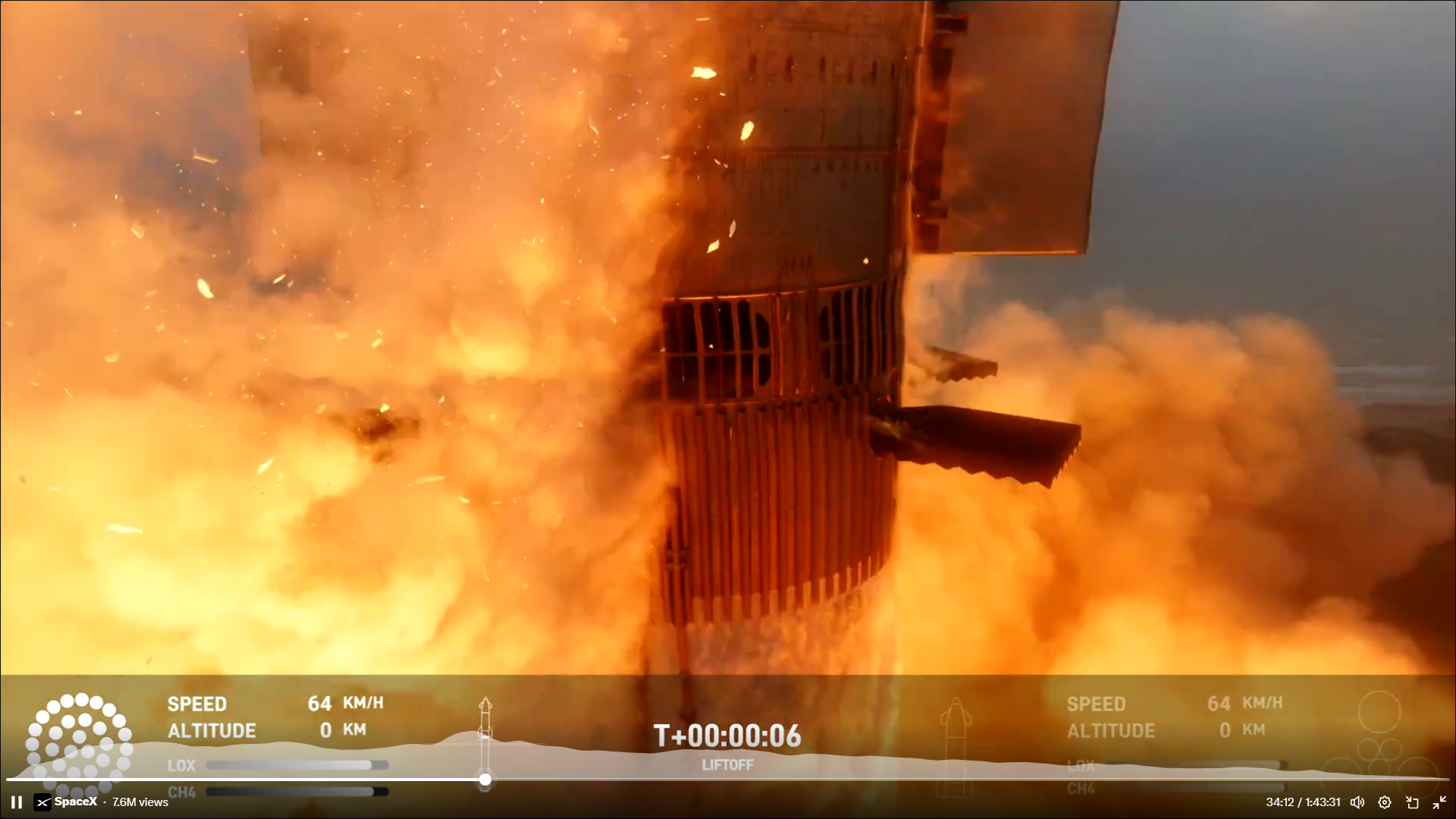
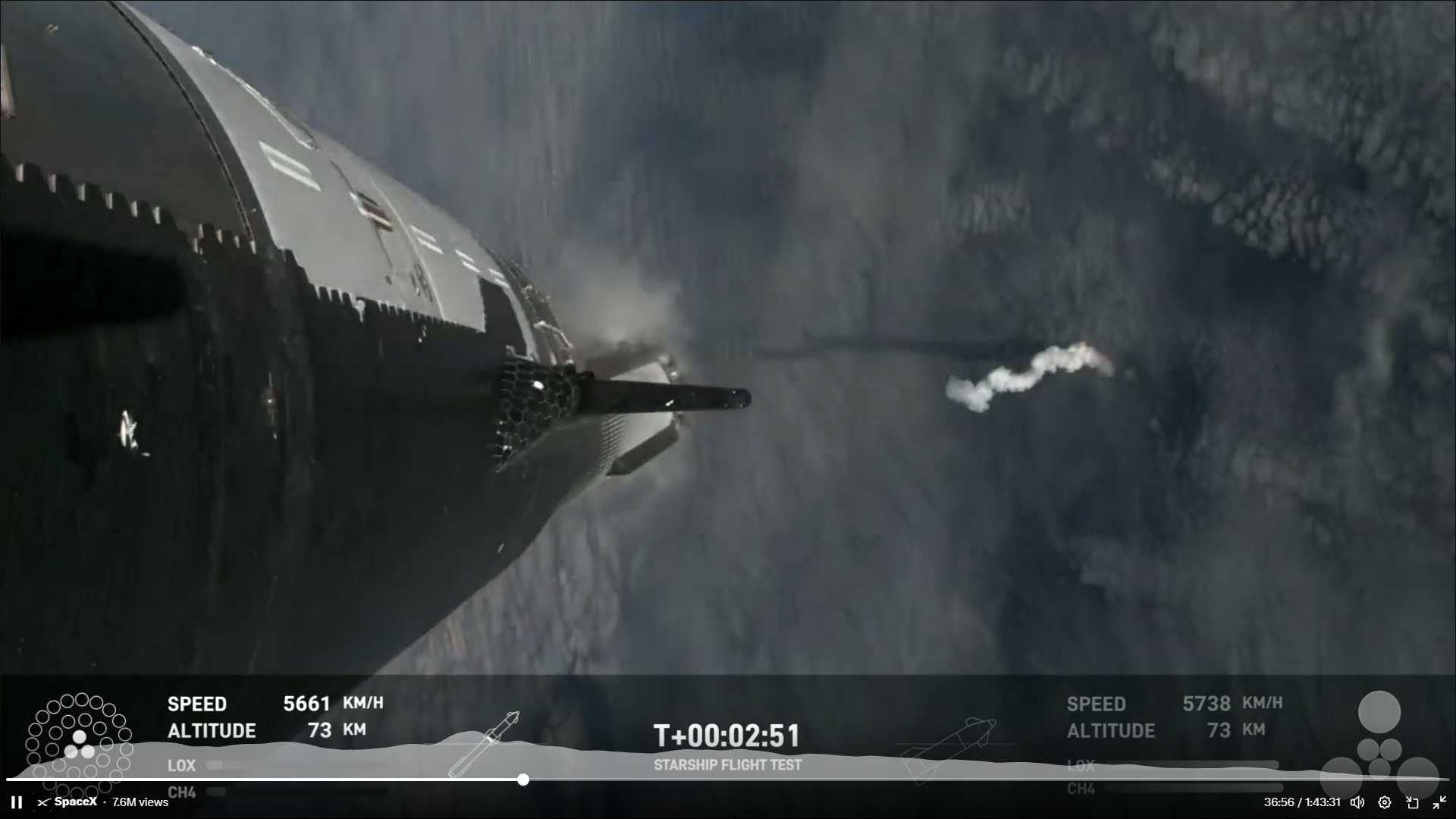
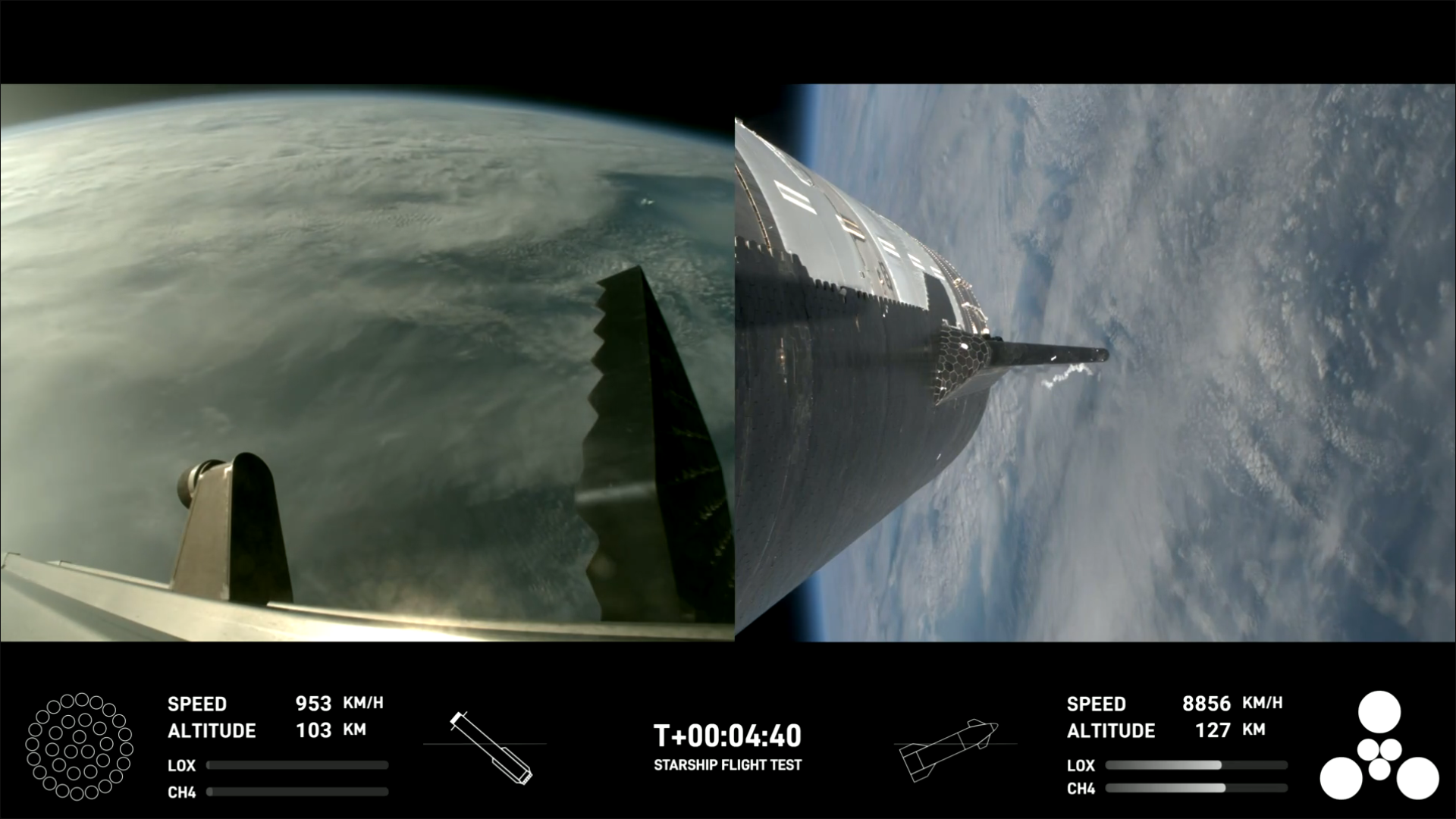
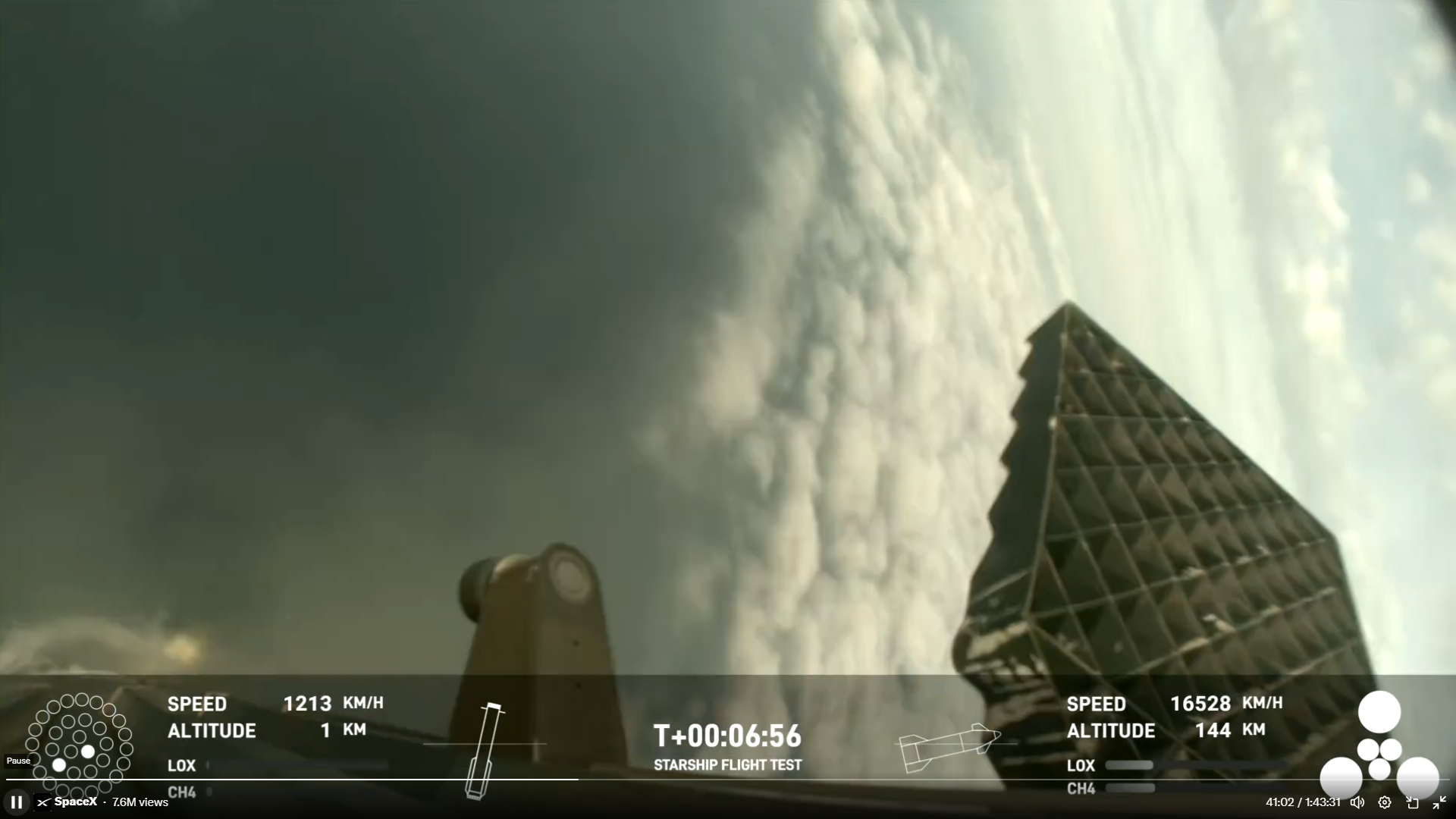
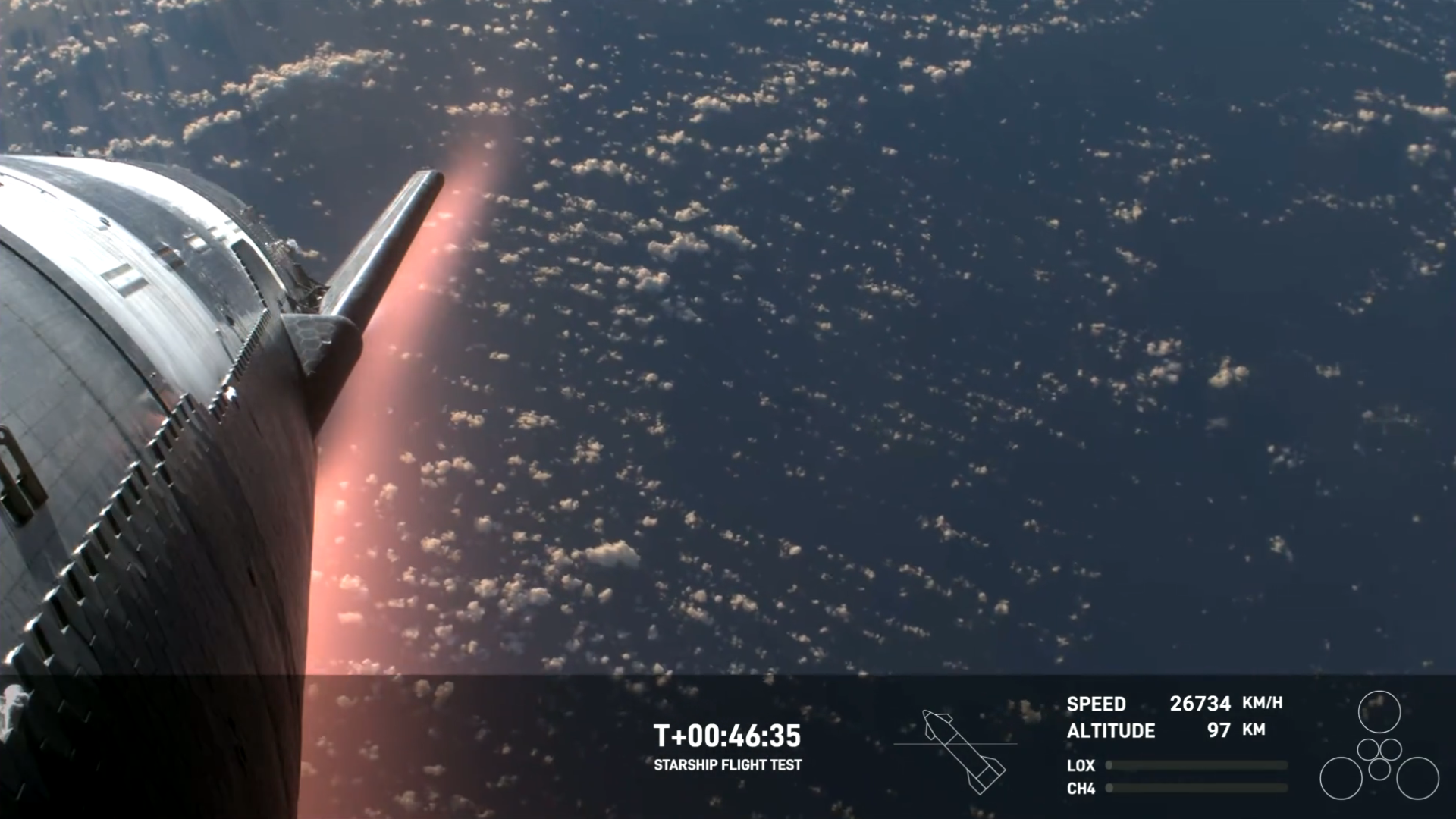
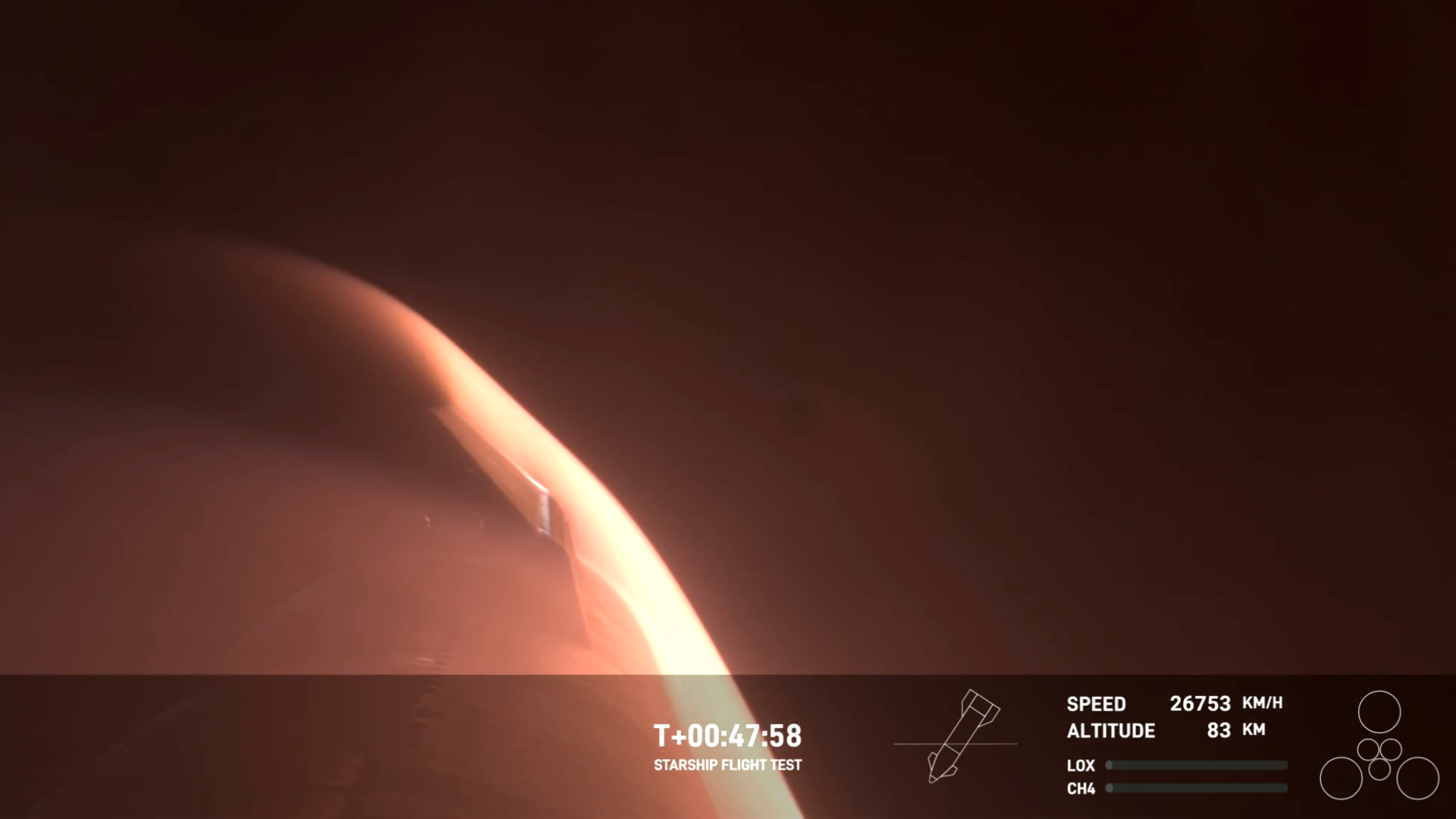
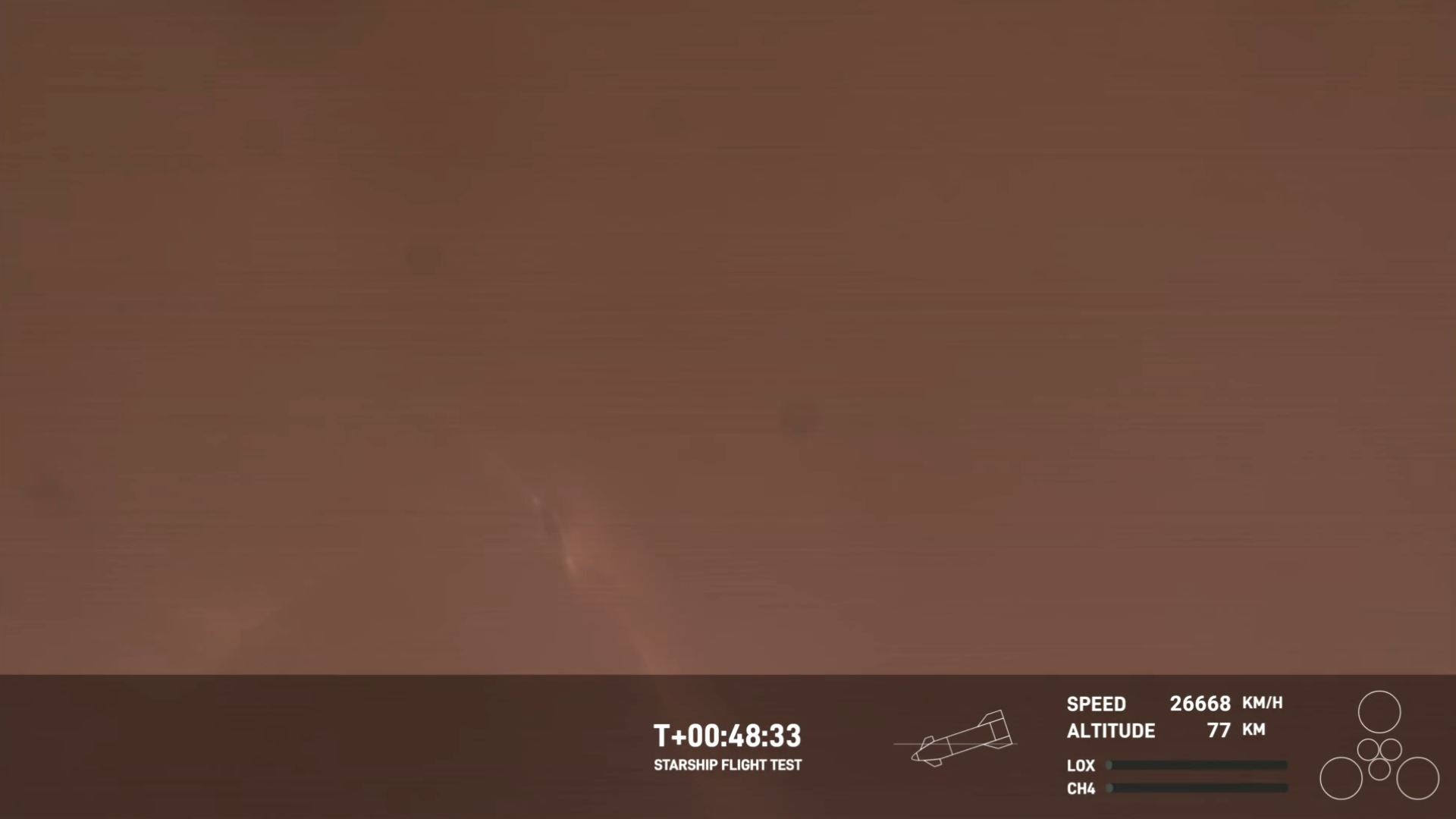
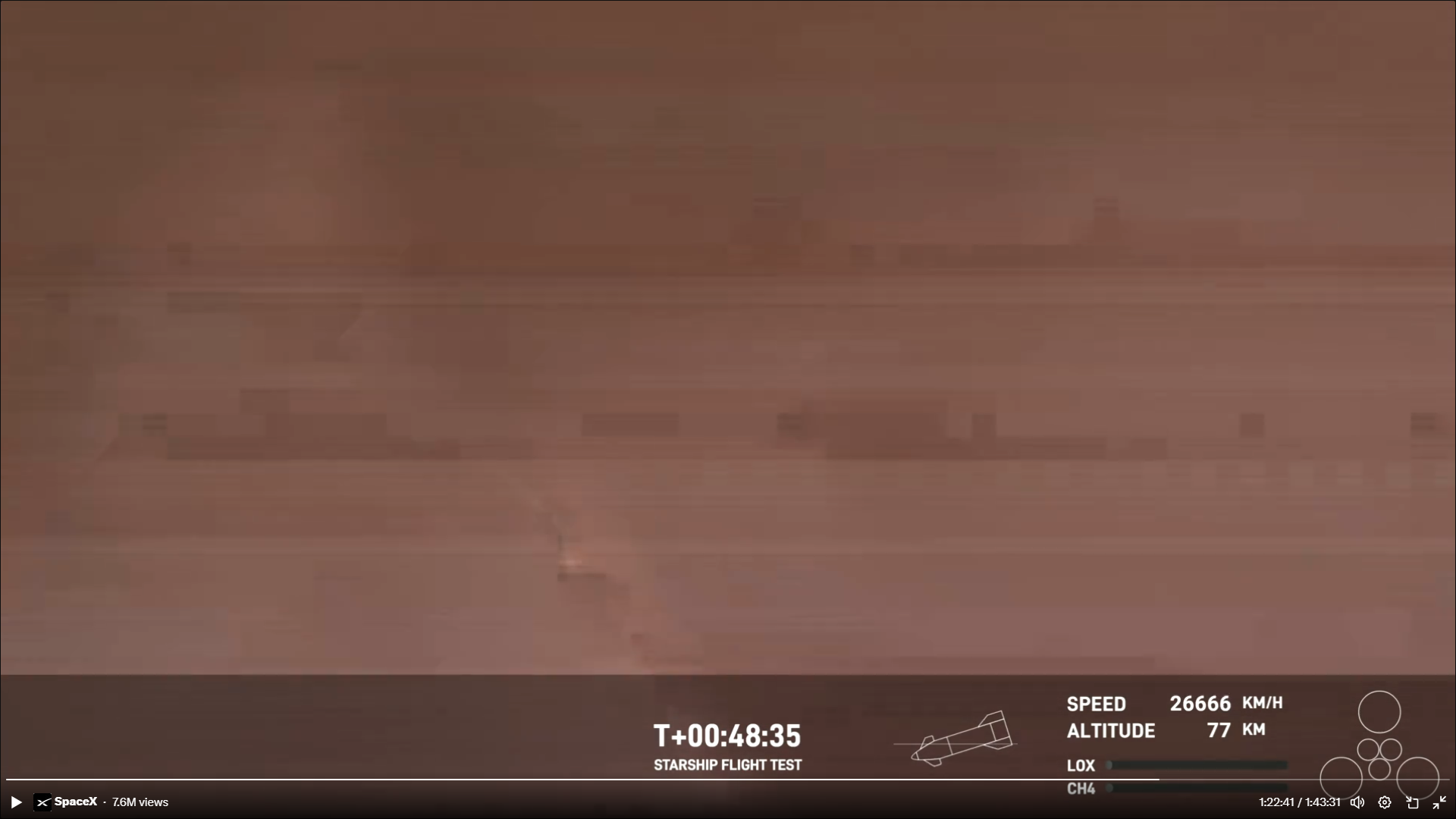
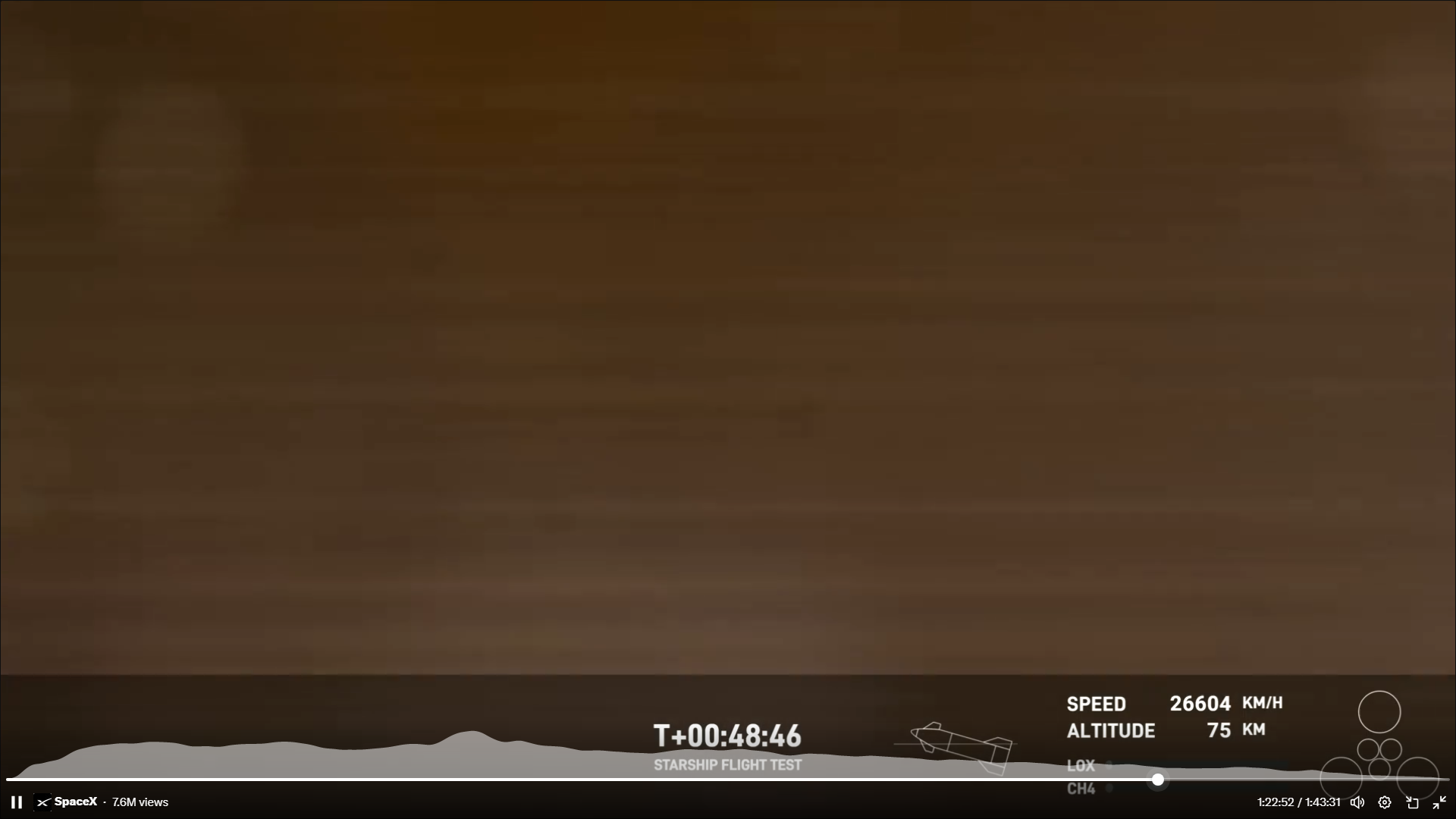
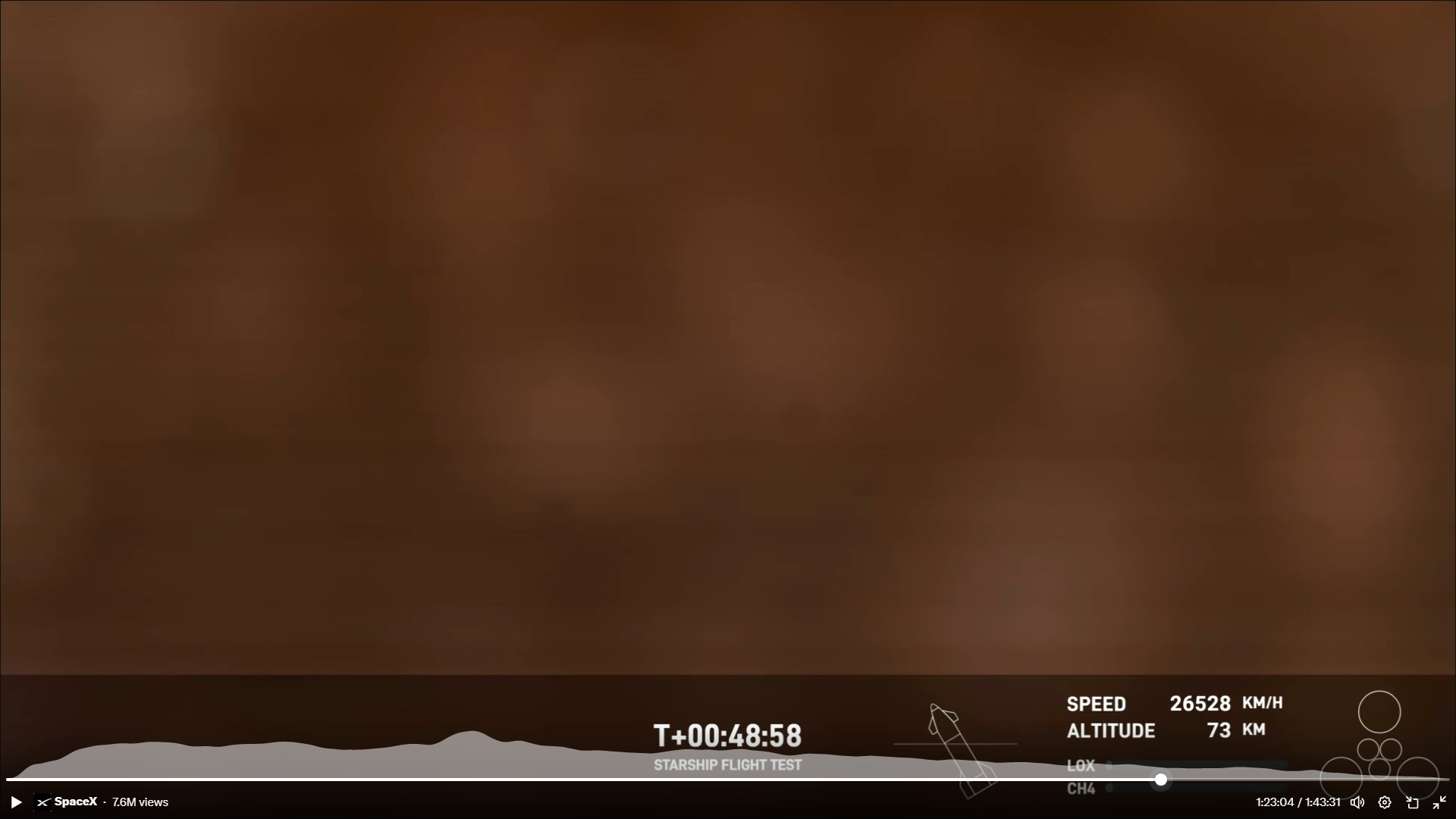






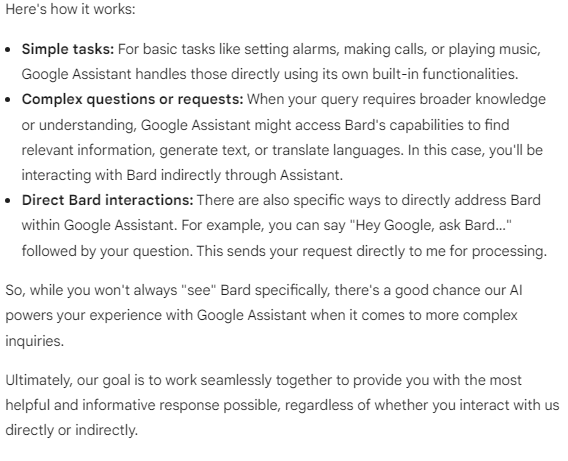








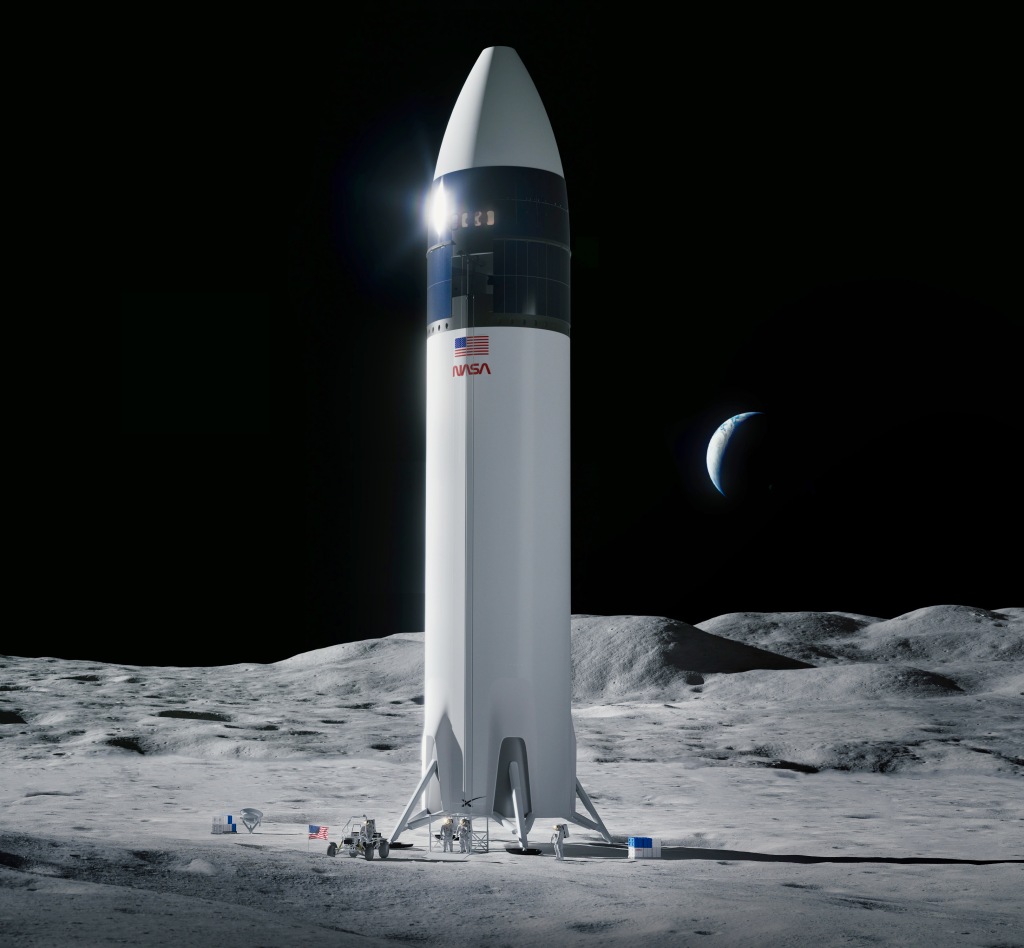



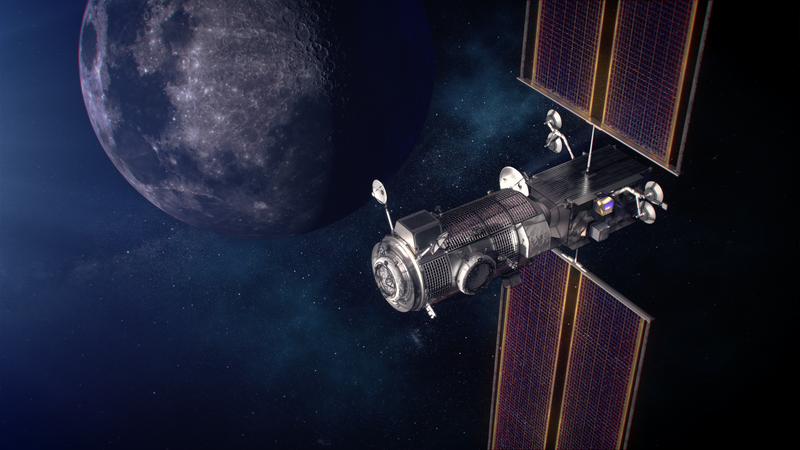






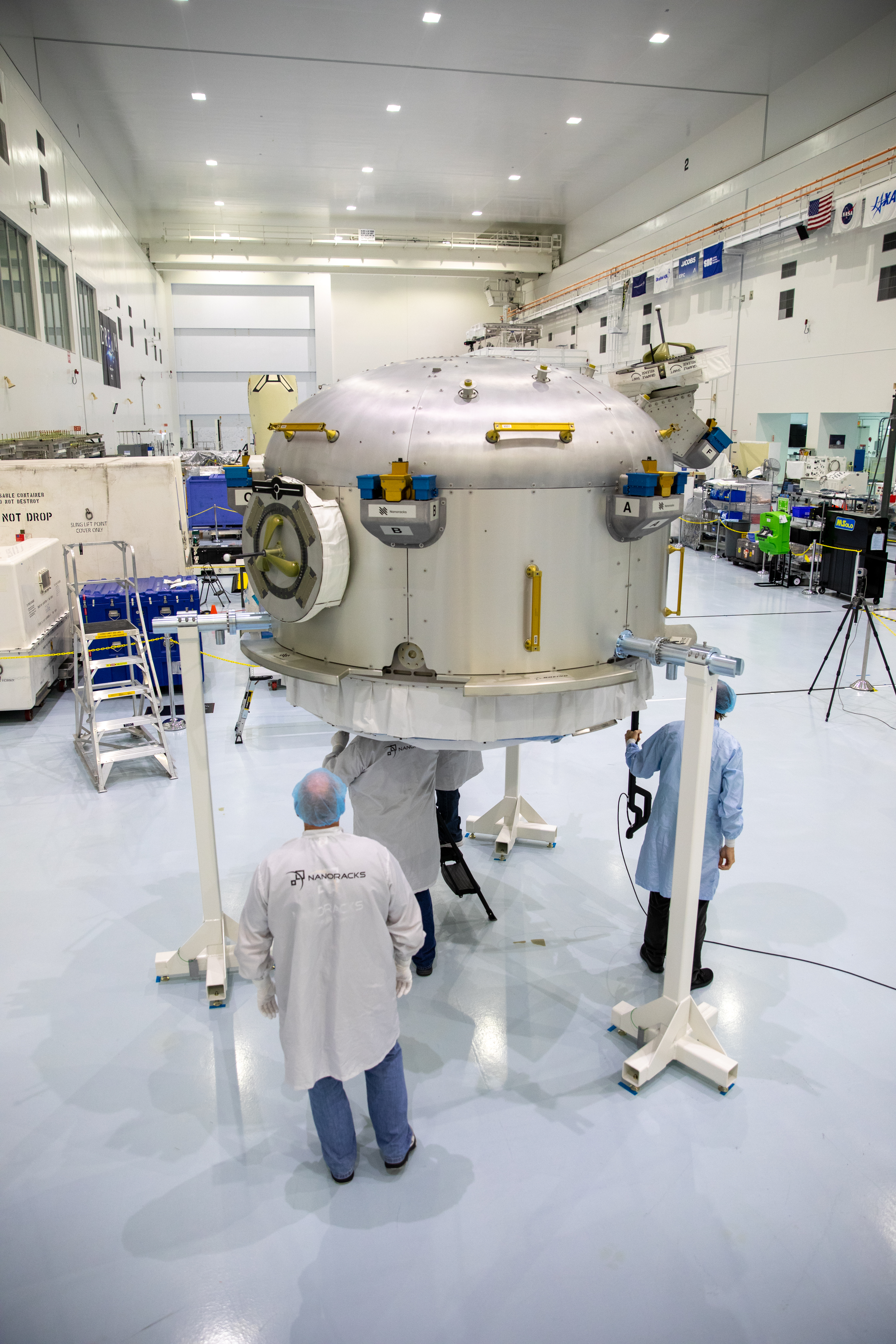

















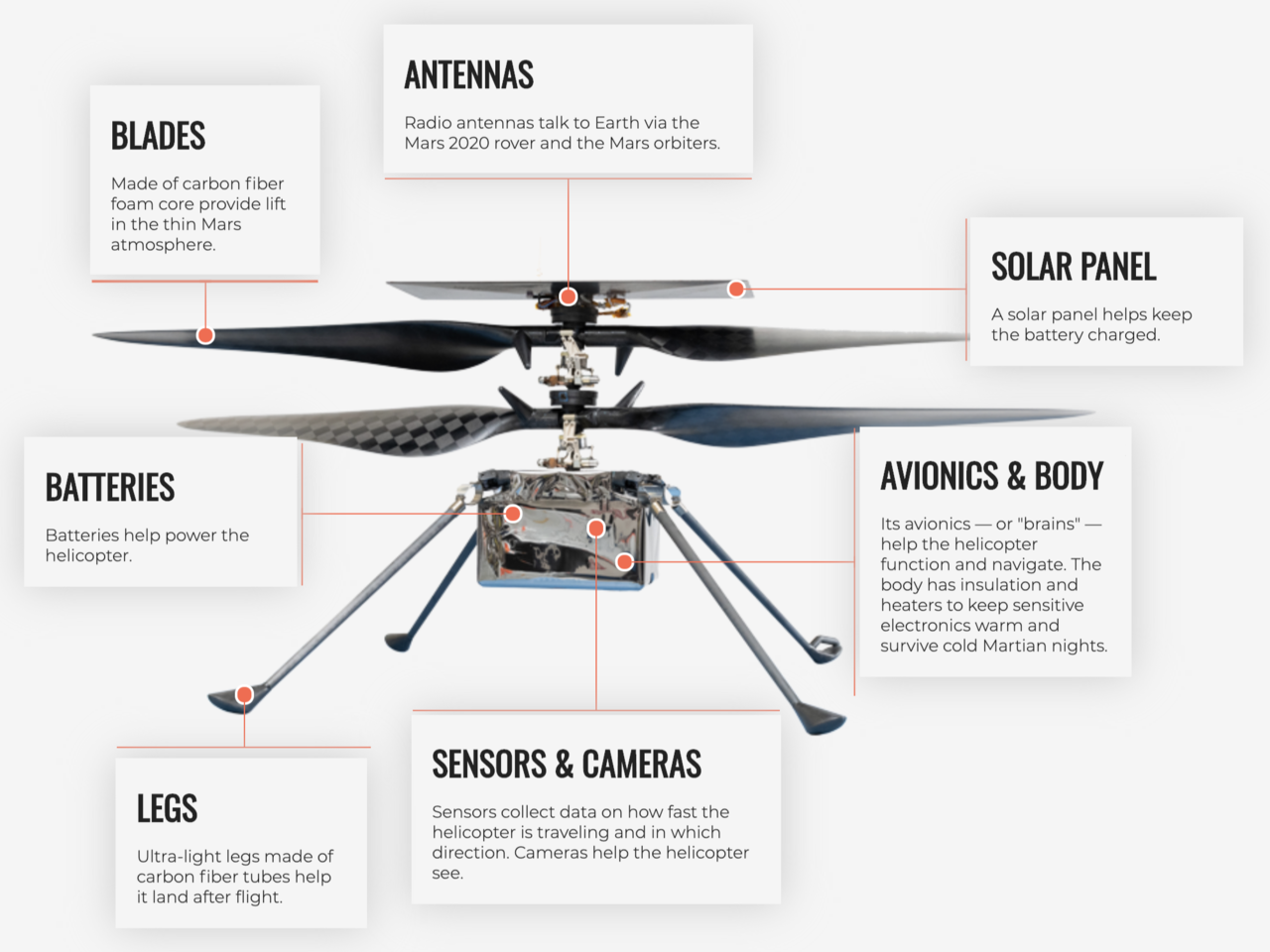
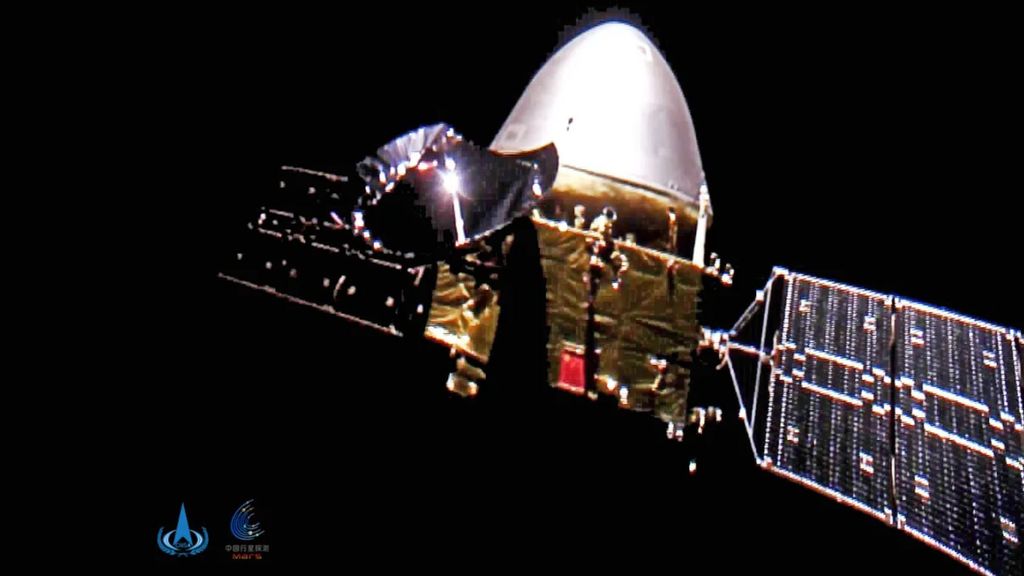
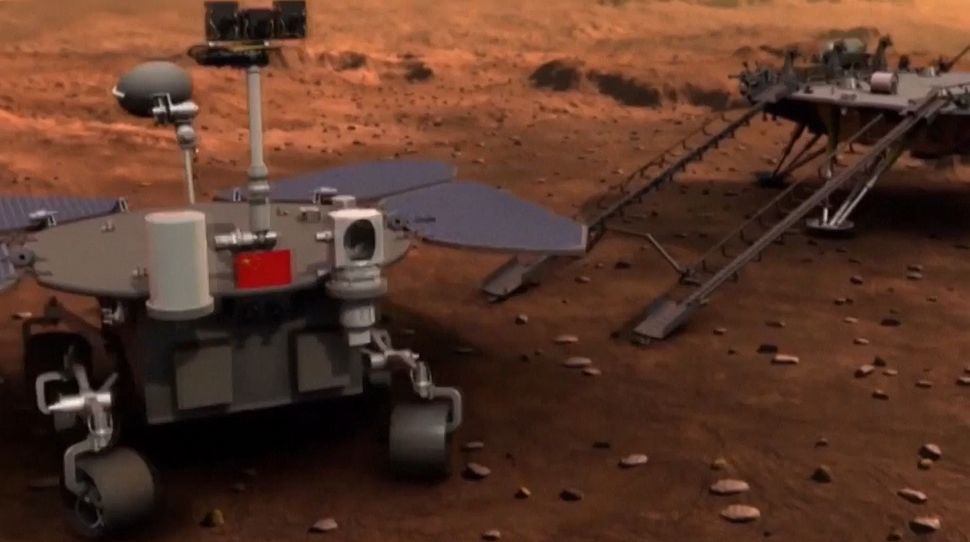
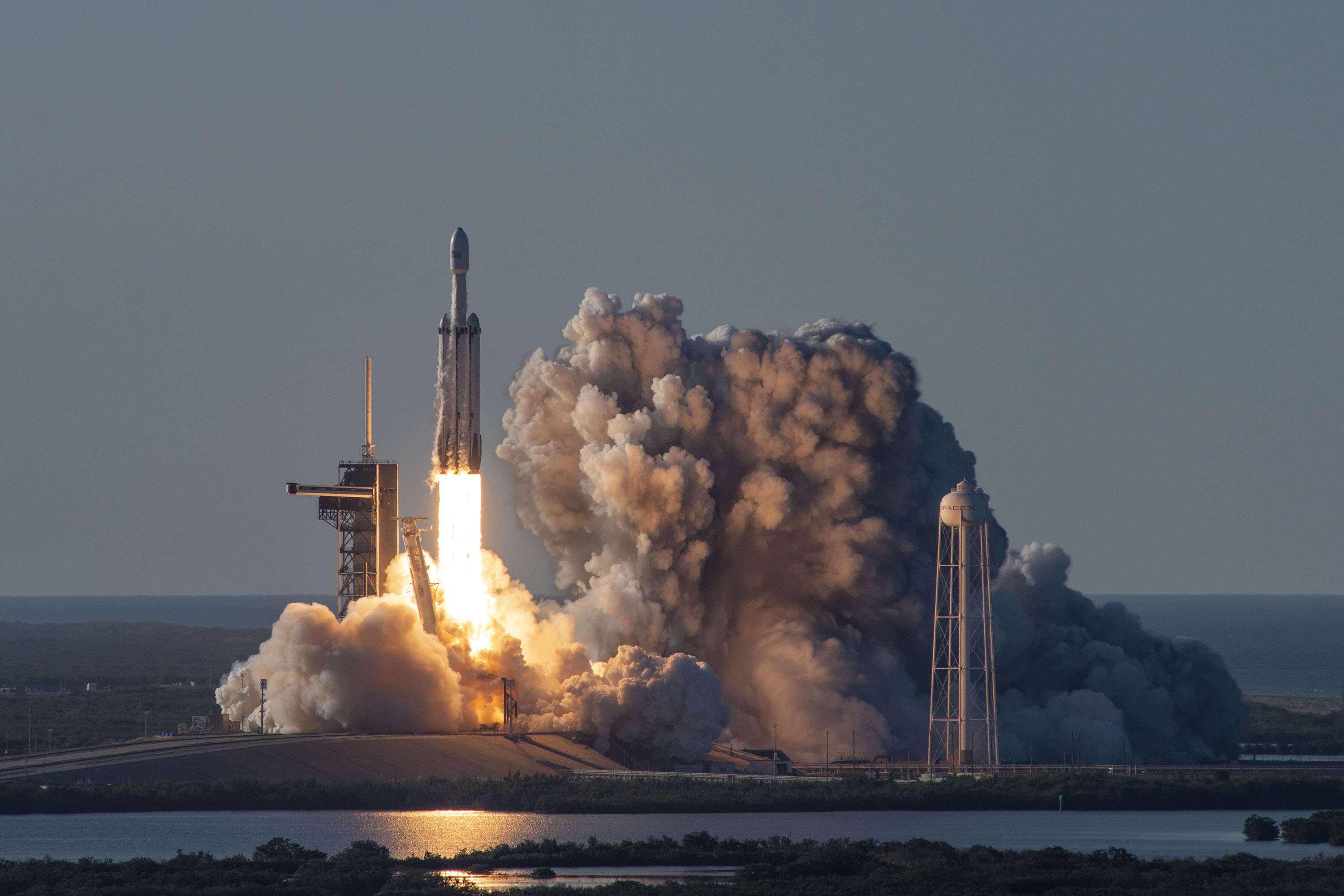





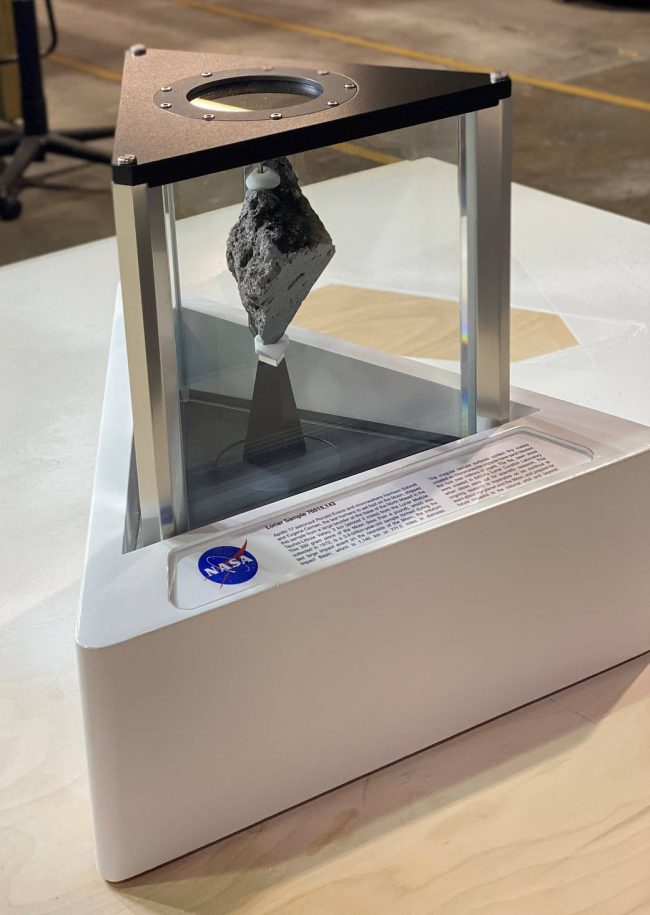









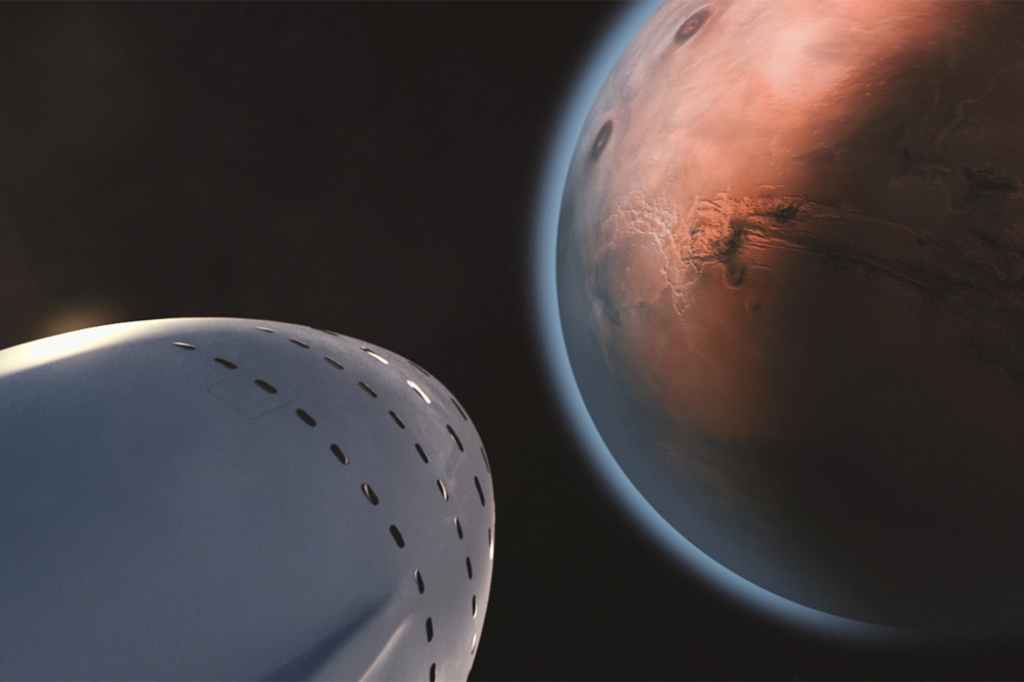






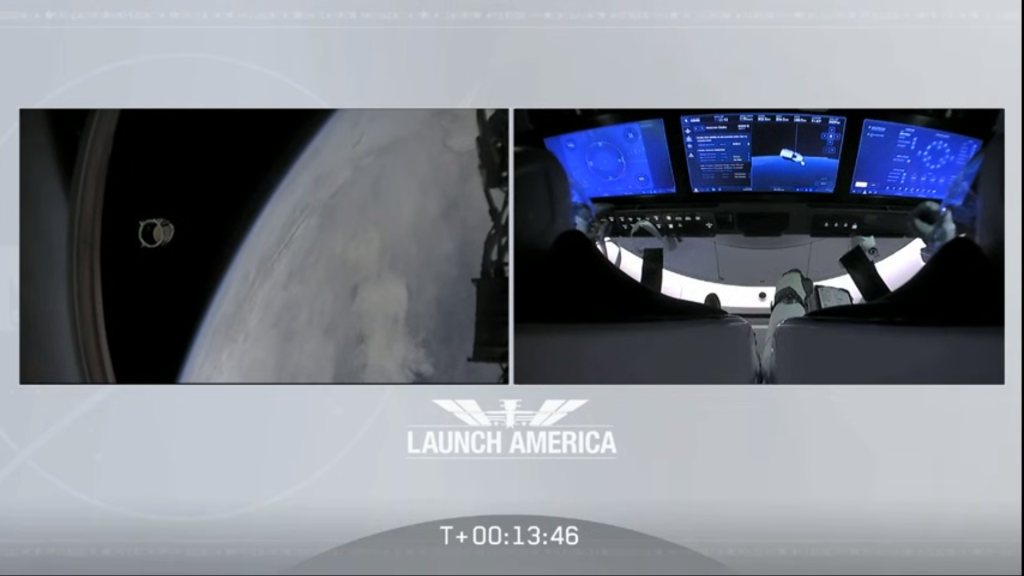
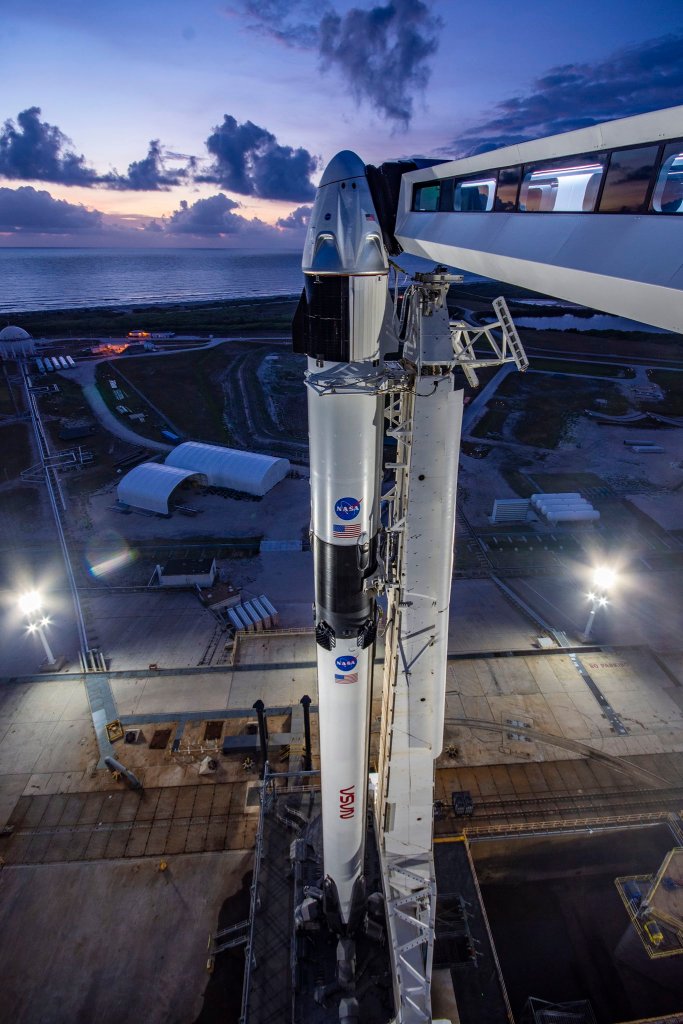






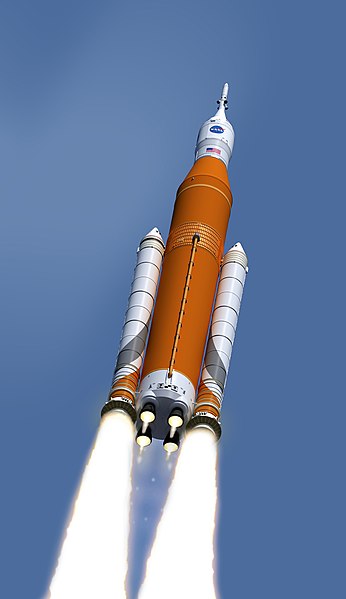


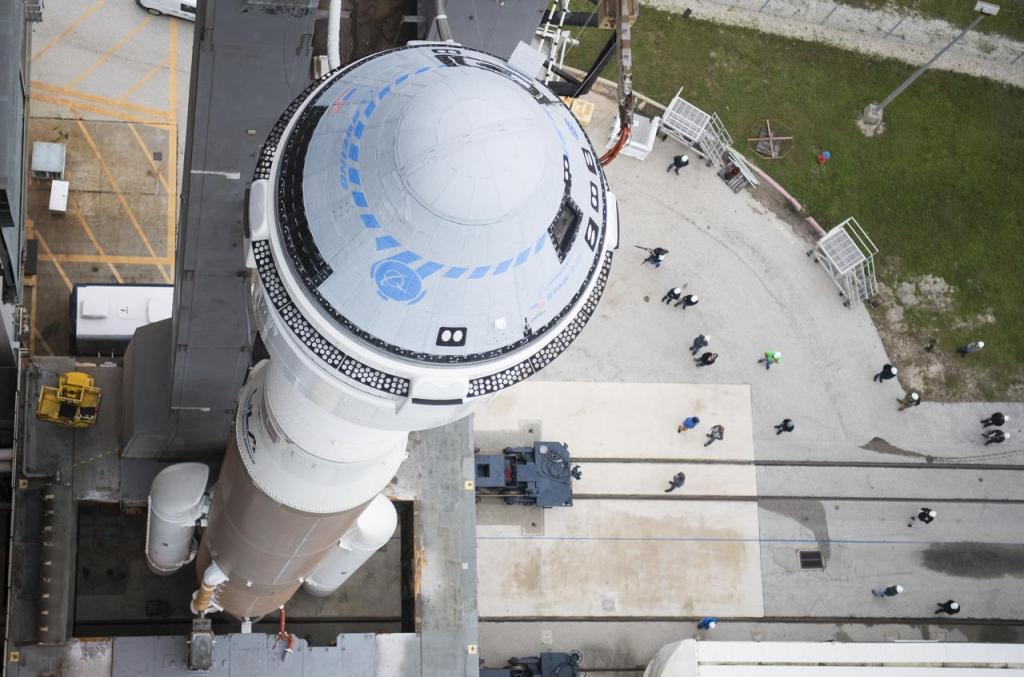


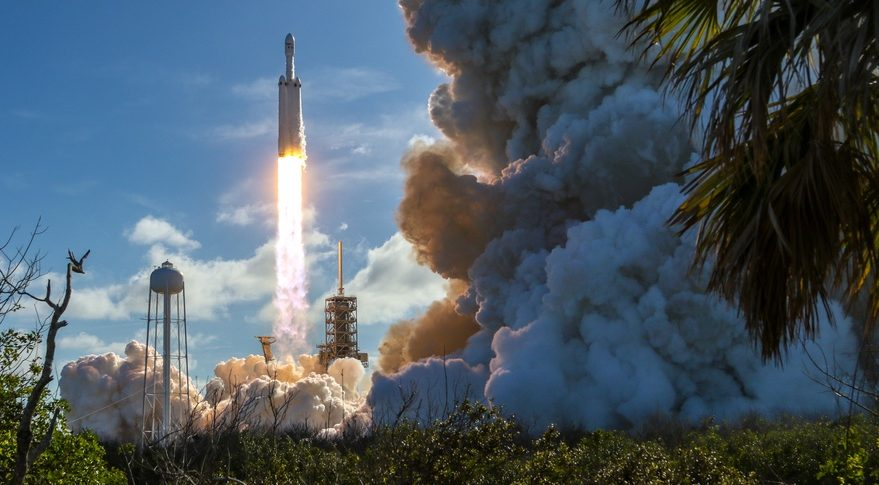
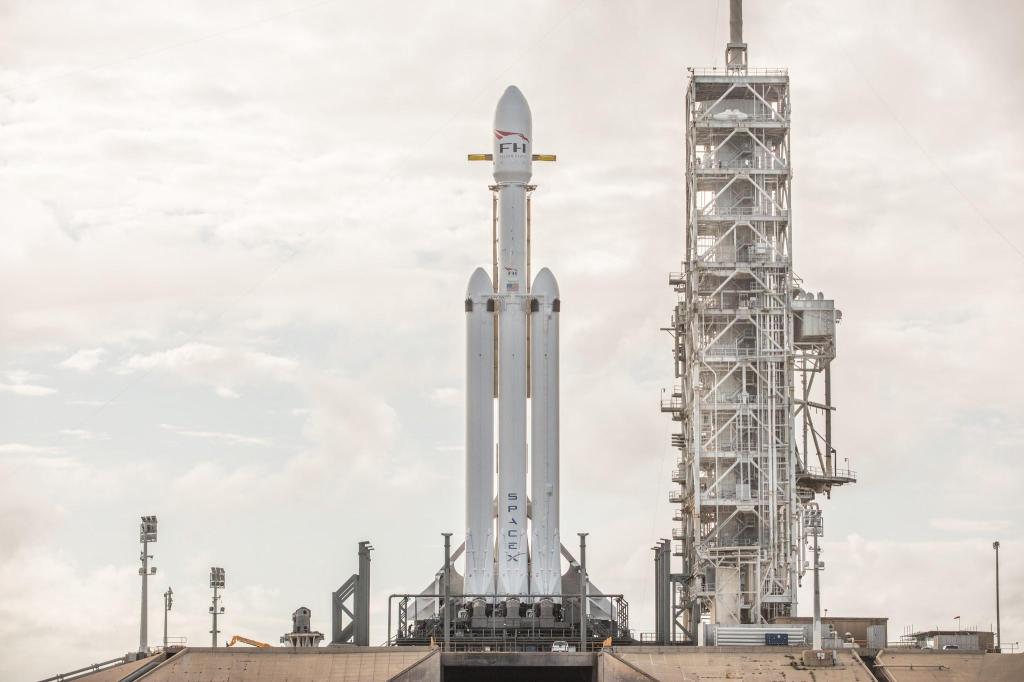
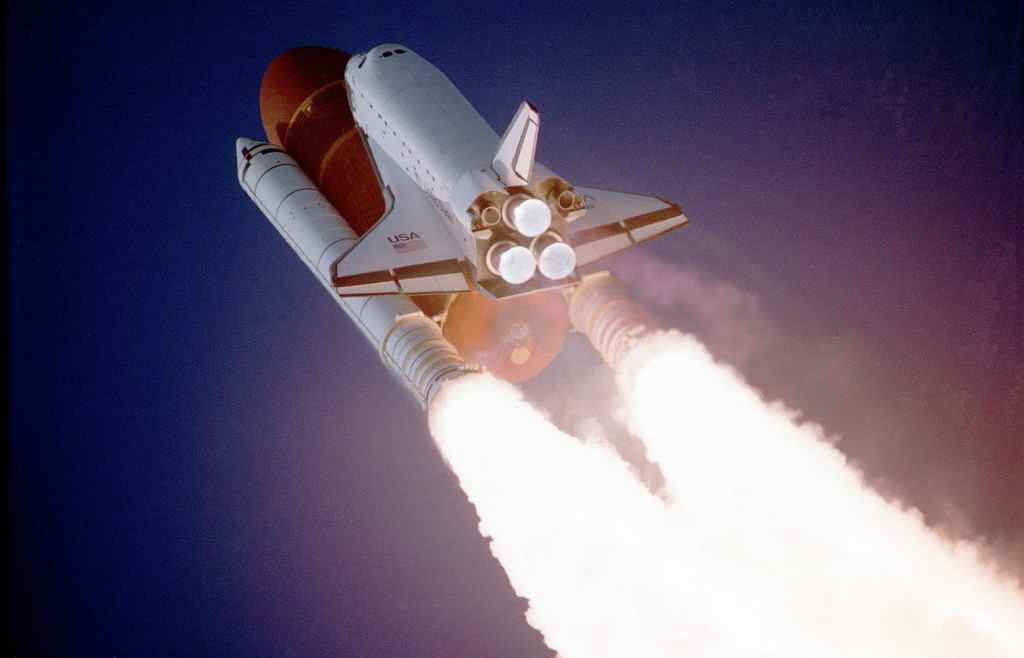














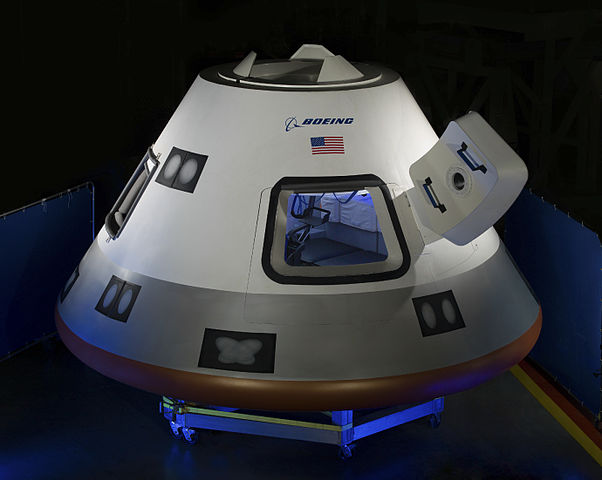









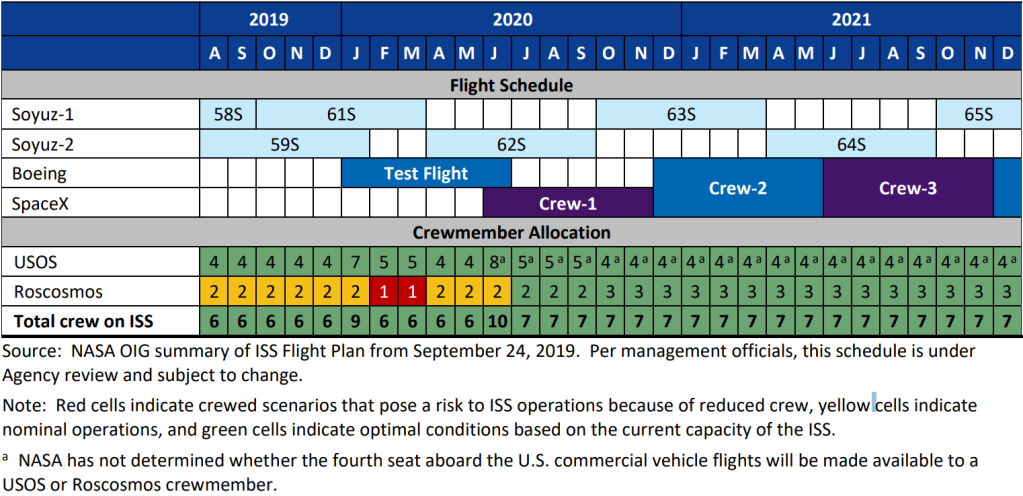














 Bill Housley

Recent Comments